 Wildlife Film News
|





 |
Welcome to our Newest Full Members! |
|
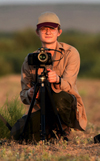
Luca Antonio Marino – an award-winning filmmaker and photographer with experience of shooting wildlife sequences solo or with crews in varied locations across the globe; biology graduate with expertise in animal behaviour and ecology. Competent in researching and developing natural history stories, contacting scientists, setting up location shoots/permits, data wrangling, creative editing (Adobe Premiere Pro CC, DaVinci Resolve 16, Avid Media Composer), operating a range of 4K cameras including Sony FS7 II, Canon C200, Panasonic GH5, Blackmagic Pocket Cinema Camera. Scuba diving trained. Multilingual skills (English, Italian, Portuguese). Published on international scientific journals and magazines and broadcasted on television programmes. Good inclination to think outside the box and maintain good relations with people.
Website: www.lucaantoniomarino.com |
|
Jon Nicholls – a Bristol-based composer, sound designer and multi-instrumentalist creating immersive and compelling music / sound scores for drama, documentary and interactive media for film, television, VR & audio drama. Drawing on a huge range of influences and an extensive network of outstanding live instrumentalists, I compose and record music in a wide range of styles ranging from sweeping orchestral music to electronica, choral writing, quirky sound design and intimate acoustic textural work. I’ve been extensively commissioned by broadcasters including BBC Radio and BBC TV, Channel 4, ITV, Sky & Al Jazeera, and my music / sound scores are regularly heard in major theatres including the National Theatre, RSC and in the West End. As well as my composition work, I also create audio / podcast content for clients including the BBC via my audio production company Selkirk Media.
Website: www.jonnicholls.com |
|
George Schnipper – A Moscow-based multilingual wildlife video editor and camera operator with a zoology background and six years of filmmaking experience. Produced over 150 works: interviews, documentaries, showreels, shorts, travel and commercial videos. He has worked as a cameraman for a Russian wildlife series about the desert fauna of Uzbekistan. Working as production assistant for the nature documentary filmmaking company LESFILM. Have worked with Blackmagic, Canon, Sony, Panasonic and DJI video equipment. Moved from Denmark to the UK to study Zoology with Herpetology. Currently living in Russia. Dual citizenship allows for easy travel and relocations to sites around the world. Fluent English, Russian and Danish languages. Basic German. Can work as a fixer with travelling through Europe, Russia and Central Asia. Have connections with Russian nature reserves and local scientists. Website: www.georgeschnipper.com |
|
Join them, become our next newest Full Member! |
 |
As a full member of the site, you get a listing in all appropriate sections, a profile page and priority on your news across the site, this newsletter and our social media accounts. Membership fees help to keep the site going too ... Your support is much-needed! To become a full member ... email membership@wildlife-film.com for an application form. Visit: Wildlife-film.com/freelancers (currently just £30/year!) or Wildlife-film.com/companies (£100/year!) for further info. |



 |
Tweet |

|
#ImagineFor1Minute by Tom Mustill/Gripping Films A tiny film with a big idea: to ask viewers across the world to take a minute to visualise the better future we could have, and then to talk about it. This tiny film was launched to celebrate the 75th Anniversary of the UN General Assembly, and features Avaaz members, alongside the voices of UN Secretary General Antonio Guterres, Greta Thunberg, Pope Francis, indigenous leaders Hindou Ibrahim and Benki Piyako, and other influential global voices. Conceived in lockdown and composed of voicenotes and selfies sent in from every continent. This could be the most important minute of your day: Research has found we rarely take the time to imagine what a better future could be like. So Tom Mustill and crew thought they’d make a film that helps these conversations begin. This film asks anyone, from world leaders school children, to visualise what needs to change and then to talk about it. They’ve made this one minute film so it can speak to a single individual or an entire government. They hope it will help individuals think about the future they want, meetings get off to good starts and motivate people to share their hopes for the future, and start to make that future happen. We all want it to be a catalyst for a better world. Imagine/Share: grippingfilms.co.uk/imaginefor1minute |


|
The Wild Connection – A Review The Wild Connection, by husband and wife team Carter McCormick and Paula Sprenger, is a documentary that examines our relationship with wildlife. This artful exploration of some of America’s most incredible species promotes a deeper understanding of our link to the wild at a time when its future is uncertain. Although they can seem far removed from our lives we have an innate connection to the animals we share the Earth with. The relationship between us is complex, ever changing, and unique to each species. The Wild Connection seeks to understand the link between us at a time when the future is uncertain. It is an oft-said thing by those that are engaged with wildlife, in natural history or ecological circles, be they biologists, birders, conservationists or even mere film-makers, that we’ve lost our connection to the natural world. By “we”, we mean everyone else. Those city types, kids of today and the like ... Increasingly losing touch with nature. So, I was immediately invested in the idea behind this film. Can “we” reconnect? This documentary aims to show us inadvertent connections at various sites across the USA ... Antelope Island, Utah, where herds of large mammals roam the mountainsides and grasslands and its shores are home to millions of animals but where the early impact of people on American wildlife is illustrated; Crystal River, on the Nature Coast of Florida, where species collide as the large populations of both humans and animals intersect, often with deadly but unintended consequences. There are great success stories but protected species are still under serious pressure, and not just from people, there are invasive species adding to that pressure exacerbated by climate change too; Palo Duro Canyon, located in the Texas Panhandle, is the second largest canyon in the United States. Its’ unique topography creates a climate that offers shelter to wildlife year round. Human-introduced invasive species are also a problem here and massive persecutions of rattlesnakes are unethical, whilst upsetting the balance too. The plight of turkeys and that of cattle, including their impact on the environment are shown ... One billion cows, in the US alone, are seriously contributing to global warming; Baxter, Maine, a testament to conservation that remains largely untouched, despite being a pristine wilderness the animals here are still affected by human activity miles away. An aquatic animal, a conservation success story, that shows the ecosystem is healthy and the surprisingly aquatic moose that is plagued by insects that are exploding in numbers further North due to climate change; Okefenokee Swamp, Georgia, which may seem like a foreboding place, but is full of life. In the black waters of the Okefenokee nature is on full display. Charismatic keystone species are suffering due to hunting, loss of habitat and human development and alligators are impacted by climate change in surprising ways. Even more surprising interconnections link a woodpecker, pine trees and fire, or lack of it. The cinematography is exceptional in this film, well edited and good flow with appealing graphics used to illustrate historical points and data. An appropriate use of music nicely balanced with natural sounds with a well-paced narration that helped to keep the attention, even though the film could’ve been shorter. I found the film incredibly informative, with lots of things learnt about the animals and environments studied, not least the interconnectedness of threats to wildlife in the US and climate change. It felt like a well-researched film but the imparted knowledge was easily digested. I loved the inclusion of the segment on cattle, the cruelty injustices, exploited for meat and dairy products, but also their very significant negative impact on the environment. Not preachy, but part of a wider story including their auroch ancestors. Well done and I would very much like to see more of this kind of truth-telling in wildlife film-making. The points made about the “wild connection” were immersed in the wider biology of the animals and ecosystems helping the viewer to understand the fuller context with ease. There’s still a chance for all of these animals and their ecosystems ... Our connection to the wild. “We” need to remember our shared history, remember our relationship to the land and animals ... realize past mistakes and recognize what we are doing now. We have a chance to modify and reduce our impact as humans on the natural world ... i.e. live in a way mindful of our wild connection. I recommend that you watch this film, immerse yourself in the stories, understand the connections and then find your wild connection, not just to these stories, but in your local patch too. By “we”, I mean all of us.
The film is available to watch on Vimeo (rent or buy) and Amazon Prime Video (rent, buy or stream). Visit: thewildconnection.com Follow: facebook.com/habitatproductions & instagram.com/habitatproductions Film-maker Bios: Carter McCormick is from Rising Fawn, Georgia where he gained a deep love for wildlife. He began his filmmaking career in 2008 and his passion for film and conservation have taken him to wildernesses around the globe. Carter has collaborated with many prestigious research organizations, conservation groups, universities, and NGOs. Paula Sprenger was born in Santiago, Chile and worked to achieve her dream of being a filmmaker since she was a child. Throughout her childhood Paula always had a camera in hand, and her career took a turn when she became successful in fashion photography and portraiture. Eventually, when Carter and Paula met in college in 2015 they began working in film together. Two years after meeting the couple got married, and they set off in their RV to travel across the USA to film 'The Wild Connection'. Today they live in Ireland where they continue to document wildlife. The two maintain their company Habitat Productions while Carter researches creating more impactful wildlife films for his PhD. Statement from the Filmmakers: Many wildlife films, though captivating, seldom impart knowledge in a way that can change how a viewer engages with the world around them. With The Wild Connection, we set out to create a film that was artful and entertaining but that also examined our relationship with wildlife in a way that promoted deeper understanding and empathy. Making this film we navigated sweltering heat waves off-grid in our RV, filled our wetsuits with hot water on cold winter mornings, walked rough terrain with heavy gear in search of wildlife, and faced a multitude of other obstacles. Despite all of the challenges of making a documentary (especially with only two people) every day in the field or working from home was a labor of love. Making this film only furthered our love for the land, plants, and animals we share this planet with and we hope that you share that love when watching our film. |


|
The Virtual Ireland Wildlife Film Festival 2020 Winners Announced! The second Ireland Wildlife Film Festival was held virtually, due to COVID-19, from the 10-24th of September 2020. Sixty two submissions came in from all around the globe, resulting in a great collection of films in three categories, Feature Film, Short Film and Student Short Film, and I was asked to be a judge for a second year running! The Ireland Wildlife Film Festival was the first of its kind in Ireland and seeks to bring stories of conservation and species preservation to the big screen while also striving to create a community of filmmakers and audience members who care deeply about environmental issues. The best Feature Film will receive 500 Euro and laurels. Twenty four films were selcted for screening during the virtual event.
The Nominees and Finalsists: Best Feature Film
Winner: Sockeye Salmon Red Fish Sockeye, a species of wild salmon, is born in Kamchatkan waters and spends its entire life in the Pacific Ocean. Only once does it return to fresh waters - to give offspring, start the circle of life, and die. It is an inexhaustible resource that feeds billions of people on the planet, restored every year! But soon, we may find ourselves facing the unimaginable: humans will exhaust the inexhaustible! "Sockeye Salmon. Red Fish” is finished thirteen years after I first had the idea to tell the story of Kamchatka’s wild salmon. Wild salmon are a perpetual engine, feeding billions of people on this planet. Finalists: Edge of Existence The Edge of Existence is a long-format documentary, set in the Western Corridor of the Serengeti, that sets out to uncover and document the untold story of human-wildlife conflict in Africa. Human-wildlife conflict is a global issue that has reached crisis levels, threatening the survival of both humans and wild animals. There are communities living alongside wildlife in some of the last remaining wilderness areas on earth. These wilderness areas have started disappearing because of expanding human development, deforestation, and depletion of natural resources, which has left humans and wildlife living in closer proximity than ever before. The conflict arises as a result of the competition for limited space and resources between communities and wildlife. The situation is dire, and if it is not addressed urgently, it will have a catastrophic effect on the environment and on communities that live alongside wild animals daily.
Lost Kings of Bioko Off the coast of Central Africa lies an isolated island, covered by primeval rainforest and surrounded by dark ocean waters, inhabited by a greater variety of species than nearly any other place on Earth this terra incognita is called BIOKO. The ruler of this realm is one of the world's least known primate species, the drill. Historically revered, indigenous folklore tells us of a drill king who ruled the island’s forests, a place where drills still play a critical role in the health of an ecosystem known to scientists as a biodiversity hotspot. Bordering this kingdom is the black sand coastline, an ancient nesting ground for giant sea turtles and home to natural wonders. This film explores the secret lives of drills and their mysterious island home as we follow a family group and a newborn who discovers this tropical paradise with all its challenges for the first time. Best Short Film
Winner: Beyond The Fence Growing up in rural South Africa means being born in a country so rich in wildlife that foreigners can only dream of, and yet never being given the chance to fully experience the beauty of it for yourself. But Queen, Rifumo and Wisani have set out the change this. Armed with a camera, the trio aim to rise above their difficult pasts and “reframe” the narrative of wildlife conservation, which has long since had a reputation for being white dominated. Queen becomes one of the only black female field guides in South Africa while Rifumo and Wisani start a business together. The trio have one goal - to inspire the youth from their community to become the next generation of eco-warriors. Queen, Rifumo and Wisani are all graduates of the Wild Shots Outreach program - an organisation founded by British conservationist, Mike Kendrick. Mike believes that exposure to wildlife is the key to inspiring children from disadvantaged communities to become involved in conservation, and that this exposure needs to be paired with opportunity. The trio have each embraced this movement with overwhelming dedication, and are taking wildlife conservation to new heights. Beyond The Fence looks at the inspiring stories of each of our characters, from their challenging pasts to their inspiring outlooks on life and how photography has changed their lives. With an aim to shift perspectives, the audience is probed to revisit their own ideas of what it means to do conservation in this day and age. The real question is, how can people care for nature when they don’t even have access to it? And how can they not have access to it when they live right on the park’s doorstep? This is the story of what happens when you give someone a chance. "Having my directing debut on a film so close to my heart has truly been a dream come true. It was at a highly prestigious Natural History Awards Night in the UK last year where a friend of mine said to me, "So I take it you're more into conservation than Blue Chip?" And it was at that moment when it all made sense to me - the answer had always been clear in my mind. That there is in fact a difference between the two, and if we continue to show Blue Chip series on television while ignoring human-interest stories of conservation, then we stand at risk of losing all our wild spaces altogether. If we don't tell stories that make an impact, then soon we will no longer have a subject to film for our Blue Chip series. I grew up watching the likes National Geographic and Discovery Channel at home. I have always had an ineffable passion for nature and wildlife. I have always had the privilege of visiting the Kruger National Park and other private game reserves with my family. When I realised that it was my privilege that afforded me these opportunities, and that the majority of South Africans may live their entire lives without ever getting to see even a zebra, I knew something had to change, and that I had to be the one to help drive this change. My hope for Beyond The Fence is to touch audiences on a deeply emotive level, of course. But more than that, I'd like to help start conversations. We are at an absolutely critical point in history. We are the only generation to have so much scientific knowledge about our natural world, and we are the last generation to be able to save it from a total, irreversible collapse. Our conservation methods are exclusive and outdated, and if we are to turn this ship around, we need all hands on board. I think it's clear that what we need now more than ever is to reconnect to our natural heritage and to the one and only planet we call home." Tessa Barlin, Director Finalists:
Those In Grass Houses Sociable Weavers engineer the biggest nest built by any bird. Within these enormous structures they live a fascinating social life, but can their family bonds protect them from the dangers of life in the savannah..
Swords & Fangs Every year off the coast of Baja California, Mexico, a spectacular event brings together two of the pacific's most tenacious predators. Powerful and agile, Striped Marlins and Californian Sea Lions take advantage of the sardine and mackerel migratory passage to gorge themselves on this abundant prey. Their quarry's only chance of survival: to stick together. Filmed on a single breathold. The Manta Listener Disconnect to reconnect! Our world is dominated by technology and noise. It's easy to get lost sometimes and people struggle more and more to find true happieness. Thiago Mendonca, a passionate diver and divemaster has one very simple advice to find meaning in life. Follow him on his unique journey and let him tell you what it takes to really re-connect with nature. Best Student Short Film
Winner: A Walk Through The Land of A Thousand Hills Claver Ntoyinkima, a native park ranger, shares the secrets of Nyungwe National Park in Rwanda as he guides us through the forest. With almost 300 bird species, over 1,000 plant species, and dozens of large and small mammals, Nyungwe is one of the most biodiverse places in the world. Twenty-five years after the devastation of the Rwandan Civil War, the park is now one of the best-conserved montane rainforests in Central Africa. As Claver walks through the forest we uncover the origins of his conservation values and the history of an ecosystem that survived one of Rwanda's darkest periods. "I am an MFA student at Montana State University. I specialize in wildlife and nature cinematography but enjoy working on a variety of projects and in different capacities. The collaborative nature of filmmaking is what drew me to the medium and I have developed collaborative skills with all facets of production, pre to post. I have been fortunate to work on some cool projects while in school, my credits include work for BBC, CBC, National Geographic, Smithsonian Channel, PBS, and Rwanda Development Board. I live in Bozeman, Montana where I am finishing my MFA but work all over the world. My mission is to convey the transformative power of the wilderness to create emotional connections between people and the natural world. Despite the globalized nature of society today, many people do not have the opportunity to personally experience the transformative power of the wilderness they impact. Visual storytelling is a powerful tool that creates emotional connections between people and the natural world and thus facilitates the protection of our planet’s wild places. My goal is to tell these stories." Chema Domenech, director, producer Finalist & Audience Choice Popular Vote Winner: Capuchin Culture An intimate portrait of a family of capuchin monkeys living in the semi-arid forest of north-eastern Brazil. This film tells the story of mothers and babies, showing how they learn to survive in this harsh environment. Sandstone ridges and pinnacles shape the habitat which is characterised by a dry season with temperatures higher than forty degrees and almost no rain. It is not easy to find water and fresh fruit and these monkeys must rely on all their ingenuity and remarkable skills to survive here. If they want to become independent, youngsters must learn the strategies of their group: hunting, finding water, digging the ground to extract roots and eventually using stone tools to crack open the palm nuts, their favourite food. Capuchins' success is the result of their intelligence, high adaptability and their effective survival strategies. These techniques and behaviours are transmitted to the offspring and represent their own culture, traditions passed across the generations to face the challenges of the Brazilian wilderness. "“Capuchin Culture” is a student film based on the latest discoveries on capuchin monkeys’ behavioural traditions and it tackles the emerging debate of preserving animal culture. Traditions can have important consequences for the survival of animal populations and this has implications for global conservation. I made this production as a filmmaker and as a biologist with expertise on the behaviour of capuchin monkeys. In 2014, for my Master's thesis in biology, I spent three months in the field site of Fazenda Boa Vista (Piauí, Brazil) to investigate the foraging strategies of a population of wild capuchins. These monkeys learn to crack open very hard palm nuts using stone tools and this strategy is one of the most complex forms of tool use in nature, putting capuchins on a par with chimpanzees and humans. Fazenda Boa Vista is one of the few locations in which capuchin monkeys use tools to crack palm nuts. This behaviour is passed across the generations and it is one of the cultural traits of this population. The researchers of the EthoCebus Project have investigated the social influences on the acquisition of stone tool use and the threat to capuchins’ culture due to human impact. Recently, it has been argued that the presence of humans has eroded the diversity of chimpanzee culture and that conservation needs to preserve animal traditions as well as bodies and genes. Other species, such as capuchins, are also likely losing their ancestral knowledge at our hands. Therefore, in 2019, I decided to come back to Brazil to film capuchins’ most intimate and outstanding behaviours, showing how youngsters learn the survival strategies thanks to their group members. Although the film was “very low budget” production, I still managed to succeed in carrying out all its phases and getting the results I wanted. I aimed to make an accurate and entertaining documentary and raise people awareness on the importance of protecting this population of monkeys and its invaluable cultural heritage. " Luca Antonio Marino, director, producer Wildlife-film.com congratulates all of the finalsists and winners. We would like to recommend two of the Selected Films:
Rodents of Unusual Size It is a brilliant film, a heady mix of human/wildlife conflict of an unexpected kind, pest control on a grand scale, unlikely pets, bounty hunting, rodent cuisine and climate change. A story expertly woven in that quirky style beloved from earlier Tilapia Film productions like the fabulous Plagues and Pleasures on the Salton Sea! Hard headed Louisiana fisherman Thomas Gonzales doesn't know what will hit him next. After decades of hurricanes and oil spills he faces a new threat - hordes of monstrous 20 pound swamp rats. Known as "nutria", these invasive South American rodents breed faster than the roving squads of hunters can control them. And with their orange teeth and voracious appetite they are eating up the coastal wetlands that protects Thomas and his town of Delacroix Island from hurricanes. But the people who have lived here for generations are not the type of folks who will give up without a fight. Thomas and a pack of lively bounty hunters are hellbent on saving Louisiana before it dissolves beneath their feet. It is man vs. rodent. May the best mammal win. Project Wolf In the Scottish Highlands, charity Trees for Life is trialling an innovative study to try and curb deer overgrazing the regenerating Caledonian Forest. Hoping to discover what potential impacts the reintroduction of missing predators might have, they took inspiration from an icon of the rewilding movement. They named the experiment Project Wolf. By using its very own ‘human wolf pack’, the charity hopes to discover what impact the presence of pursuit predators may have on the deer population and, in turn, the landscape. This short documentary joins the human wolf pack on their patrol, and explores how rewilding is not just about reintroducing large predators, but also changing whole landscapes and reconnecting ourselves with nature. "Originally from Aberdeenshire Scotland, I was brought up with a love for wildlife. When studying MA Anthropology joint with Film and Visual Culture at the Unviersity of Aberdeen, I started to think more about how our worlds overlap and wanted nothing more than to make films about it. I relocated to Bristol to do a postgraduate in Documentary at UWE and started doing just that. I self-shot my first short film, 'Red Sky on the Black Isle', that went on to show around the world in film festivals and scientific conferences, win an award and be translated into 3 different languages. Since then I have started working full time as a videographer and crowdfunded my latest half hour documentary film, 'Project Wolf', a half hour documentary on rewilding which is available to watch online for free in full. I researched, developed, filmed and edited both of these films along with many more. Based in Bristol, I hope to continue making films about our relationship with the natural world." Lisa Marley, director Watch this Panel Discussion - Ireland Wildlife:
More discussions here: facebook.com/irelandwildlifefilmfestival/videos Visit: www.irelandwildlifefilmfestival.com Visit/Like facebook.com/irelandwildlifefilmfestival & follow twitter.com/irewildfilmfest |
|
Jackson Wild Announces 2020 Media Award Winners Jackson Wild™ has announced the 2020 winners ofits prestigious film competition, the Jackson Wild Media Awards™. Known as Nature film’s equivalent to the Oscars®, the Jackson Wild Media Awards celebrate excellence and innovation in nature, science and conservation storytelling. Winners were announced during the livestreamed Awards Ceremony as a finale to the first-ever Jackson Wild Virtual Summit. More than 700 innovative filmmakers, conservationists, photographers, scientists, journalists and visionaries convened from across the globe to engage in important conversations about the future of nature, science, and conservation media, impact, and filmmaking. “As an industry, we are re-imagining the role media plays in our shared world, inspiring engagement and igniting the changes that will allow us to survive and thrive on our planet,” said Lisa Samford, Executive Director of Jackson Wild. For the first time, the competition shifted from a biennial to an annual cycle, reflecting the growing importance of media to accelerate change as we address the global issues that confront our planet. This year’s submissions included over 620 category entries from over 30 different countries competing for 30 awards, including the Best of Festival Grand Teton Award.
See below for a full list of winners: GRAND TETON AWARD (Best of Festival): My Octopus Teacher CONTENT CATEGORIES Animal Behavior, Long Form (Sponsored by Love Nature)
The Octopus in My House Animal Behavior, Short Form (Sponsored by Discovery)
This Killer Fungus Turns Flies into Zombies | Deep Look Ecosystem, Long Form (Sponsored by Wanda Natura)
Okavango - River of Dreams: Divine Journey Ecosystem, Short Form (Sponsored by The Nature Conservancy)
Chasing Ghosts Earth & Sky, Long Form (Sponsored by ARTE France)
The Edge of All We Know Conservation, Long Form (Sponsored by Doclights) Reef Rescue Conservation, Short Form (Sponsored by Humane Society International) Akashinga: The Braves Ones People & Nature, Long Form (Sponsored by Vulcan Productions)
My Octopus Teacher People & Nature, Short Form (Sponsored by World Wildlife Fund)
Akashinga: The Brave Ones Changing Planet, Long Form (Sponsored by PBS) On Thin Ice Changing Planet, Short Form (Sponsored by International Fund for Animal Welfare)
Mermaids Against Plastic: TAMARA Science in Nature, Long Form (Sponsored by Marco Polo Film AG)
My Octopus Teacher Science in Nature, Short Form (Sponsored by National Geographic)
Chasing Ghosts PROGRAM CATEGORIES Impact Campaign (Sponsored by HHMI Tangled Bank Studios)
Sea of Shadows Non-Broadcast (Sponsored by Saint Thomas Productions) Entangled Limited Series, Long Form (Sponsored by Smithsonian Channel)
H2O The Molecule That Made Us Limited Series, Short Form (Sponsored by Off the Fence Productions)
Last Call for the Bayou Engaging Youth & Family (Sponsored by San Diego Zoo)
The Elephant Queen Presenter-Led (Sponsored by Conservation International) Wild Cuba: A Caribbean Journey Micro-Movie (Sponsored by Seeker)
African Parks: Protected Area Management #NatureNow Feature (Sponsored by Terra Mater Factual Studios)
The Elephant Queen Emerging Filmmaker (Sponsored by ORF Universum)
Life on the Rocks 360° Storytelling (Sponsored by cWave Labs)
ecosphere: Kenya Global Voices (Sponsored by HHMI Tangled Bank Studios)
Flying Elephants - A Mother's Hope CRAFT CATEGORIES Cinematography (Sponsored by Fujifilm and Fujinon Lenses)
The Elephant Queen Editing (Sponsored by Bonne Pioche)
My Octopus Teacher Original Music Score (Sponsored by ORF Universum)
Seven Worlds One Planet: Australia Writing (Sponsored by Advantage Austria)
The Octopus in My House Audioscape (Sponsored by Television Academy Sound Peer Group)
The Elephant Queen Special Jury Awards
Great Green Wall Peng Yu Sai
Corona - The Pandemic and the Pangolin
The Tiger Mafia Pumas - Legends of the Ice Mountains Wildlife-film.com congratulates all of the finalsists and winners. |
|
So much Wildscreen Festival 2020 news ... So many reasons to attend! Countdown to the Wildscreen Festival ... Happening virtually from 19 - 23 October, 2020 Wildscreen Festival Programme Announced! Transforming this year’s festival into a virtual experience meant Wildscreen could include even more ground breaking content into their week-long celebration of the very best in wildlife film, conservation and photography. They’ve also drawn upon their expansive network to bring you an unmissable programme of award winning, world famous thought leaders of the industry. These include heavyweight keynote and headline speakers from TV, film and photography, commissioners from channels such as Smithsonian, ORF & Nat Geo plus masterclasses developed just for our audience by world leading providers to the industry. They didn’t want to stop there! In addition to their already jam-packed programme they have some yet to be announced sessions with globally revered household names, see announcements below and watch out for more on Wildscreen and our social channels over the next couple of weeks! The live streamed programme will be available from 09:00 on Monday 19 October but if you can’t wait until then, buy your pass now to access their film library of over 200 tremendous pieces of work. Reserve your place now to be amongst the enviable delegate list including notable and influential figures in the wildlife and conservation filmmaking genre, including ...
Award winning and Panda Award nominee representatives from production companies including Boothfilms (Violent Planet), Humblebee Films (Attenborough and the Giant Elephant), KEO West (War on Plastic with Hugh and Anita), Silverback Films (Our Planet), Plimsoll Productions, (Night on Earth), Felis Creations (Planet Earth II), Icon Films (Mysteries of the Deep), NDR Doclights (Serengeti) & Gripping Films (Nature Now).
CLICK HERE to buy your Full Industry Pass now! Or head to the Programme Page for more information. More news below too! Steve Backshall in conversation with Jeremy Darroch, Sky Group Chief Executive Wildscreen festival 2020 is pleased to announce its first keynote: Jeremy Darroch, Sky’s Group Chief Executive will be in conversation with TV presenter, adventurer and wildlife expert Steve Backshall. Under Jeremy’s leadership Sky has saved over a billion trees in the Amazon through its Rainforest Rescue Campaign, partnered with WWF to fight for healthy oceans, and has now set the ambitious target for its business to become net zero carbon by 2030 - two decades ahead of government targets. BAFTA award-winning wildlife expert Steve Backshall has been passionate about the wild world ever since he could crawl. A veteran of the CBBC Deadly series and his global hit Expedition, Steve is currently in production with SHARK which is Sky Nature’s first premier natural history commission. SHARK with Steve Backshall is a three-part series from True to Nature for Sky Nature, with a companion series for Sky Kids. The two will discuss their shared love of the natural world, the climate crisis and the role of nature programming, and what broadcasters can do to accelerate their own progress towards net zero carbon. Jeremy Darroch said: “Every company depends on and is fundamentally connected to the environment and we all have a responsibility to protect it. That’s what inspires Sky’s ambition to become net zero carbon by 2030 – two decades ahead of government targets. We are committed to using our voice through world-class nature programming, documentaries, and news reporting, to highlight the issues affecting our natural world and the threats that it is facing.” Steve Backshall said: “The power of nature programming and reporting to change viewers’ hearts and minds about the survival of our natural habitat never ceases to amaze me. We face a huge challenge in changing the way we work in order to reduce our impact on the natural world. We should all be nature and climate campaigners. I hope this interview inspires more ground-breaking nature programming and commissioning from broadcasters.” Wildscreen Festival Platform: wildscreenfest.uscreen.io Sky Nature is the home to breath-taking natural history programming, dedicated to exploring the beauty and wonder of the natural world and inspiring us all to do more to look after it. The channel features landmark Sky original series, including Sky’s existing David Attenborough collection, and is the home of Love Nature programming in the UK. Sky’s sustainability journey – the story so far:
Conservation icon to speak at Bristol’s Wildscreen Festival Wildscreen Festival 2020 is thrilled to announce that pioneering Ethologist, Founder of The Jane Goodall Institute and UN Messenger of Peace, Dr. Jane Goodall, will be appearing at this year’s event in conversation with conservation photographer Tom Mangelsen and wildlife filmmaker Sandesh Kadur. At the world's leading international nature film festival’s biannual event from 19th-23rd October, Goodall and Mangelsen – longtime friends as well as legends in the conservation field - will discuss the impact of photography and film in bringing conservation issues to a wider audience, the changes in storytelling techniques over the years and how environmental threats and issues are fast evolving. "Photography can play such a strong role in bringing the natural world into our lives and homes and introduces us to new species in wild places that most of us will never have the chance to witness. It was wonderful to have the opportunity to talk with Tom and Sandsesh on these issues - thank you iLCP and Wildscreen." Jane Goodall “We are proud and excited that Jane Goodall has joined our impressive Wildscreen 2020 speaker line-up. The world-renowned ethologist and conservationist who redefined 'what it means to be human' is relaxed and engaged but, as always, her message is clear: “What you do makes a difference, and you have to decide what kind of difference you want to make.” Sue Martineau, interim CEO Wildscreen “iLCP is delighted to bring together two of our Senior Fellows in a conservation conversation with their friend Jane Goodall; conservation work can so often be solitary, so we are delighted that they can share this time to discuss the importance of conservation and photography.” Susan Norton, Executive Director, International League of Conservation Photographers Wildscreen Festival will take place from 19-23 October and tickets are currently on sale. Oscar-Winning James Cameron announced to Headline at the Wildscreen Festival 2020 Wildscreen Festival 2020 is thrilled to announce that ground-breaking filmmaker and explorer James Cameron will be appearing at this year’s event in conversation with BBC Studios’ Natural History Unit producer Orla Doherty. The acclaimed writer/director/producer of blockbuster hits such as Avatar, Titanic and The Abyss, Cameron is currently executive producing two National Geographic series - OceanXplorers and Secrets of the Whales. OceanXplorers, produced by BBC Studios’ Natural History Unit with OceanX Media, is a global cross-platform television event that will bring to life the magical worlds of our oceans across six ambitious episodes. Secrets of the Whales is a four-part natural history series for National Geographic from Red Rock Films. Filmed across three years in 24 locations, the series ventures deep into the world of whales to reveal life and love from their perspective. At the world's leading international nature film festival’s biannual event in October, Cameron will reveal why he’s so passionate about our oceans and what drives him to explore them. Doherty will also quiz the moviemaking maestro about his love of adventure, science and technology, about the evolution of natural history documentary filmmaking and about the environmental themes that lie behind much of his storytelling. Cameron has a longstanding relationship with National Geographic. As part of the Deepsea Challenge expedition, and in partnership with National Geographic, he famously made a record-breaking solo dive to the Mariana Trench’s Challenger Deep in a custom-built submersible that he co-designed. He’s been a National Geographic ‘Explorer at Large’ for nine years and has also executive produced Akashinga: The Brave Ones, the story of a team of women-only rangers and their fight to protect some of Africa’s key species from poaching in Zimbabwe. The short film, winner of two Jackson Wild awards among others, will receive a special screening at Wildscreen. James Cameron said: “I feel very much at home in the natural history film-making community, so I’m pleased to be joining everyone at Wildscreen to share some of my personal experiences working in the field. The oceans-related projects I’m producing all share elements I love – new tech used for scientific inquiry wrapped in great storytelling that visually excites and emotionally resonates. I’m proud to work with my longtime partner, National Geographic, as well as BBC Studios’ Natural History Unit, to bring viewers incredible and surprising new insights into our oceans and the rich and abundant life we need to protect and preserve.” BBC Studios Natural History Unit producer Orla Doherty commented: “This is a rare and exciting opportunity to hear from one of the world’s best storytellers and film-making visionaries on his feature films and documentaries about our natural world. I’m eager to hear about what motivates him as a natural history filmmaker and where he sees tech and innovation taking us both as messengers and as residents of a fast-changing planet.” Sue Martineau, interim CEO Wildscreen added: "We are honoured and delighted to have James Cameron the 'world's most successful director' appearing at Wildscreen Festival 2020. We know that he will appeal to an extremely diverse and varied audience. We can't thank him enough for taking time out of his very busy schedule to support Wildscreen." See the full line-up of speakers: wildscreen.org/festival/speakers ... GET YOUR PASS!! Follow etc: facebook.com/wildscreenfest & twitter.com/WildscreenFest + instagram.com/wildscreenorg |
|
Wildlife Film Festival Rotterdam 2020 Nominees Announced! WFFR is delighted to announce the complete list of nominees selected for the WFFR 2020 Flamingo Awards. All winners will be announced during the online Flamingo Award Ceremony on Saturday the 31st of October 2020. The Wildlife Film Festival Rotterdam (WFFR) is the only film festival for nature documentaries in the Netherlands and shows the most recent films from home and abroad. Since its first edition in 2015, WFFR has been taking place in the Rotterdam film theatre Cinerama, which was also the vibrant heart of the festival this year. The programme consists of beautiful documentaries showing the beauty of nature, as well as films showing the relationship between man and nature. This year, due to COVID-19, the festival will be held virtually. Best Film:
Okavango River of Dreams – Paradise In the area surrounding the massive Okavango river in Botswana live all kinds of wild animals: elephants, birds, hippos, crocodiles and… lions! This film features the amazing story of Fekeetsa, a lioness that was severly injured by a buffalo and left badly handicapped. After her pride has left her for dead, she has to survive in the swamp alone – and to hunt, to feed her little cubs. The film ends with the spectacular wildfires that ignite the peat bog deep underground and burn for decades, making the landscape disappear under thick blankets of smoke. On Thin Ice Northern Russia is in trouble. Enormous layers of permafrost are thawing out and revealing remains of the ancient Siberian megafauna. Hundreds of scary looking holes are blasting off from the deep exhaling methane, which has 80 times stronger greenhouse effects than carbon dioxide.The life of arctic reindeer herders, barely changed for thousands of years, is under pressure. Their livelihoods are virtually melting away. In the Russian Arctic, climate change is not a question anymore. Scientists say that the tipping point was reached already years ago. Now, Pandora’s box has been opened. The fate of people and wildlife is at stake as is the entire Arctic.
Seven Worlds One Planet - South America South America – the most species rich continent on Earth. From the volcanoes of the Andes to the world’s largest rainforest the Amazon: animals here must specialise to carve out a niche. In Patagonia, a puma mother draws on a lifetime’s experience to catch prey three times her weight. In the cloud forest, rarely seen Andean bears clamber thirty metres into the canopy to find elusive fruit. Poison dart frogs use ingenious methods to keep their tadpoles safe, whilst anacondas stalk capuchin monkeys. At Igauzu, swifts make death-defying flights through one of the biggest waterfalls on Earth.
Sockeye Salmon Red Fish The sockeye, a species of wild salmon, is born in Kamchatkan waters and spends its entire life in the Pacific Ocean. Only once does it return to fresh waters – to give offspring, start the circle of life, and die. These salmons form an inexhaustible resource that feeds billions of people on the planet, a resource that is restored every single year. But soon, we may find ourselves facing the unimaginable: humans will exhaust the inexhaustible… Best Short: How to Save Our Planet How do we create a future in which both people and nature can thrive? This is the biggest question of our times. In the next few decades, we need to do something unprecedented: achieve a sustainable existence on Earth. But how do we do it? We can start by understanding how we got to this point… In this film, Sir David Attenborough explains how we humans can take charge of our future and save our planet, in only 8.5 minutes!
Nigerians Fight to Protect the World's Most Trafficked Mammal Pangolins are believed to be the most trafficked mammals in the world. As the four Asian species of pangolins have dwindled, poachers are increasingly turning to the African species to supply the trade. In this short film, meet the bold Nigerians who are fighting to protect this gentle and vulnerable creature. Winter Lake “My friends can’t believe I go camping in winter. They think it’s crazy!” But 13yearold Emika loves it. It’s just as beautiful as in summertime, she thinks. “You just need a good tent and sleeping bag, and warm clothes.” Every school vacation she and her cousin Antti, who is kind of like a big brother to Emika, go to the vast Saimaa Lake, an amazing nature reserve in Finland with thousands of islands. Green Impact: The Hole ‘The Hole: Apocalypse Avoided’ tells the remarkable story of the hole in the ozone layer – and how the world managed to fix it. The film reveals how scientists spotted the giant hole in the stratosphere and persuaded Ronald Reagan and Margaret Thatcher – two of the most unlikely eco-warriors in history – to take action. Had they not acted, humans would’ve been forced to hide from daylight and become a nocturnal species. Human actions solved the first great man-made threat to the planet’s environment. As climate change begins to feel like an impossible challenge, the forgotten tale of the hole in the ozone layer offers a timely message of hope. How to Save Our Planet Ever Slow Green Fifty years ago, a unique afforestation project took root on an eroded desert plateau in Tamil Nadu, South India, when people from diverse countries came together to establish the international experimental township of Auroville. Today, the lush Auroville forest is an outstanding example of eco-restoration that recreates and preserves a type of tropical forest that is on the verge of extinction. Ever Slow Green tells the story of Auroville’s 50-years-young forest through some of the diverse characters who have dedicated their lives to bringing it to fruition. Animal Behaviour: 700 Sharks Dive into a feeding frenzy of 700 sharks in Polynesia, the largest concentration of sharks in the world. Filmed with very ambitious camera gear, this documentary reveals unprecedented social behavior of sharks. The film demonstrates that, contrary to what science said up to now, sharks do not hunt alone. They are actually organized animals with a leader, have strategies and collaborate among one another: an organization that resembles a pack of wolves or lions. Discover incredible scenes of hunting, in which fifty sharks team up to capture one fish, and in which prey sometimes manages to outsmart sharks. Panda Goes Wild We know pandas almost entirely from zoos, and little about their behaviour in the wild. Yet, if they are to survive, it’s important to learn. For three years, award-winning cameraman Jacky Poon and his team have had unprecedented access to the Qin Mountains and the Woolong Panda breeding centre. In the centre, we follow a young panda from birth, that is later selected to return to the wild. The keepers have to teach him how to cope: dressing up as pandas and training him to fear leopards, bears and people. In a final climax, the team journeys deep into the snowy forest to find the panda, six months after his release. My Octopus Teacher After years of swimming every day in the freezing ocean of South-Africa, Craig Foster meets an unlikely teacher: a young octopus who displays remarkable curiosity. Visiting her and tracking her movements for months he eventually wins the animal’s trust and they develop a never-before-seen bond between human and wild animal. As the little octopus shares the secrets of her world, Craig also undertakes an incredible transformation: his body becomes immune to the cold and every breath can last minutes. The octopus shows him things that have never been recorded on film and ultimately redefines Craig’s understanding of the creatures we share our world with. Awareness: The Pollinators The Pollinators is a cinematic journey around the United States following migratory beekeepers and their truckloads of honey bees as they pollinate the flowers that become the fruits, nuts and vegetables we all eat. The many challenges the beekeepers and their bees face en route reveal flaws to our simplified chemically dependent agriculture system. We talk to farmers, scientists, chefs and academics along the way to give a broad perspective about the threats to honey bees, what it means to our food security and how we can improve it. On Thin Ice
The Kingdom: How fungi made our world Since the dawn of life, fungi have driven evolution and ruled all life on land, making them both powerful allies and, given the chance, formidable foes. The Kingdom of Fungi is an alien world with the largest and oldest organisms alive. Fungi made life possible on a barren planet and brought life back to Earth after the last mass extinction. By looking at fungi in the context of evolution and natural history, scientists are making discoveries that will change our lives. Some fungi will save us, others will threaten us and we are just beginning to understand which is which. Van Lawick Conservation: Sockeye Salmon Red Fish The Tiger Mafia The magnificent tiger is one of the world’s most beloved, and threatened creatures. Filmmaker Karl Ammann uncovers the illegal breeding in secret South East Asian tiger farms. His nine-year investigation exposes how body parts are harvested from both alive and butchered tigers, and then traded for sale in China’s underground pharmaceutical and jewelry industries. How to Save Our Planet People & Nature: Our Gorongosa Gorongosa National Park in Mozambique has become one of Africa’s most celebrated wildlife restoration stories. After a decade of renewed protection, Gorongosa’s large mammal population has increased tenfold to over 100,000 animals. But the Park must also find a way to co-exist with the 200,000 people living in surrounding communities. Dominique Gonçalves, a young African elephant ecologist shares the inspiring story of how Gorongosa is becoming a new model for wildlife conservation and community development. Nigerians Fight to Protect the World's Most Trafficked Mammal
Ghost of the Silverback An elusive species of gorilla roams the deep forests of Gabon, West Africa. Their leader is a silverback called “Musiru”, distinguished by his rusty red forehead. These aren’t the famous mountain gorillas of East Africa made famous by Dian Fossey – they’re the western lowland variety seldom seen by humans. Gabon’s gorillas have survived logging, poaching and even the Ebola virus, and now the future of the region’s wildlife conservation could be resting on their shoulders. This film reveals the work of Smithsonian scientists as they attempt to habituate these rarely seen primates and increase ecotourism in Moukalaba-Doudou National Park. Childrens: Winter Lake Gajah Borneo Inspired by real events, the story of a Borneo pygmy elephant calf in a land ruled by palm oil comes to life in a stop motion world made out of recycled paper. We see an elephant family fleeing time and again from palm oil farmers. During one of their escape attempts, the elephant calf is separated from its parents. He is left sad and alone until help suddenly appears … Spy in the Wild – The Tropics Special Spy Creatures investigate the extraordinary wildlife that thrives in the tropics and the events and gatherings that happen across the year. This team of hyper-real Spy Creatures not only look like the animals they film, they behave like them too. Accepted by the families, these robotic look-alikes can not only film from an intimate perspective, they also interact with the animals and so gain revelatory insights into their worlds. See the world through the eyes of Spy Dolphin, Spy Monkey and Spy Jaguar Cub and experience wildlife like you never have before. Newcomer: Wild Karnataka Wild Karnataka is a factual entertainment film, made to showcase the fabulous flora and fauna of Indian southern state Karnataka. The film is India’s first blue-chip natural history movie and is narrated by David Attenborough. Karnataka is the state with the highest number of tigers and elephants in India. The film covers every single habitat across four years to document and celebrate the spectacular diversity of a single Indian state. Using not just aerial, but also hidden cameras, Wild Karnataka reveals some of the most intimate moments of natural history. Painted Ladies One of nature’s most extraordinary journeys begins with a tiny blue egg. This film will take you on a journey with the creature inside this blue egg as it undergoes the most mysterious transformation found in nature; metamorphosis. Extraordinary timelapses show the forming of the wings inside the chrysalice, along with the development of the colours. What was once a caterpillar now emerges as a new creature: the beautiful painted lady butterfly.
Beyond The Fence is a short documentary that explores a positive solution to the conservation crisis that South Africa faces. It looks at the power of photography in engaging young people from rural communities in wildlife conservation. Set in rural South Africa, where most people have never had the opportunity to experience wildlife, Queen, Rifumo and Wisani emerge as three young eco-warriors. Armed with a camera, the trio aim to rise above their difficult pasts and “reframe” the narrative of wildlife conservation, which has long since had a reputation for being white dominated. The three have one goal – to inspire the youth from their community to protect our natural heritage. Congratulations to all nominees!! Visit the website with the full list of nominees here: wffr.nl/nominees-2020 Follow: facebook.com/wildlifefilmfestivalrotterdam & twitter.com/wffr_nl + instagram.com/wildlifefilmfestivalrotterdam |
 |
Selling OCTOPUS to Netflix. A podcast with executive producer and distributor Ellen Windemuth Ellen Windemuth executive produced Craig Foster‘s beautiful film MY OCTOPUS TEACHER, a new Netflix release. She describes the years’ long journey of her friend, South African wildlife filmmaker Craig Foster as he recovers his mental health by swimming in the icy kelp forests of Cape Town’s False Bay. Ellen tells how her company Off the Fence developed a marketing strategy aimed to overcome the resistance of network buyers who may have felt that a slimy cephalopod is a turnoff to viewers who relate better to grand or cuddly big mammals, or that the story didn’t fit their channel remit. Off the Fence finally secured a worldwide deal after pitching the rough cut to Netflix‘s Sara Edelson. |
|
My Octopus Teacher and me by Swati Thiyagarajan My husband fell in love with an Octopus. Sure, I was jealous. Who wouldn’t be? I mean, after all octopuses have three hearts, blue blood and a brain that is pretty much distributed through the body. These are shape-changing, colour-changing, liquid magicians. Who can compete? So, yes I was jealous, but of him. I wanted an octopus friend too, or any ocean animal friend really. I am easy like that.
When I first met Craig, there he was, free diving and ocean-loving, a little more graceful and adept in the water than on land and there I was, scared of water, absolutely no oceanic skills like swimming and firmly rooted on land. Suddenly I found myself living on the shores of a massive wilderness, the Atlantic Ocean and surrounded by people who were in the water everyday. An amphibious tribe. Not only were they swimming and diving every day, but they were skin diving. Let me tell you, for a girl who grew up in the tropics, this water is COLD. As a conservation and wildlife journalist, I had, by the time I met Craig, spent over 12 years traveling and reporting on wildlife and conservation issues around India. I had my own television show BORN WILD, and I absolutely understood the mystique, the lure, the yen to be in nature. Even though I grew up in a coastal city in India, a near drowning incident as a child kept me afraid and out of the water. Plus at the time I was a kid in India, we didn’t have much of a culture of swimming in the ocean or diving or any water sports for that matter. My first few years in Cape Town was pretty much spent dangling my feet into the water or sitting on the shore watching and waiting for Craig. I was irritated with myself for my reticence and fear. My first day in Cape Town, when I arrived in 2007, Craig drove me straight from the airport to a small cottage by the ocean. It was completely dark when we arrived. The next morning I woke up early and stood at the window admiring the view which included four African penguins waddling across the lawn. Now, I vaguely had an idea that penguins, being Southern Hemisphere birds, were found in South Africa, but I hardly expected to see them on a lawn sloping down to the ocean. If that wasn’t astonishing enough, two cape clawless otters appeared and seemed to be either herding them or chasing them around a boulder. All of them vanished into the water while I stood there gaping. It was a wonderful ‘Welcome to Africa, have a nice day.’ The ocean had already started calling then, it just took me a while to hear. Read more from Swati here: stories.seachangeproject.com/my-octopus-teacher-and-menbsp |
 |
The International Nature Namur Festival 2020 is (still) on from 9 to 18 October! We'll welcome you safely at the Citadelle and Delta. As a result of the Coronavirus epidemic, the FINN had to cancel all of its decentralisations of the Spring season. During that same period, our teams had to cope with a lot of uncertainties about whether the Festival 2020 would take place or not. All these questions turned quickly into imagination and creativity. How to make the 26th edition possible whilst respecting all the sanitary and financial measures? Today, the conclusion of this brainstorming is crystal clear: the 26th edition of the International Nature Festival of Namur will be supportive, unusual and respectful to live the emotion together... Nature is a show! Solidarity against adversity... The fact that the edition of 2020 still goes on was guided by the wish to support sectors that have seen their activities being stopped for several months. Image and nature professionals can count on the Festival to put their work in the spotlights and present it to the public in October in Namur.
More here: festivalnaturenamur.be/program |
|
30th Abbeville Bird and Nature Festival - Postponed until 2021 The 30th edition of the Festival de l'Oiseau et de la Nature was meant to be held in Abbeville, in the beautiful Bay of Somme in the North of France, from 11-19th April 2020 but was cancelled due to the Coronavirus pandemic. Like many other events worldwide, the global pandemic impacted us and we had to cancel the 2020 edition last spring but things are slowly returning and we can't wait to see you again and make happy new memories with you next April. Till then, we've held photo trainings this summer and nature walks are scheduled in October. Next edition will take place 24th April - May, 2nd, 2021. Save the date! We're really glad that most of our guests who were to join in 2020 will be with us next year. Celebrating our 30th anniversary will only be postponed till 2021. Next call for entries for the film and photo competitions are postponed to 2021 Films and photos that were selected for the cancelled edition will be shown to our Festival-goers from April 24th to May 2nd, 2021, that's the reason why there won't be any call for entries this year. Next ones will be made in summer 2021 for the 2022 Festival.
Visit: www.festival-oiseau-nature.com Follow: twitter.com/FestivalOiseau, facebook.com/festivaloiseaunature & instagram.com/festivaloiseaunature |
|
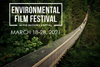
Environmental Film Festival in the Nation's Capital are now accepting submissions for 2021! The 29th Annual DCEFF will be held March 18-28, 2021. We look forward to offering a robust online festival, as in-person theatrical screenings will continue to be pending until safety permits. We welcome film submissions on all topics related to the natural and built environment. Submission Categories Short Films This category includes films with a running time of 40 minutes or less, including credits. Feature Films This category includes films with a running time greater than 40 minutes. Please carefully read the rules and guidelines for submissions posted on FilmFreeway. If you have specific questions about submitting a film to DCEFF, contact samantha@dceff.org. More here: dceff.org/submissions 2021 Festival Deadlines:
|
|
The IVFF 2020 Goes Virtual from Oct 10-17th The International Vegan Film Festival is going virtual for its third annual event. The 2020 festival will take place online with digital screenings, panels, filmmaker Q&As and more from October 10th-17th. Founded in 2018, the International Vegan Film Festival is dedicated to celebrating the vegan ideal: a healthier, compassionate, environmentally-friendly lifestyle that can be achieved through the consumption of plants and animal-free alternatives. “Like many other live events around the world, we've had to adapt to prioritize the safety, comfort, and well-being of our community,” said festival executive director, Shawn Stratton. OVER 25 VEGAN THEMED FILMS HAVE BEEN SELECTED FOR THE 3rd ANNUAL FILM FESTIVAL. THE ONLINE FESTIVAL WILL RUN FROM OCTOBER 10-17th, 2020. FOR A FULL LIST OF FILMS AVAILABLE AS WELL AS TICKET INFORMATION, VISIT: theivff.com ALONG WITH THE FILMS, YOU WILL GET ACCESS TO FILMMAKER Q&As, FILM INTROS AND AWARD PRESENTATIONS. The International Vegan Film Festival (formerly the Ottawa International Vegan Film Festival) is a trailblazing event dedicated to celebrating the vegan ideal: a healthier, more compassionate, environmentally friendly lifestyle that can be achieved through the consumption of plants and animal-free alternatives.
The event will take place on the Eventive platform with the full event schedule and ticket information being available on the festival website: theivff.com |






|
David Attenborough: A Life On Our Planet – A Review The much anticipated "witness statement" from David Attenborough, produced by WWF and Silverback Films, is coming to the cinema screens, for one night on the 28th of September featuring an exclusive conversation with Sir David Attenborough and Sir Michael Palin, and then globally on Netflix from the 4th of October 2020. In more than 90 years, Attenborough has visited every continent on the globe. Now, for the first time he reflects upon both the defining moments of his lifetime as a naturalist and the devastating changes he has seen. Honest, revealing and urgent, David Attenborough: A Life On Our Planet is a powerful first-hand account of humanity’s impact on nature and a message of hope for future generations. The film, which serves as Attenborough’s witness statement for the natural world, will screen in select cinemas across the UK, the Netherlands, Iceland, Ireland, Norway, Sweden, Denmark, Finland, Australia and New Zealand, before being released widely to theatres in those territories. Tickets are on sale now. Audiences watching Attenborough’s story on the big screen will have the unique chance to watch an exclusive conversation between Sir David Attenborough and Sir Michael Palin. This will be available in cinemas only. The legendary broadcasters share a passion for exploring our vast planet and a desire to protect it for future generations. The film has been created by award-winning natural history filmmakers Silverback Films and global environmental organisation WWF. The film will launch on Netflix globally this autumn. Film-makers: Narrator: Sir Dacid Attenborough Film-maker’s Statements: “For decades, David has brought the natural world to the homes of audiences worldwide, but there has never been a more significant moment for him to share his own story and reflections. This film comes at a monumental time in humankind’s history when world leaders make critical decisions on nature and climate. It sends a powerful message from the most inspiring and celebrated naturalist of our time.” Colin Butfield, Executive Producer “I’ve worked with David on many projects throughout my career, but to collaborate on this film, which is so important at this time, has been a real privilege. At 94 years old, his knowledge and insight of the natural world remains as relevant and cherished today as it was the first time he introduced the British public to pangolins and sloths on television. “As we rebuild from the pandemic, Sir David’s reflections and messages of hope feel particularly timely and relevant. He not only addresses why we must urgently mend our relationship with nature, but also offers solutions to ensuring a safe and sustainable future for our planet and its people.” Keith Scholey, Director & Executive Producer Throughout his career, Sir David Attenborough has made hundreds of hours of iconic television, yet A Life on Our Planet is his first feature film. Why did he choose this film to make the move to the big screen, and why now? The film’s producer-director, Jonnie Hughes, explains its genesis. David has witnessed a serious decline in the living world over his lifetime. He has seen the rainforests retreating and the grasslands emptying, and has searched ever harder for species hanging on in hidden corners of the world. He’s observed a downward trend that is set to cause a disaster far more profound and with more lasting impacts than the desolation of Chernobyl – a decline that will have a more limited impact on his life, but will come to define the lives of all those who follow him. He is dedicated to lending his considerable profile to efforts to halt and then reverse this decline, and he’s in a good place to do so. “Saving our planet is no longer a technological problem, it’s a communications challenge,” David has said on several important stages. To bring about the wholesale change required to transition to a sustainable existence on Earth, we all need to hear a new story – a positive, inspiring one in which we take control of our impact and aspire to a future in balance with nature. A key component of David’s efforts to assist in this great communications challenge is this film. In 2014, when we at Silverback Films were working with both WWF and David on the Netflix series Our Planet, WWF calculated that populations of wild animals had declined on average by more than half since 1970. This shocking statistic made real the steady dismantling of the living world that David had become increasingly aware of throughout his career. It quantified the terrifying extent of our impact and qualified that, in addition to climate change, a second red warning light was now flashing on the dashboard of Earth – ‘biodiversity loss’. It also made us all decide we urgently needed to make a single film that broadcast this biodiversity crisis far and wide – David’s witness statement and his vision for the future – a personal account of a story that involves us all. David is clearly troubled by the vision he has. He knows what happens next. We humans will, accidentally, clumsily, destabilise nature. We’ll tip the world into a sixth mass extinction. Nature, our life-support machine, will seize up. We are, it is suddenly clear, involved in an act of self-destruction. Unless we build a new kind of life on our planet. And David’s here to tell us how. Statement from Sir David Attenborough about the COVID-19 pandemic and tackling the Climate and Nature Crisis: “The COVID-19 pandemic has caused, and will continue to cause, immense suffering. If there is hope that can come out of it then that may arise from the whole world having experienced a shared threat and found a sense that we are all in it together. The same unique brains and communication skills that fuelled the development of our civilisations now have access to technologies and institutions that allow all nations of the world to collaborate and cooperate should we choose to do so. “The time for pure national interests has passed. If we are to tackle climate change, enable sustainable development and restore biodiversity, then internationalism has to be our approach. In doing so, we must bring about a greater equality between what nations take from the world and what they give back. The wealthier nations have taken a lot and the time has now come to give.”
The film starts out with David Attenborough in Chernobyl, where he makes a comparison to what happened there following a nuclear disaster to what could happen everywhere should we not heed the many warnings being presented to us now. He speaks earnestly to camera "I am David Attenborough and I’m 93. This is my witness statement.” The film goes on to look back at Sir David's long career as a broadcaster, that is more than sixty years, over which time he has seen incredible and alarming changes in the natural world. The tone and mood of the film is serious and sombre, with David delivering stark facts alongside the beautiful imagery. The message is clear: Time is running out for Our Planet. Perhaps it would be better to say The Planet, as it doesn't belong to us, as a species, we merely inhabit this planet but have learnt to exploit it on a grand scale, very much to its' detriment. The film feels very personal, hard-hitting too. David's oh so familiar, reassuring voice has emotion it it when talking about the issues facing us and the planet. Facts and figures are presented in a very clear and convincing way. There can be no denying. He says things like "If we take care of nature, nature will take care of us" and "We need to rediscover how to be sustainable". He also speak about our over-consumption of animal products saying "Large carnivores are rare in nature because it takes a lot of prey to support each of them. The planet can't support billions of large meat eaters ... there just isn’t the space. If we all had a largely plant-based diet, we would need only half the land we use at the moment." And he said much else ... Listen! Everyone should watch this film and take serious note of David Attenborough's warnings of where we are heading unless we take decisive action now. The climate emergency is very real and we cannot in good conscience ignore it, for each and every one of our own personal actions impact on the future of the planet that we live on. We must do far, far better. This is a very important film. The most important film ever made by David Attenborough in my opinion. But, we all need to listen, and act on what this very respected and knowing elder man is saying. There can be no excuses not to. Am happy to see that he is still hopeful. Visit: www.attenborough.film David Attenborough has started his own Instagram accont: @davidattenborough ... reportedly, this account was the fastest to reach one milllion followers in Instagram's history... It took just four hours according to the Guinness Book of Records! This was his first post: |
|
Extinction: The Facts review – a heartbreaking warning from David Attenborough With an eighth of the planet’s species at risk of dying out, this documentary offered a stark look at the devastation that humans have wreaked, and are wreaking, on the natural world It is hard to absolutely, positively look forward to an hour-long programme about the many varied, catastrophic ways we have ruined the world around us. David Attenborough’s Extinction: The Facts (BBC One)was as upsetting as you might expect. If his earlier Planet Earth series delivered joyous portraits of nature at its most spectacular, here we had beautifully shot footage of monkeys desperately leaping into a river to escape a forest fire, a baby bear looking lost in a ransacked, smoking landscape, and the corpses of killer whales, tangled in fishing nets, rotting on the shore. It was unbearably painful to watch. People who make programmes about the environment are constantly searching for new ways to force us to pay attention, to make sure we resist the temptation to change channel in search of less distressing content. This time they tried making the theme of extinction feel urgent by filtering it through the prism of the coronavirus pandemic. But there is something depressing about this need to persuade people to focus on the imminent extinction of 1m different species by appealing to our self-interest, highlighting how humans will ultimately suffer as a result of the devastation we have brought upon ourselves. “This year, we have been shown we have gone one step too far. Scientists have linked out destructive relationship with nature to the emergence of Covid-19,” a mournful Attenborough said. It’s sad that both the scientists and the film-makers sense the problem of extinction has to be shown to hurt us (in the form of triggering global pandemics that cut a swathe through humanity) before we really care enough to engage. Attenborough’s regretful delivery of the facts only made them worse to hear.
Also read: "David Attenborough’s ‘Extinction’ is so relentless and powerful I’m going to teach it at university" - James Dyke, a senior lecturer in global systems at Exeter University via inews.co.uk While he is no fan of the term, Sir David Attenborough is a national treasure. For over 70 years he has been entertaining and informing us about the wonders of natural world. Life on Earth, first screened back in 1979 revolutionised natural history documentary. Since then Sir David in partnership with the now legendary BBC Natural History unit in Bristol has produced ever more compelling shows. Living Planet, Trials of Life, Blue Planet, Planet Earth, and many more. An embarrassment of riches. But as the years progressed, there was an increasing tension in these flagship natural history shows. Because the miraculous world that they beamed into our living rooms no longer existed.The vast herds of wilderbeast, oceans teaming with fish, endless expanse of tropical rainforests, had all largely vanished... ‘As a Bristol wildlife filmmaker, I’m delighted that ‘Extinction: The Facts’ has finally been made’ By Tom Richards For anyone who feels they’ve been listening to daily news stories on the climate crisis, this probably wouldn’t have been a shocking opening line to a TV documentary. But when it’s the nation’s best-loved naturalist Sir David Attenborough speaking on prime time BBC One, people across the country sit up and pay attention. In Extinction: The Facts, Attenborough took Sunday-evening viewers on a devastating, whistle-stop tour of the planet’s most pressing environmental issues. |
|
Don't look away now: are viewers finally ready for the truth about nature? For decades David Attenborough delighted millions with tales of life on Earth. But now the broadcaster wants us to face up to the state of the planet. Sir David Attenborough’s soothing, matter-of-fact narrations have brought the natural world to our living rooms for nearly seven decades and counting. From Australia’s Great Barrier Reef to the jungles of central Africa, the 94-year-old broadcaster has dazzled and delighted millions with tales of life on Earth – mostly pristine and untouched, according to the images on our screens. But this autumn Attenborough has returned with a different message: nature is collapsing around us. “We are facing a crisis. One that has consequences for us all. It threatens our ability to feed ourselves, to control our climate. It even puts us at greater risk of pandemic diseases such as Covid-19,” he warned in Extinction: The Facts on BBC One primetime, receiving five-star reviews. Clips and graphs showing the spiralling extinction rate were shared widely on social media. Some even pledged to change their diets and live their lives in a different way. “We have to listen to him. And act,” said broadcaster Matthew Stadlen. Wildlife storytellers have long wrestled with how to tell this uncomfortable tale while keeping audiences engaged. Less than two years ago, Attenborough himself said that repeated warnings on the subject could be a “turn-off” for viewers. The thought of a million species at risk of extinction due to human activity was deemed too much for many to bear. But last Sunday night, viewers did not reach for the off button. “I thought the figures would just go off a cliff if I am totally frank,” Jack Bootle, the BBC’s head of science and natural history commissioning, told the Guardian. “What actually happened, to my delight, was the opposite. Viewers rose really dramatically over the course of the hour. So by the end of the hour, it picked up an additional 0.6 million viewers, which is a lot in our book. I think that people couldn’t quite tear themselves away.” |
|
And Prince William is at it too: A Planet for Us All With exclusive access across two years, this film is an intimate portrayal of Prince William, following him as we’ve never seen him before on a global mission to champion action for the natural world and celebrate the pioneering work of local heroes. The Duke of Cambridge reveals that young people hold the key to a more positive future relationship with the environment, and that their determined drive to tackle climate change has made him an optimist. He explains how his mission to give nature a voice has felt even more personal since he became a father and that he wants to leave behind a better world for future generations. Working together to protect the planet, he believes that local communities have the power to protect and repair the natural world on which we all depend. The challenge is daunting but this film is a message of hope driven by Prince William’s own optimism. He believes that community action is a vital part of the solution and that working together to protect nature – from the smallest moth to the largest elephant – each and every one of us has the power to protect and restore our planet. Filmed at a time of unparalleled change for everyone, the documentary follows Prince William from Africa to Asia, from London to Liverpool and to the Sandringham Estate, charting his journey as the world has awoken to the urgent need to restore our planet. It shows The Duke as he has developed his lifelong passion for African conservation into a global leadership role on the environment. We see him join conservation heroes great and small: from Sir David Attenborough to children and young people protecting the natural world close to home. The film begins at The Sandringham Estate. Prince William grew up feeling a deep connection with the outdoors and explains that it’s a connection he now shares with his own children. At an event in Birkenhead, the Duchess of Cambridge names a new ship after Sir David Attenborough, before the couple meet with him privately afterwards and discuss their hopes for finding solutions to the climate change crisis. The Duchess of Cambridge tells him: “The children were very upset that we were coming to see you and they weren’t coming. They are massive fans of yours!” Prince William adds: “Every generation, you know, after yours, David, has grown up listening and seeing all the things that you’ve shown them. And, hopefully, each generation listens a little bit more.” Sir David shares his optimism: “The public is becoming extraordinarily well informed it seems to me. Kids know an awful lot now about ecology and what’s happening with the world. It’s remarkable.” In Liverpool, Prince William makes a surprise visit to meet a group of children determined to make a difference to the planet. They are in the process of building a huge bug hotel, which they have named Bugingham Palace. After discussing the importance of the insects on the environment, the children are keen to quiz the Duke about some other pressing subjects - including whether his children can be cheeky and whether he is able to do the floss dance! Back at Sandringham, Prince William explains that on the estate they are trying to boost the numbers of insects by planting trees in amongst the barley and wheat, as evidence has shown that the insects in the trees protect the crops from pests and reduce the need for pesticides. Prince William’s passion for conservation started in his youth when he visited Africa and the documentary follows him as he goes back there and visits rhinos in Tanzania. As he feeds a carrot to a rhino called Deborah, Prince William talks about poaching and his fear of rhinos and elephants disappearing forever. He says: “People might see them and think it’s a big tank, a big hulk of an animal, with a big horn, but they are incredibly vulnerable. They have brilliant eyesight and people will take advantage of that and they want this horn, which is affectively nail, and that is all it is, it’s fingernail. This is where the horn belongs, on a live rhino and that’s where it should stay.” Prince William is visibly moved as he visits a heavily-guarded secure ivory store in Tanzania where 43,000 tusks with a street value of £50million have been impounded. He says: “It’s a mind blowing number of tusks, it really is. You can’t get your head around it.” Back in London, Prince William talks about his trip to Tanzania in a speech at the Illegal Wildlife Trade Conference before he and The Duchess of Cambridge visit a beach in Anglesey, Wales, to help with a litter pick. In Ullapool in the Scottish Highlands, two schoolgirls excitedly meet Prince William on a video call so they can tell him the work they have been doing to protect their local ocean wildlife which is being damaged by trawlers dredging the seabed for scallops. After a successful campaign to parliament, the area is now protected and all scallop fishing must be done by hand. Prince William has a video call with a local fisherman to ask about his livelihood and the impact that COVID-19 has had. The Duke and Duchess of Cambridge are seen on a trip to Pakistan where they are shown the effects of global warming at the Hindu Kush mountains where glaciers are melting at record speed which could eventually lead to a shortage of fresh water. The Duchess of Cambridge says: “Everyone’s asking all of us to protect the environment and what comes first is actually just to care about it in the first place. And you’re not necessarily going to care about it if you don’t know about it and that’s why we thought it was so important to come here.” Prince William adds: “It’s a huge environmental and humanitarian disaster. And yet, we still don’t seem to be picking up the pace and understanding it quick enough. And I think the young are really getting it. And the younger generation are really wanting more and more people to do stuff and want more action. “And we’ve got to speed the pace up. We’ve got to get on top of it and we need to be more vocal and more educational about what’s going on.” Back in the UK, Prince William goes kayaking at a central London nature reserve which has been created at an 11 acre reservoir in Hackney. The area used to be out of bounds to the public, but is now a tranquil space which is home to a wealth of wildlife including kingfishers, dragonflies and rare moths. Prince William talks to the people who have developed the area and those who use it. At the end of the programme, Prince William says that he believes that 2020 and the corona virus pandemic has given people a chance to take stock of what is important. He says: “I can’t talk about Coronavirus without mentioning how many people sadly lost their lives and how terrible and sad that all is. But I think the tiny little ray of light, if there is any ray of light from this, is that is allows us to take stock and to refocus our priorities. I’ve been really heartened by what I’ve been hearing from other people and how they’ve decided to appreciate nature and experience it and see all the things that they never thought they would. “Someone has to put their head above the parapet and say, I care about this. To have the belief that if we all work together, we can make a difference.” Who could disagree with that!?
Watch on ITV Hub: itv.com/hub/prince-william-a-planet-for-us-all/10a0440a0001 |
|
Do you share SCOTLAND: The Big Picture's Rewilding Dream? Despite its beauty and drama, Scotland has become a nature-depleted nation. Our natural woodlands cover just 4% of their original range, many species that were once prolific now teeter on the edge, and others have been hunted to extinction. It’s time to rewrite nature’s story. Recent months have forced us all to re-evaluate our dependence on nature’s rich tapestry, and as we begin to consider a new future, we can no longer bury our heads in the sand and ignore the global threats of climate breakdown and biodiversity loss. Business as usual is not an option. You are invited to share SCOTLAND: The Big Picture's Rewilding Dream: The Big Picture DREAM is a vision for a future where abundance and diversity of life is returned to Scotland’s land and seas, to benefit nature, climate and people. We call it rewilding. The green shoots of rewilding are already emerging. In places, young forests are on the march, sea eagles are once again soaring high, ospreys and pine martens have bounced back, and beavers are rejuvenating Scotland’s wetlands. These remarkable stories show what is possible. SCOTLAND: The Big Picture is a dynamic charity that works with a diverse range of people to make rewilding happen. Today, we are asking you to help realise our DREAM, and to enable Scotland to become a world-leading rewilding nation, where nature in all its complexity is reawakened. Let’s rewrite nature’s story. Together. Find out more and support here: scotlandbigpicture.com/donate |
|
Buying a camera for filming wildlife – Wildeye Beginners guide to buying a video camera for wildlife filmmaking Introduction One of the most common questions we get asked here at Wildeye is “what camera should I buy to film wildlife”. Sadly there is no easy answer. In this post, we will explain the pros and cons of different types of cameras and clear up some of the technical questions you may have. Filming Wildlife Whether filming as a hobby or professionally I’m going to assume that you want to achieve the very best results within your budget. Budget is the first thing you want to think about. I doubt you’d walk into a car dealership to buy a car without really knowing what you want to spend, yet we often hear from first-time buyers that they don’t have a budget in mind. Whilst this article is about cameras there are other considerations that will quickly eat into your budget and those include a tripod, microphones, batteries and memory cards. We won’t go too in-depth here about the accessories as we’ll cover those in another post but do bear this in mind. It makes no sense to spend all your money on a super high-quality camera only to put it on a shaky old tripod that ruins your fabulous 4K shots. Once you’ve decided what you can spend on a camera kit you can then start to decide upon what type of camera you’ll buy. I’ve split cameras into three main classes. They are a video DSLR, a typical stills style photography camera with removable lenses that also shoots video. Camcorder, a typical all in one camera designed for quick and easy operation. Finally, we have Professional video cameras – typically (but not always) owned by individuals who make their living from being a wildlife camera operator. DSLR / Mirrorless Video DSLRs and Mirrorless are hybrid stills cameras and are a very popular option with first-time camera buyers as not only do they shoot video but also take high resolution stills photographs. There is a wide range of cameras to choose from with some newer models being designed foremostly as video cameras. The compact form factor of these cameras often means that you can get away with smaller, lighter tripods, gimbals and other accessories. They are a joy to travel with and don’t appear at all conspicuous as larger cameras can do. DSLR cameras often have larger sensors than camcorders and due to this, they offer a look that closely resembles large Hollywood movies – think backgrounds out of focus (shallow depth of field). Another advantage of these larger sensors is dynamic range (where the camera can see more details in the black and white parts of the image at the same time) and also low light abilities. A notable camera from this category is the older sony A7S mark II which was used on Planet Earth 2 and Blue Planet 2. Whilst it was not used to film all the footage they were used on certain sequences and considered good enough to be included in the final program. DSLR cameras accept interchangeable lenses which means you can easily vary the angle of view. Buy a wide-angle lens for landscapes and establishing shots and a telephoto lens for close-ups of animals. You can buy most DSLR and mirrorless cameras in a kit with a “standard” lens, extra lenses can be expensive! Read more: wildeye.co.uk/buying-a-camera-for-filming-wildlife |
|
A Lockdown Perspective, by David Lindo 2020 will no doubt go down as the year when the ebb and flow of the world was paused. And it is set to become one of those historical periods that, in years to come, gives rise to the inevitable question: where did you spend lockdown? However, 2020 will also be remembered for reasons other than the pandemic, ones just as unpleasant as Covid-19: for there were reminders of a profoundly unreasonable and unjustified inequality that still persists in our society, namely racism. In case you, the reader, need reminding then just recall the altercation that befell Christian Cooper, a black birder threatened in New York’s Central Park by a female white dog walker; and the killing of George Floyd that sparked a tidal wave of reaction across the world. Although distant geographically, these injustices also impacted the space that we all inhabit: a world that, on the surface, is populated by binocular-clad people whose only wish is to enjoy life through the medium of observing nature. Read more: birdsonthebrink.co.uk/blog/a-lockdown-perspective-by-david-lindo |
|
Interview: Wildlife filmmaker Tania Esteban on her ultimate wildlife experience Tania Esteban shares how a love of Sir David Attenborough and a zoology scholarship lead her to her filmmaking career. Wildlife filmmaking is one of the most exciting careers you can pursue, with opportunities to see and film some of the world's rarest creatures in incredible locations. Tania Esteban decided from a young age that she wanted to pursue a career in wildlife filmmaking – and has never looked back since. Tania Esteban is part of 22 women who are partnered with the Women Who Photo & Film campaign, which was originally launched by The Photography Show & The Video Show in 2018. This year, Tania and the other Women Who Photo & Film ambassadors will be hosting an informal networking session on Sunday 20 September from 17:00 BST onwards. 01. Can you tell us how you got into wildlife filmmaking? Being raised in the countryside of Andalucía, Spain, I've always been hugely passionate about wildlife, photography, film and storytelling. I've wanted to work in natural history filmmaking ever since I was very young. I grew up watching natural history documentaries with Sir David Attenborough and was dazzled by the incredible imagery of birds of paradise and high-speed shots of cheetahs hunting. Seeing the 10 minute 'making of' sections at the end of each program made me realize that I could pursue a career in this and combine my love of the visual arts with my love of science. However, what was most important to me was to try and make even the smallest of differences to our planet and help encourage others to care about the earth and its incredible biodiversity. I got a scholarship to study zoology at university and then I subsequently got a masters in wildlife filmmaking in Bristol. There, I joined the radio, filmmaking and photography societies so that I could begin to create a portfolio of work. I then got my CAA drone license and began work as a junior researcher and camera assistant while I was studying for my MA. My most recent work was on BBC Big Cats and then as a researcher on Wild Cities. I'm now at Silverback Films working on a new 8K BBC Landmark series. I also produce and do freelance camerawork for Panasonic and Atomos as one of their ambassadors, creating exclusive content for their channels in the UK and Europe. |
|
Josh Dury joins fight against light pollution Twenty-three-year-old astronomer and film-maker, Josh Dury, from Compton Martin, has been campaigning against the ever-growing problem of light pollution in our night skies. Josh’s interest in astronomy began at the age of seven from watching science fiction tevevision programmes. His curiosity only grew further when, in 2015, he witnessed the solar eclipse from his home in the Mendips. Speaking of his growing interest, Josh told The Journal: “After seeing the solar eclipse, I made it my ambition, two years later, to travel to the US to witness the Total Solar Eclipse. I have also been lucky enough to observe the Northern Lights in Iceland.” Josh made the journey last year to the Atacama Desert, in Chile, to see the darkest sky in the world. Since then, he has made it his aim to promote the effects that light pollution is having all across the world, but particularly focusing on the night skies in Somerset. Gaining inspiration from his knowledge of wildlife filmmaking at The Natural History Unit and since completing a Photography Degree at Bristol UWE, Josh has produced a film called ‘Back to the Light’, which aims to raise awareness to the implications of light pollution on the natural world and ‘its impact to astronomers, wildlife conservation and human health.’ Read more: mnrjournal.co.uk/article.cfm?id=118968 Watch, from Josh: Back to the Light - a natural history of the night-sky that identifies the subject of light pollution; its impact to astronomers, wildlife conservation and human health. This short film was produced to raise public awareness of the Starlink Constellation and voice the concerns of the international astronomy community for mega constellation projects. Starlink is a satellite constellation being launched by American Company, SpaceX to provide global internet services to the most remote parts of the world. Because of the sheer quantity and global coverage of satellites, astronomers from around the world are concerned how these satellites will obstruct their views of the night-sky and the foreseeable universe. We are amidst a climate emergency. Light pollution continues to shine upwards affecting the astronomers ability to look up at our open window of the universe and now these satellites are further contributing to the degradation of the night-sky and the natural world. This film was a joint worldwide collaboration effort of astronomers to voice their concerns of how the night-sky will change within the next 5-years - to protect the night-sky for future generations.
Josh's Newest Venture: Space4All Josh has also been busy setting up an astronomy organisation called Space4All which aims to actively promote practical astronomy and to engage members from all backgrounds. Check out and follow the associated socials: twitter.com/Space4All_UK, facebook.com/Space4AllUK & instagram.com/space4alluk |
|
PREHISTORIC Animals Call HISTORIC Town Home! Filming The Storks Of Alcala De Henares from Ewan Wilson He says: "OK, so I have moved to Spain and the fist mission on my mind was these incredible animals. The white storks of Alcala have been nesting on the roofs of the town for over 500 years, there presence is so powerful here that they have replaced the swan as the towns logo! In this video I will be learning about the incredible lifestyle of these birds and capture on camera how they have adapted to call Alcala there home."
"I hope you enjoyed todays video! If you did please consider subscribing and to keep up to date check out my other social medias!" Instagram - www.instagram.com/true_naturetv |
 |
THIRTEEN's Nature Highlights New Wildlife Behavior and Rescue Stories in Season 39, Wednesdays at 8 p.m. Beginning October 21 on PBS Features new documentaries about the Australian bushfire rescues, pandas, primates, pumas and more iconic species Preview Season 39 at pbs.org/nature THIRTEEN's Emmy- and Peabody Award-winning series Nature premieres new episodes Wednesdays at 8 p.m. beginning October 21 on PBS (check local listings), pbs.org/nature and the PBS Video app. Season 39 starts with Pandas: Born to be Wild, which follows two Chinese cinematographers as they trek through the steep trails of the Qinling Mountains to catch a glimpse of wild pandas and learn more about startling new behaviors of one of the world's most endangered animals.. From Australia to Africa to the Alps, Nature's 39th season travels the globe to film never-before-seen animal behavior alongside crucial conservation stories of at-risk species. Experience from your screen the wildlife across the globe, from pumas in the Patagonian Andes, to sharks around the volcanoes of Hawaii, to ibexes in the European Alps. Witness the grueling, emotional volunteer efforts to rescue wildlife survivors from Australia's devastating bushfires earlier this year. A three-part series on the primate family delves deeper into lesser-known species, such as the slow loris and the tarsier, than ever before. Nature gets in the holiday spirit with a trip to Lapland, a region in northern Finland, the fabled land of Santa Claus and actual home of reindeer, wolverines, bears and more. |
|
Patagonia’s ‘Public Trust’ film asks US Americans to Fight For Their Public Lands On September 25, Patagonia’s “Public Trust” documentary debuts on YouTube for the public. It’s been featured a few times as an exclusive screening at digital film festivals since the Spring, but soon it is available for all to watch. Produced by Robert Redford and Yvon Chouinard, it’s a moving tribute to the importance of public lands, a reminder that they’re public lands, belonging to all, and a rallying call to fight the interests that seek to exploit them.
Visit: patagonia.com/films/public-trust
& patagonia.com/actionworks/campaigns/public-lands-waters-threat See the full film here on September 25, 2020:
|
|
David Attenborough Awarded Indira Gandhi Peace Prize Congress leader Sonia Gandhi described David Attenborough as one of Nature's "most staunch conscience keepers" for over half a century. Former Indian Prime Minister Manmohan Singh on Monday conferred the Indira Gandhi Peace Prize on British broadcaster David Attenborough at a virtual event. Congress President Sonia Gandhi was also present during the online award function. She described David Attenborough as one of Nature's "most staunch conscience keepers" for over half a century. David is also the brother of actor Richard Attenborough. "David is already well known to us all through his prodigious creativity in educating the humankind with brilliant films and books about the natural world. And he has, of late, been the most sensible voice warning us that we, more than anything else, are responsible for the accelerating threat to the environment on our planet," Sonia Gandhi said in her speech. "When environmental protection has become all the more imperative, when climate change and continued loss of bio-diversity is threatening livelihoods and public health, indeed life on earth, there could not have been a more appropriate choice for an award in her name than Sir David Attenborough," she said. Accepting the award for the year 2019, Attenborough said, "We have to change from being nationalists to being international". Read more: ndtv.com/india-news/british-broadcaster-david-attenborough-awarded-indira-gandhi-peace-prize-2291928 |
|
David Attenborough wins an Emmy for Outstanding Narrator The 94-year-old broadcaster has nabbed his third consecutive Emmy win for Outstanding Narration. David Attenborough has added yet another gong to his collection after winning an Emmy for his work on BBC America documentary Seven Worlds, One Planet. Attenborough’s win during the first night of the Creative Arts Emmys marks his third consecutive award for Outstanding Narration, having won in previous years for his work on Our Planet and Blue Planet II. This year, the 94-year-old broadcaster beat out the likes of A-listers Lupita Nyong’o (Serengeti), Chiwetel Ejiofor (The Elephant Queen), Angela Bassett (The Imagineering Story) and professional athlete Kareem Abdul-Jabbar (Black Patriots: Heroes of the Revolution) for the award. Read more: radiotimes.com/news/tv/2020-09-15/david-attenborough-wins-emmy-award |
|
Sir David Attenborough and BBC Studios Natural History Unit return to the field Award winning team assemble for the first time on location since March to resume filming for ground-breaking BBC One landmark series The Green Planet. Sir David has recently conducted two shoots for The Green Planet, one in Cambridge and one in East Sussex. In this image is Sir David is using specialist microphones to listen to the sound of water moving in the xylem tubes within a tree at Pashley Gardens, East Sussex The Pashley Gardens shoot took place over one day following very strict Covid-19 guidelines. The original shoot was due to take place in May. From: bbcstudios.com/news/sir-david-attenborough-and-bbc-studios-natural-history-unit-return-to-the-field |
|
"American environmentalism’s racist roots have shaped global thinking about conservation" by Prakash Kashwan The United States is having a long-overdue national reckoning with racism. From criminal justice to pro sports to pop culture, Americans increasingly are recognizing how racist ideas have influenced virtually every sphere of life in this country. This includes the environmental movement. Recently the Sierra Club – one of the oldest and largest U.S. conservation organizations – acknowledged racist views held by its founder, author and conservationist John Muir. In some of his writing, Muir described Native Americans and Black people as dirty, lazy and uncivilized. In an essay collection published in 1901 to promote national parks, he assured prospective tourists that “As to Indians, most of them are dead or civilized into useless innocence.” Acknowledging this record, Sierra Club Executive Director Michael Brune wrote in July 2020: “As defenders of Black life pull down Confederate monuments across the country, we must…reexamine our past and our substantial role in perpetuating white supremacy.” This is a salutary gesture. However, I know from my research on conservation policy in places like India, Tanzania and Mexico that the problem isn’t just the Sierra Club. American environmentalism’s racist roots have influenced global conservation practices. Most notably, they are embedded in longstanding prejudices against local communities and a focus on protecting pristine wildernesses. This dominant narrative pays little thought to indigenous and other poor people who rely on these lands – even when they are its most effective stewards. Including: "Local communities are often written out of popular narratives on nature conservation. Many documentaries, such as the 2020 film “Wild Karnataka,” narrated by David Attenborough, entirely ignore local Indigenous people, who have nurtured the natural heritages of the places where they live. Some of the most celebrated footage in wildlife documentaries made by filmmakers like Attenborough is not even shot in the wild. By relying on fictional visuals, they reproduce racialized structures that render local people invisible." |
|
Love Nature preps “After the Wildfires” Blue Ant Media-owned wildlife and nature platform Love Nature is exploring the aftermath of the wildfires that ravaged Australia in 2019 with the commission of After the Wildfires. Produced by Sydney-based Northern Pictures, the one-off, hour-long special (pictured) will center on the animals that struggled to survive the devastating fires and those who gave everything to save them. The project will feature “dramatic” footage of the fires as they spread across 20 million acres, alongside first-hand stories of the ongoing recovery efforts. After the Wildfires is a coproduction between Australian pubcaster ABC, Canadian pubcaster CBC and Blue Ant International. Karina Holden exec produces for Northern Pictures alongside Love Nature’s James Manfull. After the Wildfires will premiere this November across Love Nature’s online and linear platforms, reaching 200 million homes globally. |
|
Love Nature greenlights buzzy doc “A Bee’s Diary” Blue Ant Media’s Love Nature has commissioned a new feature documentary from German prodco Taglicht Media. A Bee’s Diary, a 90-minute film which follows two honeybees from birth to death, is produced by Taglicht Media in association with CBC and WDR Germany. It will premiere on Love Nature’s global linear and streaming platforms this fall, followed by a U.S. premiere on the Smithsonian Channel and a UK premiere on Sky Nature. The doc is written, directed and produced by Dennis Wells, with Niobe Thomson serving as producer. Executive producers are Love Nature’s James Manfull, Smithsonian Channel’s Tria Thalman and David Royle, and Taglicht’s Berndt Wilting. Production on A Bee’s Diary, which took place in Germany over two years, recently wrapped. Wells used 4K technology to make the film as well as proprietary macro-imaging technology and CGI to create the doc, with images accompanied by first-person narration. More here: realscreen.com/2020/09/17/love-nature-greenlights-buzzy-doc-a-bees-diary |
|
Giant Screens Get Sharper With the launch of the new ACHTEL 9x7 camera, the world’s largest cinema screens are about to get sharper. Much, much sharper. The ACHTEL 9x7, designed specifically for IMAX and Giant Screen production, has almost twice the resolution of industry-leading RED Monstro cameras and over twenty-six times their maximum data rate, or bandwidth. But it’s not just in terms of resolution that this extraordinary, new camera leads the way. Shooting natively in the 4:3 aspect ratio of the giant screen industry, unlike the cameras of most other potential competitors, it will no longer be necessary to compromise image quality, and significantly increase post-production costs, with ‘shot extensions’ or by stitching together multiple shots in order to create full-sized images of the necessary proportions. And, by keeping every pixel at maximum, RAW quality all the way from its state-of-the-art BSI sensor to the camera recorder, the quality of the final images are unmatched by any other camera on the market today. This latest, Back-Side Illuminated sensor design features true Global Shutter readout, Wide Colour Gamut, high colour accuracy, low noise, high light sensitivity and high frame-rates - all features essential for today’s best, big-screen movies. And because, uniquely, it’s able to record uncompressed, RAW images at an impressive 10 GB/s (about twice the maximum data rate of today's Thunderbolt 3), the ACHTEL 9x7 is able to preserve the most minute of details in shadows and mid-tones as well as highlights. The absence of compression, a compromise we’ve all come to expect and live with since the advent of digital cinematography, means that no details are lost, and gradations of colour and luminance are as smooth as technically possible. Australian cinematographer and camera inventor, Pawel Achtel ACS, is no novice when it comes to inventing and producing high-end camera technology. His company’s DeepX and 3Deep camera systems for underwater cinematography featured revolutionary designs, using carefully tested and matched Nikonos underwater lenses mounted on RED cameras. And, the company's patented 3D beam-splitter was recently used extensively on James Cameron’s latest Avatar sequels, in New Zealand, prompting the legendary Hollywood director to write that the results were the best underwater 3D images he’d ever seen. By far. “Finding lenses sharp enough for the ACHTEL 9x7 is one of our biggest problems at the moment,” Pawel Achtel said from his Sydney workshop this week. “We’re constantly testing all the best lenses on the market today and are finding that only a few, select lenses maintain the maximum quality attainable with this camera.” The camera head - which provides the option of all popular lens mounts - is remarkably small even by today’s standards, measuring just 80 x 80 x 70 mm and, because it can be placed up to 20 metres away from the rest of the camera (connected only via fibre optic cable), the ACHTEL 9x7 - capable of shooting at up to 70 frames/second - can go where few giant screen cameras have gone before. The first ACHTEL 9x7 cameras are available for purchase and production hire. Purchase prices start from AUD $200k. Enquiries: 9x7@24x7.com.au Website: achtel.com/9x7 Promo: |
|
Natural history report: Rising to the challenge While all genres of non-fiction production have been impacted by global lockdowns stemming from the COVID-19 pandemic, natural history — the genre that brings the world to your living room or laptop — has been especially difficult to produce. But technology, coupled with innovation and fresh talent, is paving the way ahead for networks and producers. By the end of March, full or partial lockdowns had been implemented across more than 100 countries worldwide in an effort to curb infections of the novel coronavirus. Six months later, as of this writing, COVID-19 cases have surpassed 29 million globally. The World Health Organization continues to caution nations about the risks of opening back up too quickly and imposed travel restrictions remain in place across much of the globe. As a result, natural history productions have been forced to cultivate creative ways of churning out new content, and in the process, are handing the genre a crucial lifeline. While wildlife producers have been struggling with the same challenges as most across the unscripted genre during this time of upheaval, organizations such as National Geographic have continued to fortify their pipelines with greenlights. The pay-TV channel has been working in tandem with parent company Disney and its production partners around the world to establish on-set health and safety protocols, affording the American cable network the opportunity to get nearly 60% of its productions into the field. “We’re working with smaller crews and thinking about the ways in which new remote, autonomous and lighter camera technologies will allow us to still capture epic scale and extraordinary behaviors,” Geoff Daniels, Nat Geo’s EVP of global unscripted entertainment, tells Realscreen. “It’s [allowed us to] bring in new, local voices and more diverse and inclusive storytellers … and a new generation of passionate storytellers that can not only speak directly to their local community, but also to the world at large.” Read more: realscreen.com/2020/10/02/natural-history-report-rising-to-the-challenge |
|
BBC Gives Away 16,000 Sound Effects for Free! By almost every sound designer, the BBC Sound Effects Library has been regarded as the “must have” sound library. Now, over 16,000 sound effects from BBC Sound Library have been made available to download for free in WAV format for non-commercial uses. Best Sound Effects for Free The BBC Sound Effects Library is well known among sound designers and sound engineers. The collection contains sound effects from historical content to the recent productions, covering almost every aspect of sound effect for Film and TV production needs. Under the Research and Education Space (RES) Platform, The BBC released part of their archive of sound effects for free download. There are 16,000 Sound Effects available as high resolution WAV Format (44.1KHz, 16Bit CD Standard) to download for personal, educational, or research purposes. Here you can find the detailed terms of the RemArc Licence. There are not only practical sound effects like “Applause,” “Bells,” or “Cars,” but also some fascinating sound effects such as “fizzy liquids” or “one bluebottle insect circling at 7ft – 1972″). You can check out the entire sound library yourself here. Read more: cined.com/bbc-gives-away-16000-sound-effects-for-free |









|
New documentary sheds light on Ethiopia’s Elephant crisis Ethiopia has already lost its black rhino, now it is losing its elephants The new documentary film “Ethiopia’s Elephant Crisis,” by award-winning American journalist and filmmaker Antoine Lindley, brings to the forefront the challenges that Ethiopia faces in wildlife conservation, especially its efforts to save its endangered elephants. Commissioned by Ethiopian Wildlife Conservation Authority with support of UNDP and GEF , the ground breaking 40-minute documentary film follows filmmaker/journalist Antoine Lindley to some of the most remote parks of Ethiopia to tell the story of the challenges and conservation efforts to save what could be Ethiopia’s last elephants. Since the 1980’s Ethiopia has lost 90% of its elephants. Today, Ethiopia’s elephant population is estimated to be less than 1,900; that number is rapidly dropping due to poaching for ivory, habitat loss, and human-elephant conflicts. “I made this film to give a voice for Ethiopia’s endangered elephants,” said filmmaker Antoine Lindley. “It is one thing to read or hear about the challenges facing elephant conservation in Ethiopia, but to actually document it through film is a powerful visual tool that I hope will bring more awareness and solutions.” Read more: addisstandard.com/news-new-documentary-sheds-light-on-ethiopias-elephant-crisis Watch the film:
The ground breaking documentary film follows filmmaker and journalist Antoine Lindley to some of the most remote parks of Ethiopia to tell the story of the challenges and conservation efforts to save what could be Ethiopia’s last elephants. Commissioned by Ethiopian Wildlife Conservation Authority (EWCA) with support of UNDP and GEF. Directed and produced by Antoine Lindley – Official Facebook: facebook.com/antoine.lindley |
|
Wildlife producer Nick Stringer joins Passion Planet Emmy Award-winning prodco Passion Planet, a division of London factual producer Passion Pictures, has appointed Nick Stringer to the role of producer and director. An award-winning wildlife producer and director with more than two decades of experience, Stringer will be tasked with working across Passion Planet’s specialist factual and natural history output. He is currently in development on a handful of ocean-focused projects that make up the company’s forthcoming series and productions. “Nick gets his hands dirty both in the field and in the edit in order to tell wonderful natural history stories – he is an asset to the team,” said Passion Planet CEO Nick Southgate. Stringer has previously spent more than 20 years in the field working as a director for British documentary studio Big Wave Productions. His past notable production credits include The Dolphins of Shark Bay and Turtle: The Incredible Journey. Read more: realscreen.com/2020/09/24/wildlife-producer-nick-stringer-joins-passion-planet |



|
Teenage British activist Mya-Rose Craig stages climate protest on Arctic ice floe ABOARD ‘ARCTIC SUNRISE’ (Reuters) - Like many of her generation, Mya-Rose Craig feels strongly that adults have failed to take the urgent action needed to tackle global warming and so she has headed to the Arctic Ocean to protest. Armed with a placard reading ‘Youth Strike for Climate”, the 18-year-old British activist is staging the most northerly protest in a series of youth strikes worldwide. The strikes, made famous by Swedish campaigner Greta Thunberg, are resuming after a lull caused by the global coronavirus pandemic to draw public attention back to the threat posed by climate change. “I’m here to... try and make a statement about how temporary this amazing landscape is and how our leaders have to make a decision now in order to save it,” she told Reuters Television as she stood with her placard on the edge of the Arctic sea ice. Read more...
|
|
Free 'Netflix For Wildlife Documentaries' Streaming Service Is Launching This Autumn - The WaterBear Network A new streaming service dubbed the 'Netflix for wildlife documentaries' is launching this autumn. You can see what it's all about here: The WaterBear Network will be home to original content and curated documentaries about the planet we inhabit. As well as entertaining and informing viewers, the 'innovative' platform aims to empower people to turn intention into action through a range of integrated features. For example, if you are watching a documentary about leatherback turtle conservation efforts in Costa Rica, the service can simultaneously point you in the direction of relevant charities, organisations, volunteering opportunities and more. |
|
Terra Mater, WildBear projects part of PBS ‘Nature’ fall line-up American pubcaster PBS’s long-running natural history documentary strand ‘Nature’ has unveiled its programming line-up for this autumn, with Pandas: Born to be Wild (pictured) and Australian Bushfire Rescue highlighting the season. The 39th season of ‘Nature’ will embark on a global journey to film never-before-seen animal behaviors and conservation efforts for at-risk species. The latest season kicks off Oct. 21 at 8 p.m. ET/PT with the premiere of Pandas: Born to be Wild, from Terra Mater Factual Studios and Mark Fletcher Productions, in association with Thirteen Productions for WNET. Produced and photographed by Jacky Poon and Yuanqi Wu, the series will seek to explore – with filmmakers, scientists and rangers – the secretive world of wild pandas in China’s Qinling Mountains. Filmmaker Max Bourke’s Australian Bushfire Rescue will follow, airing on Oct. 28. The doc provides an intimate look at those who have rescued and cared for the animal survivors – from kangaroos, koalas and wombats – of Australia’s 2019 bushfires. It is narrated by Anja Taylor and produced by WildBear Entertainment and Thirteen Productions for WNET, ZDF/ARTE and ZDFE. Bettina Dalton executive produces alongside producer Dr. Holly Trueman. Read more: realscreen.com/2020/09/03/terra-mater-wildbear-projects-part-of-pbs-nature-fall-line-up |
|
A deep dive into the PBS science and wildlife fall slate American pubcaster PBS is using its Fall 2020 slate as an opportunity to explore how humans are helping restore the planet, while also diving deeply into the challenges facing the Earth and its inhabitants in the immediate and near future. The upcoming slate will present stories of scientists, researchers, activists and individuals seeking creative solutions to the planet’s most pressing issues. The roster of science and natural history programs will also focus on the challenges in combating climate change and the “visionary efforts” of humans to help nature heal. “We are really intentional in how we program things. We’re really trying to present a very broad understanding of the environment,” says Bill Gardner, VP of general audience programming and development at PBS. “We really focus on solutions and positive stories where we can exist [with the environment] in a symbiotic way. “This challenge we’re facing is for real, but hope is not lost and it rests in our hands.” Read more: realscreen.com/2020/09/25/exclusive-a-deep-dive-into-the-pbs-science-and-wildlife-fall-slate |
|
VMI Expands London Facility post lock-down "It might seem a strange thing to do in such uncertain times but VMI has taken the opportunity of the lock-down to expand its London operation to build a third camera test room, more storage and a larger green-room/recreational area. We are still being mindful of social distancing measures and the need for good hygiene (notice the mop visible in the kitchen!) but all visitors agree that the new layout works really well and is a real improvement. Our new third test room is already in use and has been used to prepare several drama and commercials productions already." Barry Bassett Visit: vmi.tv |
|
Webcast makes the connections between wildlife trade and the coronavirus pandemic - EIA Do you know how the illegal wildlife trade and the coronavirus pandemic are connected? You can find out more about the global picture and China’s role in it for yourself in this new webcast co-hosted by EIA and Asia Society. Illegal wildlife trade is worth an estimated $20 billion a year but until recently it’s largely been treated as a low-priority issue. However, initial speculation that COVID-19 may have been linked to wildlife trade and mounting concerns over future pandemic risk have spurred a renewed focus on wildlife trade in China and other countries around the world. In this special webcast, EIA campaigner Aron White discussed the key issues with Nadya Hutagalung, UN Environment Ambassador, Lixin Huang, former president of the American College of Traditional Chinese Medicine, and Sarah H Olson, Associate Director for Epidemiology for the Wildlife Conservation Society Health Programme. |
|
Amazon Deforestation Driven by Animal Farming – Drone Footage Investigators visited the state of Pará, North Brazil in September 2019 and filmed aerial drone footage showing the devastating effects that deforestation driven by animal agriculture is having on the Amazon rainforest. The fires raging in the Amazon are being purposely lit to clear land for cattle farming and soy cultivation. The majority of soy grown in Brazil (and globally) is used to feed farmed animals including pigs, chickens and fish raised for their flesh, as well as cows used for dairy and hens farmed for their eggs. Brazil is the world's largest exporter of both beef and soy.
|
|
Greta Thunberg Documentary Debuts on Hulu This November Hulu documentary I Am Greta aims to tell the in-depth story of the vegan climate activist’s life. New Hulu documentary I Am Greta debuted this month at the 77th annual Venice Film Festival. Created by filmmaker Nathan Grossman, the documentary follows the young vegan activist from her initial one-girl climate strike in front of the Swedish parliament—when she ditched school to bring awareness to the climate crisis—to her influential role as the voice of global movement Fridays for Future. The documentary details Thunberg’s life from 2018 to 2019, including her two-week journey across the Atlantic in a racing yacht and follows the now 17-year-old as she writes, and delivers, some of her famous speeches, including at the United Nations.
Read more: vegnews.com/2020/9/greta-thunberg-documentary-debuts-on-hulu-this-november |






For more Vegan Film News, visit: wildlife-film.com/vegan.html





Find a Wildlife Film Freelancer Find a Wildlife Film Organisation
|

























































Please send in YOUR news for the next issue to the editor: news@wildlife-film.com |
Disclaimer: Wildlife Film News publishes information and opinions as a service to its readers. Wildlife-film.com |

