 Wildlife Film News
Wishing all members and subscribers a happy & safe festive period ... Here's to a much improved 2021 ... See you on the other side!! |




 |
Welcome to our Newest Full Members! |
|
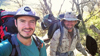
Kimen: The Natural World – Producer/Cameramen Pedro Leon Juliá and Juan Marcos Fernández are a small production team based in Argentina, currently working on a nature documentary in Neuquén Province, Patagonia. They say: "It is our belief that contemplating, studying and connecting with the natural world around us makes us stronger as individuals and as a social collective. We have substantial knowledge of wildlife and ecological conservation practices in the region so as to get close to the animals and cause minimal impact on the environment during fieldwork. Our extensive experience travelling deep into the Andean Patagonian forest, by foot and canoe, allows us to reach rare and remote places in the mountain range. We handle all aspects of production. 4K acquisition: aerial, underwater and terrain. Exclusive footage is available for purchase. We are happy to be contacted for distribution opportunities of our current documentary film and for collaboration on future projects."
Visit: Wildlife-film.com/-/Kimen-TheNaturalWorld.htm See: facebook.com/kimenelmundonatural & instagram.com/kimenelmundonatural |
|
Join them, become our next newest Full Member! |
 |
As a full member of the site, you get a listing in all appropriate sections, a profile page and priority on your news across the site, this newsletter and our social media accounts. Membership fees help to keep the site going too ... Your support is much-needed! To become a full member ... email membership@wildlife-film.com for an application form. Visit: Wildlife-film.com/freelancers (currently just £30/year!) or Wildlife-film.com/companies (£100/year!) for further info. |
|
Aeolus Online Project, 2020 - Commission and contribution opportunity – Sound Sculpture commission. We are looking for contributors to send us recordings of the wind, for inclusion in a digital recreation of a sound sculpture by artist Mike Blow. Description We are creating a web-based version of the work Aeolus’ Cabinet (2015) by Mike Blow. The The online work will be a virtual 3D model / game of the original cabinet, accessible through As the pandemic has limited opportunities for showing the original work we have secured
What we are looking for
Payment For the recording / information as specified above, we will pay:
All submissions will be checked and we reserve the right to reject any that are deemed How to be involved: If you would like to contribute to the project or have questions, please email Edmund Harcourt ed@hogarthproductions.co.uk with details about the recording you would like to submit. |



 |
Tweet |
|
Long-time BBC NHU producer Miles Barton passes away aged 61. We are sad to report on the death of Miles Barton, wildlife TV producer, born 20 July 1959; died 24 November 2020. He is survived by Alex, Matthew and Lois, his brother, Warwick, two sisters, Amanda and Melanie, his stepmother, Gill, and his father. Our condolences go out to them and all of his friends and colleagues within the wildlife film-making community. Miles Barton obituary by Stephen Moss Wildlife television producer whose collaborations with Sir David Attenborough included the award-winning Life in Cold Blood One of Britain’s leading wildlife television producers, Miles Barton collaborated closely with Sir David Attenborough for more than 25 years, turning their shared passion for reptiles into a Bafta-award-winning series, Life in Cold Blood (2008). In 2012, he made a three-part retrospective, Attenborough: 60 Years in the Wild, in which the veteran TV presenter looked back on his long and illustrious career. Tall, pencil-thin, and wearing his trademark braces – never a fashion statement, but simply to stop his trousers falling down – Miles, who has died aged 61 from a rare lung disease, was a familiar and well-loved figure in the close-knit world of natural history broadcasting. He spent virtually the whole of his 35-year career at the BBC Natural History Unit in Bristol, working on some of its most popular programmes, including The Life of Birds, Blue Planet II and the Emmy-award-winning Frozen Planet. He helped to ensure that the unit’s output was always of a very high standard, contributing to its worldwide success. Read more: theguardian.com/tv-and-radio/2020/dec/03/miles-barton-obituary Miles Barton's Tribute Page Miles died of IPF. An incurable disease, with an unknown cause. Alex, his wife, has set up a tribute page fundraising for the Southmead Hospital Charity where Miles was cared for over the past five years. Visit: justgiving.com/fundraising/alex-barton4 Julian Hector, Head of the BBC Natural History Unit, is collating a bound book of remembrance to be presented to Miles Barton's family in July and he invites anyone who has known Miles to contribute and share memories of whom he describes as a "truly wonderful man". Ailish Heneberry, Kathryn Jeffs and Liz White, who are organising this, have set up an email address to collate memories and photos: memoryofmiles@bbc.co.uk |
|
WaterBear Network launches today supported by Jack Harries, Lily Cole, Maisie Williams and Dr Mya-Rose Craig Pioneering digital network empowers members to take direct action to support NGOs
WaterBear Network, a new free, interactive video-on-demand platform dedicated to supporting life on earth, has today launched to a global audience of viewers who want to turn intention into action. Prince Harry, The Duke of Sussex was joined by WaterBear leaders Actress/Activist Lily Cole, Actress and environmental activist Maisie Williams and Mya-Rose Craig (Birdgirl) in celebrating the launch of the platform. WaterBear’s brand ambassadors have a combined reach of 25 million and will take an active role in creating content with the production team and be interviewed on WaterBear’s original interview series: The Bear Hug in 2021. Now live in eight countries around the world; the Netherlands, US, Canada, UK, Ireland, South Africa, Australia, and New Zealand; WaterBear is an innovative digital platform and mobile app with the goal of fundamentally changing the way people look at our world, love, care and engage with it. Encouraging its audience to engage with a world of constructive change based on three pillars: watch, join, take action. Showcasing award-winning documentaries, inspirational original content and live streaming, WaterBear collectively facilitates awareness, education and action. With original content and curated documentaries inspired by the United Nations Sustainable Development Goals (SDGs), WaterBear members will now be able to stream hours of video at any time, and on any device - all for free. The network democratises the journey from inspiration to education, connection and participation in making a difference. Its pioneering interactive technology enables viewers to watch content, while donating to WaterBear NGO partners, getting involved with the projects behind the featured films through advocacy or volunteering, or by booking sustainable travel. Throughout 2021 TVOD, PPV, Live, sustainable e-commerce and more Take Action features will be rolled out. WaterBear is working with incredible storytellers including filmmaker, activist and influencer Jack Harries ; producer, director and writer Tom Mustill; environmental journalist and The One Show’s Lucy Siegel and Emmy Award winner Nicolas Brown among many others. Addressing issues such as biodiversity, climate action, circularity and community. The interactive network aims to re-imagine corporate responsibility - creating a unique ecosystem for impact. From storytelling to innovative technology, content creation and global partnerships it will help brands to fulfil their own SDG objectives and ultimately contribute to a brighter future for all. Entirely independent, Resilient Foundation works in partnership with WaterBear to help fund, produce and distribute high quality, data-driven and inspirational content in partnership with its growing network of NGOs. WaterBear and Resilient’s unique vision - backed by the might and experience of Off the Fence, ZDF-E and more - is to bring together three things: great storytelling; a global network of purpose-driven organisations; and technology that facilitates impact and action. WaterBear has acquired and produced a vast collection of high calibre content, setting the bar for how innovative storytelling can create awareness, motivate people and inspire action. The first WaterBear Original - Africa’s Hidden Seaforest (Swati Thiyagarajan) - a short film about facing our fears, mental health and natures’ healing powers, as well as carbon sequestration below the ocean is amongst a selection of original productions that will be available for global viewing after today’s launch. Anthropocene is a cinematic meditation on humanity’s massive reengineering of the planet, licensed to WaterBear by their partners ZDF Enterprises. With The Bear Hug, WaterBear will dip into interviews with impact, hosted by WaterBear’s Head of Strategy, Sam Sutaria. The launch of this platform is now even more relevant as the world deals with the impacts of the coronavirus, which continues to set back many environmental and human rights initiatives. In these unprecedented times, people around the world are increasingly demanding change and the crisis presents an opportunity to build back a better world. Lily Cole, WaterBear Leader said: “Story-telling has an absolutely critical role to play in helping guide and inspire us to address our collective environmental crises - so I was delighted to learn about WaterBear, and their dedication to creating and sharing powerful stories that will inspire, educate and connect us to the threats and opportunities facing our natural world. We need stories like this now more than ever.” Maisie Williams, WaterBear Leader said: "I’m so excited to be a WaterBear Leader. This truly groundbreaking platform gives us the opportunity to familiarise ourselves with important, educational content focusing on the sustainability of our planet, empowering us to question the status quo and consider how we can contribute to permanent, effective change.The power to save our planet is in all of our hands, and WaterBear is handing us the tools. I am excited to be joining them on this journey to make further change by raising awareness for issues us and future generations face.” Dr Mya-Rose Craig said, “ I' m very excited to join WaterBear as an ambassador. Being able to take immediate action after watching and engaging with content is exactly what the world needs right now and I couldn't be more excited to join a team striving to make a real difference.” Jack Harries, environmentalist and activist said, “ Storytelling is the most powerful tool we have in our fight to tackle climate change and create a fairer, greener planet for all. As a filmmaker I have always looked for a platform that is dedicated solely to telling these stories. WaterBear represents a new type of media company, one that is dedicated to inspiring the next generation to find tangible sol utions to some of the most pressing issues of our time.” Ellen Windemuth, CEO, WaterBear Network said : “Nothing matters more to me than training a young generation of talented storytellers to create more inspiration and excitement around those values that will give our children a better future. The best way to focus this network is on the UN SDGs – seventeen key values which already more than 193 countries have committed to together. Victor Eckard, Managing Director, WaterBear Network said: “WaterBear represents the collective vision of millions of people around the world that believe there is hope and that the future is full of opportunities to make the world a better place. At WaterBear we believe in collaboration, local and global partnerships, and using the power of inspirational storytelling, networking and technology to reach and inspire as many people around the world as possible to act (in a small or big way) to make a positive difference to the world we live in.” The WaterBear Network is designed to galvanize the hard and dedicated work being done in the field by our world’s most effective NGOs - with top quality storytelling expertise from the documentary world. With this, we can share our impact universe with a global audience and engage each viewer with the cause they feel most passionately about.” Sam Sutaria, Head of Strategy, WaterBear Network said : “This is the start of decades of action, and we firmly believe WaterBear can play a central role in the global fight for a sustainable future. We also believe in the power of good business, and its role to play as we face the challenges ahead. WaterBear is no exception. We are busy building and driving a sustainable business model that is uniquely designed to support a growing network of frontline champions and organizations.” Andrea Walji, Head of Content and Production said “At WaterBear, we will always keep impactful storytelling at the heart of all we do. We are delighted to welcome on board such high quality content creators: talented directors, producers, personalities, celebrities, influencers, scientists, journalists, and of course our valued NGO partners. And we are always looking to expand and build on our network of global filmmakers to keep adding content to the slate.” Lisa Rose, Head of Impact, WaterBear Network said : “We are stubborn optimists at WaterBear - we’re focused on solutions and the simple, positive steps everyone can take to support them. We believe both systemic change and behaviour change are possible and essential on a massive scale and we are facilitating both types of change on WaterBear.” Download WaterBear from the app store or head to: waterbear.com Click here for App store / Click here for Google Play Follow: facebook.com/waterbearnetwork & twitter.com/waterbearnet + instagram.com/waterbearnetwork About WaterBear WaterBear is the first network of its kind: a free interactive video and digital platform dedicated to supporting the UN Sustainable Development Goals. It does this through inspirational content, cutting-edge technology that facilitates action, and through its global network of partners. It uniquely empowers the viewer to take direct instant action to support NGOs around the world and shape a better future for our fragile planet. About WaterBear’s CEO, Ellen Windemuth Prior to WaterBear, she was owner and CEO of Off the Fence, having founded the company in 1994. Under her leadership Off the Fence has acquired, produced and co-produced over 6,000 hours of content. Ellen is a seasoned Executive Producer and Distributor and has produced over 500 hours to date herself. She is the Chair of the Jackson Hole Film Festival Board, Honorary President of the Sunnyside Doc 2019 festival in La Rochelle, France and is active in conservation and land development. Her experience in factual entertainment programming is extensive in both production and distribution. Ellen was recently presented with Wildscreen’s Christopher Parson’s Outstanding Achievement Awards 2018. She has three children and a great passion for the outdoors. About Resilient Foundation Resilient Foundation is a registered charity based in the Netherlands, that seeks to raise funds to educate the public in all matters pertaining to the 2030 Agenda for Sustainable Development. The mission aligns deeply with that of WaterBear. The partnership is simple: Resilient raises funds to produce inspirational and educational content, and uses WaterBear to produce and distribute that content to the world - for free. |
|
Harry calls for ‘doing not talking’ on environment and climate crisis The duke took part in a discussion to launch WaterBear, a streaming service dedicated to documentaries about environmental issues, conservation and the climate crisis The Duke of Sussex has called for action rather than words to tackle environmental issues and the climate crisis. Prince Harry, voicing his support of a new Netflix-style platform for climate documentaries, said that protecting the natural world needed "doers". The prince was speaking in his capacity as head of Africa Parks, the conservation group he has been president of since 2017. A conversation with the duke about the importance of protecting the natural world will be available on WaterBear Network from 1 December. “For me it’s about putting the do’s behind the say’s, and that is something that WaterBear is going to be doing: capitalising on a community of doers. There’s a lot of people that say, but this is about action,” he said during the interview. Prince Harry, who has spent much of the past year in his adopted home of California with the Duchess of Sussex and their one-year-old son Archie, spoke on behalf of African Parks. The royal also shared his thoughts on the impact of the Covid-19 pandemic on the environment during the discussion with WaterBear chief executive, Ellen Windemuth, and head of strategy, Sam Sutaria. |
  |
David Attenborough films should be mandatory in schools Not even the best science teachers can recreate the drama and scope of David Attenborough's documentaries, says Emily Gunton. This half-term, after the most challenging seven weeks in teaching history, I decided to settle down and watch David Attenborough's new documentary, A Life on Our Planet. So, as I nestled on the sofa with my children, I felt proud that, if I have taught them anything at all, it is who David Attenborough is. He isn't the David Walliams or Jamie Vardy type of famous; he is a different kind of famous. But the kids were happy with our choice of viewing. We cracked open the half-term chocs (er, wine) and my husband mentioned that the series was purely autobiographical. Fine. I love an autobiography. Ten minutes in, I was hiding behind my cushion. I promptly renamed our Friday viewing We are Screwed Planet. A terrifying documentary on the climate emergency I wasn't alone. My seven-year-old asked at least 750 doom-and-gloom questions. The 11-year-old was silently sobbing. The 15-year-old was trying to work out if his hair wax had palm oil in it, while the 17-year-old (a geographer) proclaimed that, unless China and the US did more to stop climate change, we were doomed. As I sat there, I realised that despite their differing ages – they span key stages 2 to 5 – my children were all profoundly affected by this documentary. Despite the 10-year age gap, they all accessed the programme at their own levels. There is no doubt, it is a terrifying documentary on the climate emergency, highlighting the impact of deforestation. Attenborough is creative in the way he teaches us about the repercussions of the human invasion of so much of the rainforest. Even my seven-year-old could understand that mixing wild animals and humans ends badly: that loss of biodiversity enables the rapid spread of new diseases from animals to humans (hello, Covid-19). It's about saving ourselves What was surprising was that my Gen-Z children's appreciation of the natural world around them is astonishingly small – not comparable with their grasp of technology, for example. Trying to ignore the possible gaps in my parenting, I wondered how many children – actually, let's include adults in this – know what an anteater looks like? Or how a bird flies, or even why millipedes have up to 200 pairs of legs? It seems that too many of us are just too caught up in our own business to focus on what is possibly the most pressing thing: the natural world.. Read more: tes.com/news/david-attenborough-films-should-be-mandatory-schools |
|
All3 buys ‘Our Planet’ & ‘Perfect Planet’ producer Silverback Films All3Media has acquired blue chip natural history producer Silverback Films, the UK-based firm behind The Hunt, Our Planet and David Attenborough: A Life On Our Planet. The company, which was founded in 2012 by former BBC producers Alastair Fothergill and Keith Scholey, is also behind upcoming BBC and Discovery five-parter A Perfect Planet, which will premiere in 2021. Deal advisors Helion Partners said the acquisition would allow Silverback “to capitalise on its iconic global position”, with sales arm All3Media International helping to fund and develop “new landmark and environmental programming” for global buyers. Further financial details have not been disclosed, but the deal’s unveiling comes a day after Discovery – part owner of All3Media along with Liberty Global – launched its new streaming service, Discovery+. The factual broadcaster has been ramping up its natural history offer recently, most notably with a mega deal for BBC Studios’ blue chip content, which was agreed last year. Silverback previously helped Netflix move into the natural history space with its first show in the genre, Our Planet, which was narrated by Sir David Attenborough and went on to be the streamer’s most watched original docuseries of 2019 globally.. Read more: tbivision.com/2020/12/03/all3-buys-majority-stake-in-our-planet-prodco-silverback-films |
|
A Perfect Planet with Sir David Attenborough ... Coming Soon! A new five-part series exploring the great forces of nature that support, drive and enable life on earth. Watch the extended trailer:
Exploring the great forces of nature that support, drive and enable life on earth. The five-part series takes in awe-inspiring views, from lands drenched by the Indian Monsoon to the slopes of fiery Hawaiian volcanoes, from the tidal islands of the Bahamas to the frozen wastes of Ellesmere Island. Visit: bbc.co.uk/programmes/p08xc2lh ‘Humans are so dominant they disrupt the forces of nature’: David Attenborough says we must act now to save our ‘perfect’ planet 94-year-old’s new series, A Perfect Planet, took four years to make and was filmed in 31 countries: independent.co.uk/environment/climate-change/david-attenborough-climate-crisis-wildlife-our-planet-b1760373.html A Perfect Planet is due to air before March 2021. |
|
Watch episode one of Ocean Witness Season Two This four-part series will explore the wonders of our blue planet, the threats our oceans face and the communities across the world who are taking action to protect them. From manta rays and coral reefs, to human rights at sea and a climate strike in the Arctic, each 30 minute episode is packed with all you need to know about the state of our oceans today.
Sign up and receive the next three episodes of Ocean Witness: secure.greenpeace.org.uk/page/s/ocean-witness-signup |


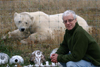







Richard Brock's book Planet Crunch is coming soon!
Follow on Instagram.com/brock_initiative ...
|
Jackson Wild World Wildlife Day Film Showcase 2020 Call for Entry 'Forests and livelihoods: sustaining people and planet' announced as the theme of World Wildlife Day 2021 World Wildlife Day 2021 Film Showcase announced The Secretariat of the Convention on International Trade in Endangered Species of Wild Fauna and Flora (CITES), Jackson Wild, and the United Nations Development Programme (UNDP) announced today that they will team up to organize an international film showcase focusing on our planet’s valuable forests, their extensive ecosystems services, and millions of livelihoods that the forests help to sustain. The Film Showcase will be one of the featured global events at the 2021 UN World Wildlife Day (3rd March) celebrations on the theme of Forests and livelihoods: sustaining people and planet.. The winners, including the films selected for the final round of the competition will be shown throughout 2021, highlighting the key message that forests are pillars of humanity’s social and economic well-being, as well as vital element for planet’s environmental health and biological diversity. CITES Secretary-General Ivonne Higuero said, “The World Wildlife Day 2021 Film Showcase offers a powerful platform to discuss the experiences of communities whose livelihoods are built on their historic relationship with forests and its wildlife. It is also an opportunity to discuss the immense value of the ecosystem services forests provide to people everywhere and to the global economy. As we seek to respond to multiple planetary crises, from climate change to biodiversity loss and the effects of a global pandemic, the film showcase will highlight the experiences of groups and communities who have established a safe and sustainable relationship with some of the planet’s most important natural systems.” In 2013, the CITES Secretariat was designated by the United Nations General Assembly as the global facilitator for the celebration of World Wildlife Day each year in collaboration with organizations in the United Nations system. “We believe in the power of story to inspire awe at the wonders of our natural world and ignite the critical changes that will be required to restore and protect it,” agreed Lisa Samford, Executive Director of Jackson Wild. “Covering over a third of the Earth’s surface, forests are a home to 80% of all terrestrial animals, plants and insects and sustain the livelihoods of millions of people, providing ecosystems services and resources that are essential to the global economy. Rich biodiversity is essential to the health of our planet. With the impact of climate change escalating every day as growing numbers of species edge toward extinction we must act quickly and decisively our own survival.”it.” “By protecting animals and plants, we protect the ecosystems that underlie our economies, our social and cultural traditions and human well-being,” said Elizabeth Maruma Mrema, Officer in Charge of the Convention on Biological Diversity (CBD). “Wildlife is instrumental to global forestry, fishery and tourism livelihoods. Biodiversity in turn keeps ecosystems functional, providing the ecosystem services that allow us to survive. The conservation and sustainable use of wildlife is therefore a critical component of sustainable development, and part of a comprehensive approach to achieving poverty eradication, food security and sustainable livelihoods.”
Timeline and planned activities The call for entry will close on 4, January 2021 and finalists will be announced in mid-February 2021. Winners will be presented at a high-level, virtual event to coincide with the global celebration of UN World Wildlife Day on 3 March 2021. 2020 World Wildlife Day Film Showcase: Forest films will then be made available for free, educational online streaming throughout the world. Award categories include:
Submission Guidelines There is no entry fee for submission, Any film completed after January 1st, 2016 related to terrestrial forests is eligible to enter, provided a streaming link to the full film is made available for free, educational, online streaming either freely or by request as part of the 2021 World Wildlife Day Film Showcase: Forests hosted by Jackson Wild on the Eventive Platform. Submissions in all languages are welcomed. Programs in a language other than English must be subtitled in English for presentation to the judges and for streaming as part of the World Wildlife Day Film Showcase: Forests. Eligible entries must complete an online submission form via www.jacksonwild.org. Important Dates for the WWD 2021 Film Showcase
Call for Judges Interested in being a preliminary judge for the World Wildlife Day Film Showcase? The commitment is approximately 10-20 hours. Judging will run from late December through early February. Click here to apply! About CITES The Convention on International Trade in Endangered Species of Wild Fauna and Flora (CITES) was signed on 3 March 1973 and entered into force on 1 July 1975. With 183 Parties (182 countries + the European Union), it remains one of the world's most powerful tools for wildlife conservation through the regulation of international trade in over 38,000 species of wild animals and plants. CITES-listed species are used by people around the world in their daily lives for food, health care, furniture, housing, tourist souvenirs, cosmetics or fashion. CITES seeks to ensure that international trade in such species is sustainable, legal and traceable and contributes to both the livelihoods of the communities that live closest to them and to national economies for a healthy planet and the prosperity of the people in support of UN Sustainable Development Goals. About UNDP UNDP is the leading United Nations organization fighting to end the injustice of poverty, inequality, and climate change. Working with our broad network of experts and partners in 170 countries, we help nations to build integrated, lasting solutions for people and planet. Learn more at undp.org or follow at @UNDP. About Jackson Wild For almost 30 years, the Jackson Wild Summit has grown a reputation for hosting extraordinary convenings science, nature and conservation media stakeholders. The World Wildlife Day Film Showcase brings together stakeholders from all over the world to focus on a single global theme. Jackson Wild’s international board members include: ARTE France, BBC Studios, Blue Ant Media / Love Nature, Borealés, Conservation International, Discovery, Doclights, FujiFilm Optical Devices - Fujinon Lenses, Gorongosa Restoration Project, HHMI Tangled Bank Studios, Humane Society International, International Fund for Animal Welfare, National Geographic Partners, National Geographic Society, Nature/WNET, Netflix, Off the Fence Productions, ORF/Universum, PBS, Saint Thomas Productions, San Diego Zoo, Seeker, Smithsonian Channel, Sony Electronics, SVT - Swedish Television, The Nature Conservancy, Terra Mater Factual Studios, Vulcan Productions, Wanda Films, WGBH, and World Wildlife Fund US. About the United Nations World Wildlife Day On 20 December 2013, the 68th session of the United Nations General Assembly proclaimed 3 March as World Wildlife Day to celebrate and raise awareness of the world’s wild fauna and flora. The date is the day of the signature of the Convention on International Trade in Endangered Species of Wild Fauna and Flora (CITES) in 1973. World Wildlife Day has quickly become the most prominent global annual event dedicated to wildlife. It is an opportunity to celebrate the many beautiful and varied forms of wild fauna and flora and to raise awareness of the various challenges faced by these species. The day also reminds us of the urgent need to step up the fight against wildlife crime, which has wide-ranging economic, environmental and social impacts. |
|
The 44th International Wildlife Film Festival is Accepting Submissions! Submissions are open for the 44th International Wildlife Film Festival! We look forward to seeing stunning work by old friends but we hope to hear from new voices whose view needs more representation in this industry. Thank you for sharing your unique view on our natural world with our 2021 judging panel - we are honored. In addition to a 2021 virtual festival, we hope to include hybrid screening opportunities; outdoor installations, IWFF at The Roxy's Centerfield Cinema (the ballfield), intimate screenings in The Roxy's Movie Garden, and maybe something else? Never fear - our team is creative and fearless and this festival will be unique and inspiring for all. Our 2020 festival pivoted in 3 weeks to execute one of the first virtual film festivals in the industry this past April. We sold passes in 47 states and 27 other countries. The festival was met with joy and gratitude across the globe. 2020 filmmakers connected with our audiences at a time where connections were rare and the unknown loomed large. Since then, our staff has executed multiple other virtual festivals so please be assured - your work is in good hands. 2021 Theme: Rising From the Depths Whales are the guardians of the oceans and, as they navigate the tumultuous currents, they serve as a steadfast symbol for all of us as we navigate the currents of life and the climate crisis. This year, IWFF celebrates the voices, stories, and work that penetrate the depths of these unprecedented times. This 2021 thematic category seeks films that investigate the countless creatures that dwell far from the surface and encourages responses that vary in their interpretation of the theme "rising from the depths", whether that be environmental, socio-political, species-specific, or metaphorically-focused. 2021 Submission Details The 2021 IWFF Submission Categories are: Semifinalists will be announced for each category when the festival lineup is announced. This year, we have lowered festival fees in recognition of the reality of screening online and the unique challenges filmmakers face. We see you! Our 2021 festival strategy is to accept fewer selections than usual in an effort to represent the films with a large amount of positive support, grassroots community involvement, and attention to detail. That means - the competition is heating up and our 2021 selections will truly feel the love! IWFF Submission Deadlines Opening Date: November 1 Submissions Open on Filmfreeway.com/InternationalWildlifeFilmFestival From this IWFF Email: mailchi.mp/wildlifefilms.org/iwff-2021-theme-submissions-details |


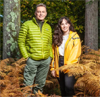 |
Chris Packham: ‘People saw a different side to me’ His daily lockdown show with stepdaughter Megan McCubbin was Chris Packham’s surprise hit, revealing much about nature – and family relations. This spring, when the country was hunkering down against coronavirus, Chris Packham posted a short clip on Twitter admiring a patch of brilliant yellow celandines on his early morning walk. People liked it, and so Packham began posting daily videos enthusing about spring unfurling around his home in the New Forest. Shortly before lockdown, he was called away for a final film commitment, but still wanted to post a daily video. He persuaded his stepdaughter, Megan McCubbin, 25, to step in. The Self-Isolating Bird Club was born, with Packham and McCubbin, who locked down together at his cottage, using two mobile phones and Skype to broadcast a live daily show online that celebrated our connection with the natural world. There seemed unquenchable thirst for their enthusiasm, their banter, and ordinary wildlife – from nesting blackbirds to badger skulls. Eight million people around the world tuned in over a month of broadcasts. Read more: theguardian.com/environment/2020/nov/01/chris-packham-people-saw-a-different-side-to-me |
|
Recommended books for wildlife-lovers this Xmas: Back to Nature: How to Love Life - and Save It One thing has become clear this year - we need nature more than ever. And it needs us too. From our balconies and gardens to our woodlands, national parks and beyond, Back to Nature captures the essence of how we feel about the wildlife outside our windows. Through personal stories, conservation breakthroughs and scientific discoveries, it explores the wonder and the solace of nature, and the ways in which we can connect with it - and protect it. ‘Rousing, polemical and heartfelt’ – Gardens Illustrated ‘An invitation to take action’ – The Observer Back to Nature celebrates the bond with wildlife that many formed for the first time while confined at home this spring, but also explains the biodiversity crisis and examines contributors to this great wave of extinctions – from salmon farming and pesticides to the persecution of hen harriers. It is well-researched – with McCubbin providing short scientific interludes – and more nuanced than you might expect from Packham’s many Twitter rants. Is he becoming more diplomatic in old age? “No, I’m getting more strategic,” he says. “I got very angry this afternoon about the Japanese restarting whaling. I don’t blame the Japanese, I blame the world’s conservationists for letting them do it. They just said, ‘Er, that’s not a very good idea at all.’ And then nothing happened. It’s our fault. I still get very angry. There’s no dulling of the blade. The blade if anything is getting sharper and more useful because I’m running out of time. There’s less time in my lifetime to make a difference.” Patrick Barkham
Available from Bookdepository.com with FREE delivery worldwide. Also: Amazon.co.uk and Amazon.com Hope in Hell : A decade to confront the climate emergency Climate change is the defining issue of our time - we know, beyond reasonable doubt, what that science now tells us. Just as climate change is accelerating, so too must we - summoning up a greater sense of urgency, courage and shared endeavour than humankind has ever seen before. The Age of Climate Change is an age of superlatives: most extreme this, biggest that, most costly ever. The impacts worsen every year, played out in people's backyards and communities, and more and more people around the world now realise this is going to be a massive challenge for the rest of their lives. In Hope in Hell, Porritt confronts that dilemma head on. He believes we have time to do what needs to be done, but only if we move now - and move together. In this ultimately optimistic book, he explores all these reasons to be hopeful: new technology; the power of innovation; the mobilisation of young people - and a sense of intergenerational solidarity as older generations come to understand their own obligation to secure a safer world for their children and grandchildren. 'Brave and unflinching in setting out the reality of the hell towards which we're headed, but even more urgent, passionate and compelling about the grounds for hope if we change course fast enough, Hope in Hell is a powerful call to arms from one of Britain's most eloquent and trusted campaigners.' Caroline Lucas, MP 'Extraordinarily powerful, deeply troubling, scathing but ultimately purposeful and hopeful. This book is a clarion call to action, and action now. After reading this, we know for sure that nothing, not even a pandemic, must divert us from the most serious problem facing every living creature on the planet. In plain language, Jonathon Porritt is spelling it out. This is our last chance. Read, mark, learn, and inwardly digest. Then act.' Michael Morpurgo Available from Bookdepository.com with FREE delivery worldwide. Also: Amazon.co.uk and Amazon.com Rebirding - Restoring Britain's Wildlife
An economic solution to rewilding our landscapes, creating a future where large, wild areas maintain wildlife. Britain has all the space it needs for an epic return of its wildlife. Only six percent of our country is built upon. Contrary to popular myth, large areas of our countryside are not productively farmed but remain deserts of opportunity for both wildlife and jobs. It is time to turn things around. Praised as ‘visionary' by conservationists and landowners alike, Rebirding sets out a compelling manifesto for restoring Britain's wildlife, rewilding its species and restoring rural jobs – to the benefit of all. 'A wonderful book, visionary, illuminating and fascinating. – George Monbiot The book is available at Bookdepository.com with FREE delivery worldwide. Also: Amazon.co.uk & Amazon.com Living Without Plastic: More Than 100 Easy Swaps for Home, Travel, Dining, Holidays, and Beyond A New Book Offering Over 100 Ways You Can Replace Plastic In Your Life Plastic Oceans International, a global nonprofit working to end plastic pollution, joins Artisan Books in announcing today (Nov 10th 2020) the publication of Living Without Plastic, from authors Christine Wong and Brigette Allen. This new book serves as a concise guide on how to easily embrace a plastic-free or plastic-reduced lifestyle. It offers over 100 simple, sustainable, and stylish swaps throughout our households, providing readers with plastic alternatives for everything from kitchen and dining, to health, beauty, travel, and beyond. “Brigette and I wanted to share how to break up with plastic in fun, accessible ways,” said Wong, a renowned Instagram foodie who advocates for zero-waste consumption and eco-friendly choices within the kitchen and home. “Every piece of plastic not used is a step in the right direction, and through our collective action, together we can make a difference!” Plastic is an invention created to improve our lives, from innovations in food safety and product transit to medical sanitation and convenience in our homes. Unfortunately, our dependence on plastic is now wreaking havoc on our environment, and a growing body of science is showing that it is also invading our human bodies through the food we eat, the air we breathe, the water we drink and the soil we cultivate. “It’s an issue that we can no longer ignore. As easy as we have each contributed to the plastic pollution problem, we can now contribute to solving it by implementing alternatives to the everyday plastics we use,” said Julie Andersen, CEO of Plastic Oceans International and author of the book’s foreword. “This is the perfect guide for doing exactly that.” In addition to presenting real-life solutions, Living Without Plastic also provides accessible information in understanding the history and implications of our plastic use. The book is available at Bookdepository.com with FREE delivery worldwide. Also: Amazon.co.uk |
|
A Life on Our Planet : My Witness Statement and a Vision for the Future by David Attenborough "The Earth's life-support machine, the thing we humans rely upon for everything we need, runs on its biodiversity. Yet the way we live on Earth now is sending it into a decline. I have been a witness to this decline. This book contains my witness statement, and my vision for the future the story of how we came to make this, our greatest mistake, and how, if we act now, we can yet put it right." David Attenborough A Life On Our Planet: My Witness Statement and Vision for the Future reflects on David's remarkable career exploring and documenting the natural world, and the decline of the planet's environment and biodiversity he has observed first-hand in that time. This is an intimate, urgent and impassioned book borne out of a lifetime's experience and knowledge, presenting David's view on the future that lies ahead if we continue as we are, and a plan for how to avoid that future. As a young man David went out into the wild and experienced the untouched natural world but even then it was an illusion, already day to day we were losing the planet's wild places, its biodiversity. "This book records some of the dreadful damage mankind has already wrought upon the natural world and the real and imminent danger that things could get much, much worse if we do not act now. But it is also a hopeful book: it offers a different future. It describes some of the ways in which we can begin to turn things around if only we all have the will to do so. Surely together we must now find that determination, and begin to make that change, for the sake of all the inhabitants of our planet. Sir David Attenborough is Britain's best-known natural history film-maker. His career as a naturalist and broadcaster has spanned nearly seven decades. His first job - after Cambridge University and two years in the Royal Navy - was at a London publishing house. Then in 1952 he joined the BBC as a trainee producer, and it was while working on the Zoo Quest series (1954-64) that he had his first opportunity to undertake expeditions to remote parts of the globe, to capture intimate footage of rare wildlife in its natural habitat. He was Controller of BBC 2 (1965-68), during which time he introduced colour television to Britain, then Director of Programmes for BBC Television (1969-1972). In 1973 he abandoned administration altogether to return to documentary-making and writing, and has established himself as the world's leading Natural History programme maker with several landmark BBC series, including Life on Earth (1979), The Living Planet (1984), The Trials of Life (1990), The Private Life of Plants (1995), Life of Birds (1998), The Blue Planet (2001), Life of Mammals (2002), Planet Earth (2006) and Life in Cold Blood (2008). Sir David was knighted in 1985, is a Fellow of the Royal Society, and stands at the forefront of issues concerning the planet's declining species and conservation. See the world. Then make it better. 'I am 94. I've had an extraordinary life. It's only now that I appreciate how extraordinary. As a young man, I felt I was out there in the wild, experiencing the untouched natural world - but it was an illusion. The tragedy of our time has been happening all around us, barely noticeable from day to day - the loss of our planet's wild places, its biodiversity. I have been witness to this decline. A Life on Our Planet is my witness statement, and my vision for the future. It is the story of how we came to make this, our greatest mistake - and how, if we act now, we can yet put it right. We have one final chance to create the perfect home for ourselves and restore the wonderful world we inherited.' All we need is the will to do so.' The book has been released to coincide with the global release of a Netflix film of the same title, directed by Jonnie Hughes for Silverback Films and commissioned by WWF. See the trailer (below).
We highly reommend that anyone who felt the film was timely and important also get ths book ... It's a much deeper and boader look at the issues and solutions covered in the film ... Really worth a read. It could easily have been a series of films. The book is available from Bookdepository.com with FREE delivery worldwide. Also: Amazon.co.uk and Amazon.com |
 |
NaturVision Call For Entries is Open! Dear ladies and gentlemen, colleagues and friends, From 14 – 18 July 2021, we will be celebrating the 20th NaturVision Film Festival here in Ludwigsburg, Germany, as well as online. We would be delighted if you would join us by submitting your latest film for the chance to win one of our prestigious awards – not to mention a share of an estimated EUR 54,000 in prize money! We have also just added a new award to our film competition: the NaturVision RETHINK Film Award. This category is open to films that depict a process of rethinking in politics and society and show positive examples. Subjects can range from responsible interaction with nature, wildlife and resources, right through to portraits of people who are calling for a fundamental rethink. Equally welcome are films that treat the theme "Rethink" artistically. Films that were completed after 1 January 2020 can now be registered via the website: natur-vision.de/en/festival/wettbewerb/einreichformular The closing date for entries is 29 January 2021. We know that 2020 has been a particularly challenging year for filmmakers. So by way of solidarity, NaturVision is offering an Early Bird deal. For films submitted by 30 November 2020, there will be no entry fee. There is also no entry fee for the NaturVision Newcomer Award category (on submission of a training certificate). For more information on the categories and regulations, visit: natur-vision.de/en/festival/wettbewerb/kategorien-preise & natur-vision.de/en/festival/wettbewerb/reglement We look forward to receiving your films! Best wishes, Ralph Thoms, Festivalleitung |
|
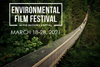
DCEFF 2021 Call for Entries The 29th Annual DCEFF will be held March 18-28, 2021. We look forward to offering a robust online festival, as in-person theatrical screenings will continue to be pending until safety permits. We welcome film submissions on all topics related to the natural and built environment. Submission Categories Short Films This category includes films with a running time of 40 minutes or less, including credits. Feature Films This category includes films with a running time greater than 40 minutes. Please carefully read the rules and guidelines for submissions posted on FilmFreeway. If you have specific questions about submitting a film to DCEFF, contact samantha@dceff.org. More here: dceff.org/submissions 2021 Festival Deadlines:
|




|
New VMI & VMEDIA Websites Launched After eight months of development, we can proudly announce that the new VMI and VMEDIA websites are now live. As well as being sensitive to small screens, mobile phones & tablets, our website offers a huge amount of new functionality. Cameras and lenses are grouped and searchable by lens mount, sensor size, manufacturer and groupsets to make it extremely easy to use. Look out for some animated 360 degree rotating cameras in the supplementary product images (note - may require a click to activate.) An all new Learn & Help section includes updated versions of all of our popular guides and some new ones added too. Articles are categorised into headings of Camera, Cinematography, Lighting, Grip etc for accessibility and cross-referenced to relevant equipment as well and News and Production Stories too. We used this opportunity to also launch an all-new VMEDIA site too, with the same clean navigational format which includes lots of information about card compatibilities across the most popular cameras. Lewis's famous card compatibility database is also in the process of being entirely redesigned and will be launched soon. More VMI news here: myemail.constantcontact.com/Brand-New-VMI-Website-Launched.html Visit: vmi.tv & vmedia.digital |
|
Support the SIXTEEN LEGS Special Edition BluRay, DVD & Archive The Love Lives of Giant Prehistoric Spiders in Australia's deepest caves... We are pleased to say that pre-orders for the SIXTEEN LEGS Special Edition Blu-Ray and DVD sets plus online archive are now open, with a host of other rewards available. There are special early-bird perks to encourage people to contribute early, including discount prices, an on-disc thank you, and shipping of the first batch of discs for Christmas!
Help us draw together the funds to release a Special Edition Blu-Ray and DVD of this fantastic, entertaining and educational movie. Support the fundraiser here: indiegogo.com/projects/sixteen-legs-special-edition-blu-ray-dvd/x/13624660# |
|
My Octopus Teacher Became a Viral Sensation on Netflix. Its Human Star Craig Foster Wants the Film to Inspire Change The dense kelp forest off the southern tip of South Africa is home to an unparalleled diversity of sea animals including sharks, rays, and, once upon a time, a common octopus that has just had an uncommon run as the star of the new Netflix documentary, My Octopus Teacher. Her onetime den lies a couple of dozen feet off the coast of Cape Town suburb Simon’s Town. The Octopus is long gone—octopuses rarely survive more than 18 months in the wild—but her co-star and “student,” filmmaker Craig Foster, still visits her former home in daily dives that are as much about pilgrimage as they are about science. “When an animal has such an influence on you… you can’t help but love the environment that made her,” he says, gazing down at her kelp-forest cove from the picture window of his cliffside bungalow. “Going there feels like going home.” Foster’s land-based home is laden with treasures brought back from his own hunting expeditions. Shells and sea glass colonize the flat surfaces. Stacks of abalone shells the size of dinner plates teeter in a corner. The skin of a small shark wraps around a driftwood pillar. It’s as if, piece by piece, he is trying to bring the ocean into his living room. Since it premiered on the streaming platform in September, the documentary has become a viral hit. Although Netflix does not release viewer data, it says it has been a global success, in the top 10 most watched in Israel, South Africa and Australia. Amy Schumer recommended it to her 10.2 million Instagram followers. With the same introspective cadences of the film’s voiceover, Foster muses that in a time of growing separation from nature, the film has triggered a fundamental human longing to reconnect with our origins. “Just under the skin we’re still fully wild. And I think this touches on what it’s like to glimpse that.” How a filmmaker became a student Find out here: time.com/5909291/my-octopus-teacher-craig-foster-interview |
|
A Life On Our Planet: Alastair Fothergill Profile Editor, Will Entwistle, speaks to Alastair Fothergill, Executive Producer of David Attenborough: A Life On Our Planet. Documenting the natural world presents to many phenomena usually seen by few. Our ability to be astonished by nature is proof enough of its power; the images often speak for themselves. Alastair Fothergill is responsible for capturing the natural world’s power. He is a wildlife filmmaker, known best for his role as series producer of The Blue Planet and Planet Earth, then later as the executive producer of The Hunt, Our Planet and, most recently the film David Attenborough: A Life On Our Planet. A Life On Our Planet differs from Fothergill’s previous work. In particular, it is a personalised account of the natural world’s vulnerability seen against the backdrop of Sir David Attenborough’s life—as Attenborough describes it, in his accompanying book, ‘the most extraordinary life. It is only now that I appreciate how extraordinary.’ The film mirrors Attenborough’s description; it is retrospective but also profoundly contemporary, and rightly so. “We sat down with David [Attenborough] and said, ‘Look, this is your film’”, Fothergill says, adding, “He describes it as his witness statement.” Fothergill is a life-long devotee of the natural world; his enthusiasm for wildlife began in childhood. He harks back fondly to birdwatching on the north Norfolk coast: “an amazing place for birds”, he says. Fascination is often nurtured by education. Fothergill personifies this sentiment, recalling “an amazing teacher at school who was very inspirational”, adding, “he used to take us around the country bird-watching.” Later, Fothergill read Zoology at Durham, where his filmmaking began. “I always knew that I wanted to be a Zoologist…and while I was there, the BBC ran a competition called the Mick Burke Award.” The award commemorated Mick Burke, the mountaineer and cameraman who never returned from the British expedition of Everest’s southwest face in 1975. The BBC chose six university expeditions—one of which included Fothergill—and equipped each with cameras. He went to the Okavango swamps in Botswana, later completing his inaugural film, On the Okavango. “I made a rather bad film, to be honest”, he confesses. Fothergill was not deterred; his experience reaffirmed his love for the natural world. “I then thought, ‘Hang on—this is an amazing way to be with animals and friends!’” Though Fothergill was educated a scientist, his filmmaking is that of an artist. He reflects on this curious fusion of science and art, acknowledging, “that’s how I started on the journey.” Read more: palatinate.org.uk/a-life-on-our-planet-alastair-fothergill |
|
A Life On Our Planet: 10 Behind The Scenes Facts You Need To Know A Life On Our Planet with David Attenborough explores the career of everyone's favorite natural historian and how the planet has changed in this time. The name of the newest eye-opening and intense documentary calling everyone to take action in protecting Mother Earth is David Attenborough: A Life On Our Planet. Through the narration of David's life stories and travels, viewers get to understand how the evolutionary history of life on our planet has developed. But this premise is only there to set the stage for the deeper topic of the film: the loss of wild places in the past 100 years, mostly caused by human action. As devastating as this is, however, not everything is lost and Attenborough provides hope by sharing a vision for the future and what needs to happen to overturn this dramatic scenario. Putting its heavy content aside, this movie is a beautiful masterpiece full of images that will take viewers' breath away. And filming was surely a ride that both Attenborough and the crew will always remember. 10: A Return To The Rainforests Of Borneo Documentaries can be complex and arduous to film, especially nature docs. The process involved in filmmaking is anything but effortless, even though it aims to look so. In this “witness statement” for the environment, Attenborough revisited the rainforests of Borneo to see how life on the island has changed over the years. The world's third-largest island is one of its richest treasures on the planet. But the species of animals and plants that live here have been largely impacted by climate change. The crew was shocked to see how the destruction compared to the early 50s (when Attenborough first visited the island). 9 Visiting Pripyat, The Ghost City Right in the beginning of the movie, as David notes how dramatically the planet’s biodiversity has degenerated, viewers will see several shots of a deserted location. Later, it is revealed that these shots belong to the territory around Chernobyl's nuclear plant, which today is uninhabitable by humans. However, this once destroyed area has become home to a lush wildlife paradise that has prevailed against all odds. What may be less known is the exact name of the place that Sir David Attenborough and his crew visited. It's called Pripyat, located in the Chernobyl Exclusion Zone and the crew stayed there for a week in September of 2018. Read more: screenrant.com/life-on-our-planet-behind-scenes-facts |
|
Deep Blue Notes: episode one – podcast Wildlife recordist Chris Watson and spatial audio sound artist Prof Tony Myatt begin a three-part journey to the Sea of Cortez hunting for the song of the largest, and possibly loudest, animal that has ever lived – the blue whale. It’s also an animal that Chris has never managed to record. Will this trip change that? In episode one of this three-part series, pioneering nature sound recordist Chris Watson sets off on a journey to record one animal that has so far evaded his microphones – the blue whale. Despite being the largest animals to have ever lived, much of their lives remain a mystery. As Chris travels to Mexico to try to find the whales, he meets scientists, conservationists and others who are also keen to learn more about their behaviour and the ocean environment they inhabit. Chris is joined on his journey by spatial audio sound artist, engineer and academic Tony Myatt with whom he is collaborating on a special sound installation for Oceans 21, a project series on the fascination and endangerment of the oceans. Listen: theguardian.com/science/audio/2020/dec/01/deep-blue-notes-episode-one-podcast |
|
‘Cemetery’ Review: Elephant Walk In this immersive experimental film, an elephant and his guardian take a dangerous jungle journey. Combining documentary, fiction and elaborate soundscapes into a uniquely experimental whole, the Spanish filmmaker Carlos Casas opens his latest film, “Cemetery,” with an on-screen description of the myth of the elephant graveyard, a trove of ivory long sought by poachers. After killing all but one elephant, the legend goes, poachers braved jungle and rivers, mountains and ravines, to follow this survivor to his final resting place. Using this tale as his template, Casas drops us into the Sri Lankan jungle to accompany the elephant and his mahout on their perilous journey.
Divided into four chapters and unfolding with minimal dialogue, “Cemetery” is primarily a slow and lovingly detailed immersion in the sights and sounds of the jungle and the mahout’s devoted attention to his animal. Melding myriad trills, screeches, and roars, Chris Watson’s mesmerizing sound design (he regularly works with David Attenborough) joins Benjamín Echazarreta’s lush imagery to create a soothing, almost somnolent sensory blanket. A silvery spider’s web, dangling in foliage like a safety net for falling leaves or acrobatic bugs, is as absorbing as the close-ups of the enormous beast itself — majestic reminders of its prehistoric ancestry. More here: nytimes.com/2020/11/18/movies/cemetery-review.html |
|
Stacey Olika on balancing work as a production assistant for BBC Studios NHU with her own multidisciplinary practice Stacey Olika is a young multidisciplinary designer currently working at BBC Studios’ Natural History Unit in Bristol. Six months into her new role, Stacey has taken a deep dive into the world of production at one of the biggest television and radio production companies in the world. How did she get there? After an interest in curation led Stacey to put on a few exhibitions of her own, her work caught the eye of some members of the BBC, who she kept in contact with. And eventually, Stacey was offered a position she couldn’t refuse. Today, she works to support the team with everything from schedules and budgets to management. Alongside her work at the BBC, Stacey is also a designer and speaker, with a focus on subjects such as racism and representation. Here, Stacey talks to us about securing a job in TV without any experience; the importance of passion, and why being too critical of yourself can hinder your progress. How would you describe what you do at BBC Studios’ Natural History Unit? Read more: lectureinprogress.com/journal/stacey-olika |
|
David Attenborough to receive lifetime achievement award The veteran broadcaster will be honoured at the Rose d’Or Awards. Sir David Attenborough will receive a lifetime achievement award at the Rose d’Or Awards, organisers have announced. The beloved broadcaster, 94, will be honoured during a virtual ceremony in recognition of his glittering 60-year career. The Rose d’Or Awards, established in 1961, celebrate achievement in entertainment programming. More here: shropshirestar.com/news/uk-news/2020/12/02/david-attenborough-to-receive-lifetime-achievement-award |
|
Woodcut Media, Spark TV merge to form specialist factual, natural history prodco UK indies Woodcut Media and Spark TV — both part of the Anthology Group — have merged to form the specialist factual and natural history production outfit Woodcut West. The Bristol-based company will develop and produce programming for the UK and international market, effective Dec. 1., and be spearheaded by Spark TV founder Paul Wooding (pictured). A veteran factual executive, Wooding has produced for the BBC, Discovery in the U.S. and UK, History, Smithsonian Channel, Channel 4 and National Geographic, to name a few. Kate Beal, co-founder and CEO of Woodcut Media, said in a statement: “Bristol is recognized worldwide as the UK’s creative hub for natural history and wildlife documentaries and we have known and respected Paul’s work for many years now; he breaks the mould when it comes to producing bold, innovative and immersive programming. This alliance will allow us to expand our mutual specialist factual horizons and branch out into new genres, which is a very exciting next stage in Woodcut’s growth.” |
|
Drive gets in gear with natural history As it continues to expand its footprint in the natural history, climate and environmental programming space, London-based funding, sales and distribution business Drive has secured the rights to distribute globally new documentary series Shared Planet. The 4 x 60’ series aims to reveal the untold stories of people and wildlife flourishing together on Planet Earth, showcasing what is said to be a blend of “stunning photography, jaw-dropping action sequences and beautiful” observational documentary storytelling. Each episode - entitled Forests, Water, Cities and Grassland - will feature stories that centre around a charismatic animal character and a bold human hero whose actions improve life for both people and wildlife. The series is executive produced by Neil Nightingale, the former head of the BBC’s Natural History Unit, and series produced by veteran filmmaker Jeff Turner (Planet Earth, Frozen Planet) of River Road Films. The director of photography is Justin Maguire. “Shared Planet is a breath taking and enormously ambitious project that spans across six continents, 22 countries and tells more than 30 powerful stories packed full of hope for Mother Earth,” said Drive co-MD Lilla Hurst. “We’re delighted to be involved with this series…and build on our expansion in the natural history and environmental programming arena.” Read more: rapidtvnews.com/2020112759482/drive-gets-in-gear-with-natural-history.html#axzz6fl7QVOpj |
 |
BBC Studios NHU scores two Xmas specials BBC Studios Natural History Unit has been commissioned to make two wildlife specials for the Christmas schedules, Meerkat: A Dynasties Special and Penguins: Meet the Family. Julian Hector, Head of BBC Studios Natural History Unit, said: “We’re thrilled to be bringing these two brand new natural history specials to viewers. In a year of such challenging times for everyone, seeing the world through the lives of such characterful animals we hope will bring joy and warm hearts and homes this festive season.” Premiering on BBC One and BiliBili, Meerkat: A Dynasties Special is a one-off special which follows the award-winning series Dynasties. Narrated by Sir David Attenborough, the special follows the dramatic story of a young meerkat queen, Maghogho, on a quest to establish her dynasty in one of the harshest places on earth. Her kingdom lies amongst the dramatic beauty of the Makadikadi salt pans in Botswana. The desert is so hot and dry here that almost nothing can survive – and yet it is here that she must raise her pups. To succeed in this desolate and extreme landscape, she will need the support of all of her family. Maghogho’s challenge is to unite and lead them as a team – working together to overcome adversity. Penguins: Meet the Family will premiere on BBC One this festive season. Penguins: Meet the Family, a 1×60’ for BBC One, is made by BBC Studios Natural History Unit. It was commissioned by Charlotte Moore, BBC Chief Content Officer and Jack Bootle, Head of Commissioning, Science and Natural History. The Executive Producer is Doug Mackay-Hope. From: televisual.com/news/bbc-studios-nhu-scores-two-xmas-specials |
|
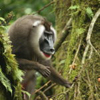
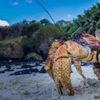
Two Best in Festival Winners at the NatureTrack film festival in California Lost Kings of Bioko by Oliver Goetzel and Christmas Island - Realm of the Robber by Moritz Katz, Braydon Moloney and Pim Niesten both win Best of Festival at this years NatureTrack film festival.
Lost Kings of Bioko also got the Conservation award and Realm of the Robber got the Scenic award too! See all the 2020 winners here: naturetrackfilmfestival.org/2020-films Congrat's to all! |
|
Kingdoms of Fire, Ice & Fairy Tales from Bonné de Bod & Susan Scott Premières on Showmax in South Africa Missing travel? Kingdoms of Fire, Ice & Fairy Tales will transport you to three of earth’s iconic wildernesses: Yellowstone National Park in America; the Black Forest in Germany; and the Arctic Circle in Swedish Lapland. These are lands where waters boil, trees talk and the skies light up as if they are on fire. Timeless lands that reveal what life was like a million years ago. Presenter Bonné de Bod and film director Susan Scott previously collaborated on STROOP – Journey Into The Rhino Horn War, which won over 30 awards around the world. "Bonné and I were absolutely gutted after making STROOP and felt like we needed to find the wonder that is out there in the natural world,” says Susan. Not that filming Kingdoms of Fire, Ice & Fairy Tales turned out to be a holiday for them: they filmed in extremes – from temperatures bordering minus 20º in the Arctic Circle to the scalding thermal vents of Yellowstone’s super-volcano and then onto the immense challenge of bringing trees to life in the densely packed Black Forest. The result is an awe-inspiring reminder that there is a planet waiting… Stream the English version first on Showmax from 3 December: stories.showmax.com/kingdoms-of-fire-ice-and-fairy-tales-2020/
|
|
‘Pass the mic!’ Activists urge Sir David Attenborough to hand over his Instagram account Young climate activists around the world have launched a campaign to encourage Sir David Attenborough to use his Instagram account for continued environmental education. After just six weeks of activity, Attenborough’s profile on the platform has become a legacy account and will no longer be posting. Campaigners have therefore launched a movement, urging him to use his sizeable audience to promote the voices and work of activists around the world - especially in the Global South. The 94-year-old documentarian broke social media history in September when his Instagram account reached one million followers in just under five hours. But after amassing an audience of 6.1 million and 45 million video plays, the producers who run the account - Jonnie Hughes and Colin Butfield of Silverback Films - announced that they wouldn’t be putting up any more posts on the page. The 27 posts on Sir David Attenborough’s Instagram account were used to promote his most recent documentary, A Life on Our Planet. The film was a noted departure from Attenborough’s previous softness on climate issues, instead delivering a powerful message about the damage humans have done to our planet, along with a manifesto for launching change. Though not without criticism, the piece was well-received by viewers and activists alike. Rather than losing the momentum built by both the documentary and the record-breaking Instagram account, young activists want Attenborough’s page to be used to continue educating people on climate issues. A campaign called #PassTheMic has been launched, encouraging Attenborough and his producers to amplify voices on the frontlines of climate change, helping to support and recognise their vital work. What do activists want to use his account for? Changemakers from a range of organisations, including Greta Thunberg’s Fridays For Future, are behind the #PassTheMic campaign. They want to ensure Attenborough’s account remains active, promoting the voices from MAPA (Most Affected People and Areas) and of BIPOC (Black and Indigenous People of Colour) to his sizeable audience. “For so many indigenous people and people of colour, social media is an outlet to share their stories, raise awareness about threats and connect with so many others who share the same messages of hope and change,” explains climate justice activist Tori Tsui. “With 6 million engaged followers at your fingertips, it only makes sense to keep the momentum going.” Read more here: euronews.com/living/2020/11/11/pass-the-mic-activists-urge-sir-david-attenborough-to-hand-over-his-instagram-account |











|
New Trailer For THE CROODS: A NEW AGE is a Fun Wildlife Croodimals Fake Documentary "Welcome to the 'Croodaceous' period – the awkward adolescence of the world's history, when even the wildlife was still figuring out what it wanted to be." Universal Pictures has released a new trailer for DreamWorks Animation’s The Croods: A New Age, and it was designed to be a fake documentary titled Wildest Wildlife Croodimals Documentary. It introduces us to the various crazy and weird species and animals that The Croods family has to deal with during the time that they exist, such as Land Sharks and Wolf Spiders.
|
|
In conservation with Keith Scholey, Executive Director of ‘David Attenborough: A Life On Our Planet’ Shortly after the release of David Attenborough: A Life On Our Planet, Epigram reached out to Silverback Films to speak to Dr Keith Scholey about his career in wildlife filmmaking, and the message he hopes this documentary conveys. Dr Keith Scholey is a University of Bristol graduate, who obtained an undergraduate degree and PhD in Zoology at the University. Early in his career, Scholey joined the BBC Natural History Unit as a researcher and worked his way up to become the Head of the Unit, which he ran alongside other specialist departments until he turned 50, at which point he decided to return to filmmaking. In 2012, he and his colleague, Alastair Fothergill, founded Silverback Films, an independent Bristol-based wildlife film production company. Films produced by Silverback are becoming increasingly focused on the environmental crisis. In addition to A Life On Our Planet, Silverback have created two other films, Our Planet: Our Business and Our Planet: Too Big To Fail, which are aimed towards finance and business, and making the case that nature can be a major economic asset. Julia: As a current zoology student at the University of Bristol, I was wondering how you made the switch from research to filmmaking? At the University of Bristol I specialized in animal locomotion. For my PhD I filmed birds flying, which was very fun, but then I had to spend hours analysing it, which wasn’t so much fun. When the opportunity to go into film turned up, I made the jump. This was sheer luck, as a guy in my PhD lab knew a producer in the Natural History Unit. At the time they were making David’s second ever big series, The Living Planet. They had to film a section all about the sky and did not know how to approach it, so I gave them some ideas and the rest is history. Read more: epigram.org.uk/2020/11/11/execute-producer-keith-scholey-speaks-on-the-importance-of-documentaries-during-this-climate-crisis By Edward Deacon, SciTech Digital Editor, and Julia Riopelle, SciTech Editor – Epigram is Bristol University's award-winning independent student newspaper. |



|
We Need to Talk About David Attenborough (Sorry David) Earthling Ed respectfully responds to what David Attenborough has been saying recently in the press about eating meat, and goes through his latest documentary 'A Life on Our Planet' to react to his thoughts on a plant-based diet and "sustainable" fishing. Some very interesting and valid points made.
Ed's Website: earthlinged.org |
|
UK TV exports reach US$1.97B, factual programming revenue rises: Pact report UK television exports generated £1.48 billion (US$1.97 billion) in 2019/20, with factual programming increasing its share of revenue, according to a new report from trade association Pact. That figure, a 6% year-on-year increase, follows a record-breaking £1.4 billion in 2018/19. Scripted dramas were the key driver of international exports for UK companies, accounting for 48% of all revenue. Revenue from factual programming such as Seven Worlds, One Planet (pictured) and The Planets increased to 28% year-on-year. The U.S. continues to be the most important market for UK exports, contributing 32% (£466 million) of all revenue in the 2019/20 financial year, an increase of £22 million year-on-year. France (£102 million) and Australia (£98 million) complete the top three markets. Last year, China was identified as a market with growth potential, and revenues there increased by 25% to £40 million in 2019/20. |
|
Conservation Filmmaking with Inka Cresswell Conservation Filmmaker, Inka Cresswell, is passionate about documenting the state of the world’s oceans to inspire others to safeguard them for future generations. At 26 years old, Inka is a PADI Open Water Dive Instructor, Underwater Photography Instructor, and Dive Against Debris Instructor, as well as an Advanced, Nitrox, and Decompression Procedures Technical Diver. She also holds a Bachelor’s Degree in Marine Biology, and a Master’s Degree in Wildlife Filmmaking. Her debut film, ‘MY 25: The Ocean Between Us’ has been shown at numerous film festivals around the world. Here, Inka provides some powerful behind-the-lens perspectives on all things conservation filmmaking. What inspired you to earn your Masters Degree in Wildlife Filmmaking? Inka: From the age of six I had already decided I was going to be a Marine Biologist. I was completely captivated by our underwater world, enchanted by all the otherworldly marine species I read about in books and watched on mesmerizing programs like ‘Blue Planet’. But at that young age, I had no idea that by the time I was able to make that dream a reality our oceans would have changed drastically. By the time I graduated from University with a degree in Marine Biology and started working on research projects the ocean I had grown up fantasizing about was long gone and I found all the work I was doing heavily geared around saving the last of a species and attempting to conserve the last of these great ecosystems. Throughout my undergraduate degree, I was increasingly frustrated by the lack of communication between the scientific community and the general public and became increasingly interested in science communication. As an avid underwater photographer, I decided to combine my passion for marine biology and diving with my love of science communication and photography and try to start bridging the gap between science and general awareness. I found that my camera was my most powerful tool in conservation as it allowed me to share my passion and enthusiasm for marine life, portray marine species in a new light and lend a voice to our oceans – creating content that not only educates but hopefully inspires people to care for our underwater world in the same way I do. When the opportunity arose to earn a Masters at the University of the West of England in Wildlife Filmmaking, in partnership with the Natural History Unit, it was an offer I couldn’t turn down as it allowed me to build my film making skills to a whole new level and provided a great opportunity to break into the professional wildlife filmmaking industry. What is your debut film ‘MY 25: The Ocean Between Us’ all about? Inka: ‘MY 25: The Ocean Between Us’ is an intimate personal authored film about how I have seen the oceans change in just my lifetime. Through the film, I wanted to take the audience on a journey from some of our most degraded reefs to some of our most pristine coastlines and share the stories of the people working to protect our oceans. From traditional fishing practices to state of the art wet labs and coral restoration work, the film shows the importance of learning from different cultures and generations and how there is still time to change the fate of our oceans. My goal as a filmmaker was to create a film that would not only educate people about ocean conservation topics such as shifting baselines, marine protected areas, and overfishing but leave them inspired and hopeful for the future.
Read more: blog.padi.com/2020/11/03/conservation-filmmaking-with-inka-cresswell |
|
No Animals Lives were Improved in the Making of this Wildlife Documentary News from the Natural World: No animals lives were improved in the making of most wildlife documentaries. New research shows that a huge number of wildlife documentaries don’t benefit any of the animals shown within. The great documentarian of the animal kingdom, David Ant-enborough, set out to investigate. He found that humans initially set out with honest determination to get genuine footage. But after a couple of days with nothing filmed and the money running out, the human film crews would get kind of desperate. Many of the human tv networks weren’t helping, either, by giving these filmmakers just days to capture footage. But what exactly do the humans do? Some humans staged predator-prey interactions by putting M&Ms in carcasses for trained animals to sniff out. To get a shot of a bear sniffing what looks like a fresh kill, filmmakers might place some jellybeans or M&Ms in a roadkill carcass. In addition, one team attracted sharks to their boat by towing a fake seal behind it. The sharks leapt out of the water trying to capture the “seal”. Given enough attempts, they’ll stop trying to hunt a meal and go without. No Animals Lives Improved One show called “Wild America” not only staged many of the series’ most dramatic scenes but they did so at the cost of some animals’ lives. The human crew allowed a deer and a pack of wolves to be placed together in an enclosure for a “hunt”. Whilst some methods have improved animal abuse was more or less routine in the past. For example, a big cat chasing a rabbit might have the upper hand because producers had tied a clear string around the rabbit’s leg, slowing it down. One producer even admitted to letting an animal wrangler break a rabbit’s leg so the team could get a better shot of a predator in action. And finally, there was the infamous Disney fiasco. Producers of Disney’s 1958 “White Wilderness” documentary decided, for some reason, that they needed to “prove” a lemming-related urban legend. That the animals routinely commit mass suicide when their numbers increase too much. So they bought lemmings from a group of Canadian kids for 25 cents apiece. Then they shipped them to the filming location and forced them to leap into the water. With camera angles skilfully concealing the filmmakers’ interference. It was a dastardly plan. Are wildlife documentaries helping? Read more: theplatypusnews.com/2020/11/10/no-animals-lives-were-improved-in-the-making-of-this-wildlife-documentary NB. The Platypus aims to change the way you see the natural world through satire, comedy, parody, spoof and tireless gonzo journalism. We think it’s time to see the world from the point of view of the animal kingdom. It’s time for humans to read, laugh, think and then act. The Platypus will show you the true Voice of Nature. Here's the study the article refers to: Do nature documentaries make a difference? - phys.org/news/2019-10-nature-documentaries-difference.html Also read: The Naked Mole Rats Are Taking Sir David Attenborough to Court! "After decades of simmering with anger in their burrows, the naked mole rats of East Africa are suing the famous naturalist for defamation. They object to being labelled as “a bizarre rodent” and having “sausage-shaped bodies with grey wrinkled skin and grotesque incisors teeth” in ‘Life on Earth.’ They cannot believe that ugly, aggressive, hyperactive, disease-ridden humans, who need to wear clothes, can utter such insults!" |
|
"Never run, only prey runs." Behind the scenes on a wildlife documentary with Chadden Hunter, Director and producer, Seven Worlds, One Planet From chasing pumas on foot across the mountains to being surprised by polar bears on a pit stop, life behind the camera on a wildlife documentary can be an exciting ride. What does it take to get the amazing footage that goes into a David Attenborough show? And what is it like getting to experience it first-hand? Chadden Hunter takes Patricia Karvelas and ABC National Radio's The Drawing Room behind the scenes of Seven Worlds, One Planet. Listen here: abc.net.au/radionational/programs/drawingroom/never-run-only-prey-runs-behind-the-scenes-on-a-wildlife-do/12864920 |
|
Government’s Den: must watch new video Imagine a world where grouse shooting doesn’t exist as a cruel sport. If the shooting industry were to ask the Government to start them up today – Dragon’s Den style – would the Government be in… or would they be out? Two professional shooting industry lobbyists pitch their case to the Scottish Government for using our land. Will they be in... or will they be out? Use #GovernmentsDen on socials. Add your voice - sign the Revive pledge here: e-activist.com/page/33064/petition/1 |
|
Earthlings Filmmaker Releases New Documentary About Slain Vegan Activist Regan Russell There Was a Killing reveals first-hand video footage of the incident leading up to Russell’s death—who was killed by a slaughterhouse truck in June—and delves deeper into Bill 156, a new ag-gag law that director Shaun Monson says appears to be “a license to kill.” Award-winning filmmaker Shaun Monson, the director behind the feature film Earthlings, is releasing a new documentary about Regan Russell—a longtime animal-rights activist killed in June by a transport truck carrying pigs into slaughter outside of Fearmans Pork in Burlington, Ontario, Canada. Premiering worldwide today (Nov 7th 2020), There Was A Killing chronicles the aftermath of Russell’s death. Approximately 30 minutes in length, the film includes new investigative angles of first-hand video footage taken by activists that was reported to have been originally confiscated by police. Interviews with attorneys, a former slaughterhouse truck driver, and activists present at the scene provide insight into the events that lead to Russell’s killing and how authorities handled the aftermath. Watch the film: On the morning of June 19th 2020, seven activists from the love-based animal rights group Toronto Pig Save were demonstrating outside Sofina Foods’ Fearmans slaughterhouse in Burlington, Ontario. What began as a peaceful vigil (giving water to pigs and offering them comfort moments before their death) and protest against “ag-gag” Bill 156 soon ended in horror for vegan activist Regan Russell. It was a little after 10am as another truck carrying pigs appeared on the horizon, but something was off. Though the truck would be turning right onto a service road, the driver remained in the left lane, not moving, holding up traffic for several light-cycles. Russell, waiting at the crosswalk on the far side of the service road, eventually decided to join her companions. Suddenly, the truck lurched forward and the other activists heard a terrifying scream, but the driver kept going until security guards waved him down. By then, 65-year old Regan Russell, a decades-long pioneer in Canadian animal rights activism had been dragged more than the entire length of the truck, and she was dead. No criminal charges were brought against the driver due to the passing of Bill 156 just one day before, a statute designed to protect transporters from animal rights activists. Dubbed an ag-gag, Bill 156 is an undemocratic and unconstitutional piece of legislation that allows force to be used against protesters. It also infringes on the right to assemble and criminalizes activists and whistleblowers working to expose violence against animals on farms, at slaughterhouses, and in transport trucks. Directed by award-winning filmmaker Shaun Monson (Earthlings, Unity), and featuring never-before-seen footage, There Was a Killing provides first-hand accounts and in-depth analysis from attorneys Robert Monson, Lisa Bloom, and David Simon exposing corruption and a cover-up that has allowed the animal agriculture industry to avoid the legal and economic consequences of their behavior through a law some may see as a license to kill. |
 |
Plant Based News Releases Teaser For Upcoming Film Vegan 2020 Vegan 2020 is the latest installment in Plant Based News' highly popular annual documentary series. The teaser is posted on Instagram. Vegan 2020, the latest installment in Plant Based News‘ annual series, showcases how health, environmental, and ethical awareness around the globe is growing. It will chart the rise – and challenges – of the vegan movement over recent months. The series started five years ago, with Vegan 2015. The subsequent installments have since grown more ambitious. Vegan 2018 and 2019 peaked, premiering in cities around the world, including London, Los Angeles, and Beijing. The movies garner millions of views. These include 4.65 million views across the years on YouTube alone, and many more across Facebook and Instagram. Many viewers also share them with friends and family to teach them about the growing vegan movement. Read more: plantbasednews.org/culture/media/plant-based-news-releases-teaser-vegan-2020 |



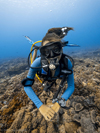
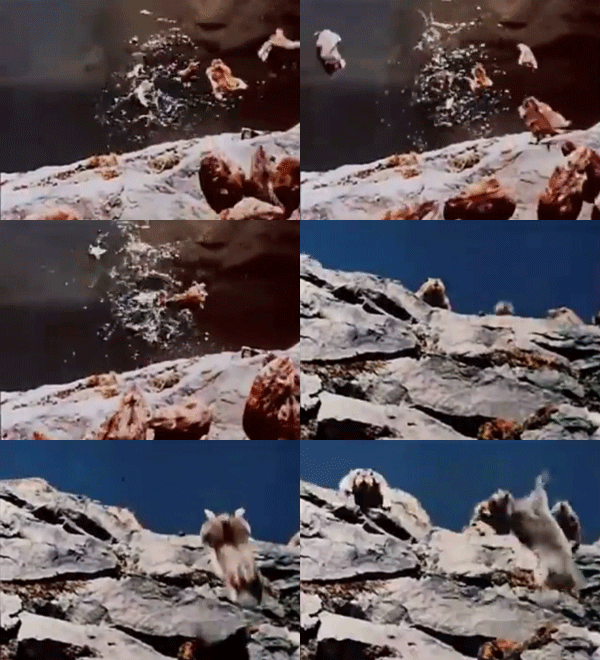



For more Vegan Film News, visit: wildlife-film.com/vegan.html






Find a Wildlife Film Freelancer Find a Wildlife Film Organisation
|





















































Please send in YOUR news for the next issue to the editor: news@wildlife-film.com |
Disclaimer: Wildlife Film News publishes information and opinions as a service to its readers. Wildlife-film.com |

