 Wildlife Film News Thanks so much for sticking with us post-GDPR Deadline!!
|


|
Welcome to our New Full Member, joining in May! Adam John Wilkinson - Adam has a real passion for wildlife filmmaking. With a degree in Zoology, he is knowledgeable in a wide spectrum of environments and habitats and takes every opportunity to learn more. He loves an outdoor life & has the resilience for lengthy periods in remote locations.
Join him, become a full member here: Wildlife-film.com/freelancers or Wildlife-film.com/companies |
|
SSL Certificate Installation Issues! In the run up to the GDPR deadline, to comply with data protection regulations, we installed SSL (Secure Sockets Layer) to the site. Our hosting company made a few mistakes, meaning the site wouldn't load for a while, but all is up and running again now. You should see a green padlock next the URL where it starts with https... Learn about SSL here. Not all pages are showing as secure yet as there's a lot of fiddling to do, so please bear with me as I work through them all. Thanks. |




 |
Tweet |

|
Places available on Wildeye's Intro to Wildlife Film-making Course! Wildeye's Introduction to Wildlife Film-making is their longest running course. The Summer dates are full, but you can still grab a place on the last dates of the year, 30 Nov–2 Dec 2018. One of of our most popular wildlife film-making courses, the introductory weekend offers you your first insight into the world of wildlife film-making. From pre-production to delivery, we’ll guide you through the many stages of the process from your first idea, research, scripting, travel, filming, editing, delivering as well as importantly selling and distributing your completed film. This course is broken down into bite-sized modules presented over two days including time spent filming at Pensthorpe, former home of BBC Springwatch. The wildlife film-making weekend is suitable for anyone including beginners, hobbyists, keen enthusiasts, those looking to undertake wildlife film-making degrees or apprenticeships all the way through to camera operators looking to diversify into wildlife film-making. As well as educating, inspiring and providing practical hands on experience its a great addition to any CV. More here: wildeye.co.uk/introduction-to-wildlife-film-making Check out the homepage for up-to-date availability: www.wildeye.co.uk |


|
‘Human swan’ is first woman to receive prestigious aviation award in 50 years
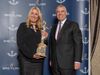
... WWT’s Sacha Dench received the Britannia Trophy in London on 17th May Conservationist Sacha Dench has been awarded the Britannia Trophy – one of the most prestigious honours in aviation – in recognition of her long-distance paramotor flight following the migration of endangered Bewick’s swans. This Royal Aero Club accolade, previously awarded to the likes of Concorde’s first supersonic flight, Sir Richard Branson and the Red Arrows, has not been received by a woman since 1967. Sacha was awarded the trophy for the ground-breaking ‘Flight of the Swans’ expedition, during which she flew 7,000km from the Russian arctic to the UK on a paramotor. During the adventure – spanning 11 different countries – she also became the first woman ever to cross the English Channel by paramotor. Sacha, a WWT (Wildfowl & Wetlands Trust) Conservationist, said:. “I was speechless when I was told I had won the Britannia Trophy. It’s an amazing accolade, particularly as it has been so long since it was awarded to a woman, and for a project that many said was impossible. “A lot of women helped, but I’m also grateful to those few men that believed a woman could do this and stuck their neck out to back me. “I learned a lot about the Bewick’s swans on my journey, and have developed a huge respect for them as aviators. That I’m receiving this award, for doing what each swan does at just 12 weeks old twice a year for their entire life, is testament to the complexity and hardship they must endure just to survive that journey, particularly in stormy autumn weather with the arctic winter on their tails. “I am delighted that Flight of the Swans has touched so many people and helped the Bewick’s swans’ plight make mainstream news. We now have many people and organisations galvanised to help across a mass of countries. “I am also more touched that fellow aviators have recognised this feat by awarding me the Britannia trophy, an award that will be invaluable in setting up future expeditions for conservation.” Dave Phipps, RAeC General Secretary, said: “We are so happy to be awarding this trophy to a truly remarkable woman. Paramotoring needs a lot nerve at the best of times and to conceive of a journey across such inhospitable terrain with huge logistical challenges - and then pull it off - is an amazing achievement. And of course, it is all enhanced by Sacha’s ability to communicate a great cause and enthuse young and old alike in the UK and around the world. She has provided immense inspiration to others and we are very proud to count her amongst these great aviators and the ‘Flight of the Swans’ project amongst great aviation achievements.” Sacha was presented with the award by HRH The Duke of York at the Royal Aero Club awards ceremony on May 17th in Piccadilly, London.
Visit: flightoftheswans.org & twitter.com/WWTSwanFlight & facebook.com/flightoftheswans Bewick's flyby. |
|
Offspring Tackles Animal Giants in New Sky One Series Bristol-based independent TV production company Offspring Films is finalising a new series for airing on Sky One this summer which puts biologist Patrick Aryee eye-to-eye with some of Earth’s biggest creatures and sees him exploring the issues they face in our rapidly changing world. The three-part series BIG BEASTS: LAST OF THE GIANTS mixes spectacular blue chip footage, from Africa, the Americas, Asia and Australia, with animated graphics to explore why size matters to individual animals, species and to biodiversity. Some of Patrick Aryee’s close encounters are with gentle giants – among them, whale sharks, orangutans, giant pandas and giraffes – but there are plenty of thrill-filled ones, too, including a plunge into the murky Amazon to track a 7-metre long anaconda, meeting a venomous Komodo dragon armed only with a forked stick and free diving alongside a sperm whale as big as a bus. Alongside today’s giants, the series also introduces a bizarre cast of even bigger prehistoric megafauna that once roamed Earth. They are brought to life using antiquarian book-inspired CGI illustrated plates, created and animated by another Bristol, UK, company, Moonraker VFX. Executive producer Alex Williamson says: “Filming on five continents in some of the world’s most remote locations, our crews have managed to capture rare and spectacular behaviours in ways never before seen by audiences, from anaconda breeding balls to elephant seal fights filmed at 1,000fps. By contrasting today’s mega species with the giants of long ago, we’re able to explore the advantages of being big in the natural world while also showing the very real threats that our biggest animals face today as the planet changes faster than ever before.” The series is the fourth to be made by Offspring for Sky with Patrick Aryee as the presenter. Episode one of BIG BEASTS: LAST OF THE GIANTS is due to debut on Sky One on Wednesday 13 June with episodes two and three airing on the following Wednesdays. The series is produced by Sam Hodgson. |
|
UK PREMIERE: Dominion London Screener ‘followed by Director Q&A’ Dominion, a new film exposing animal cruelty in modern farming practices, will have it's UK premiere in London on Saturday, June 16, 2018 from 2:30 PM - 5:00 PM, at the Prince Charles Cinema, Leicester Square. Exposing the dark underbelly of modern animal agriculture through drones, hidden & handheld cameras, the feature-length film explores the morality and validity of our dominion over the animal kingdom. The film is narrated by Sia and other celebrities, find out more here: dominionmovement.com The film starts at 2:30pm and afterwards there will be a 30 minute Q and A with the directors. PBN are hosting the UK premiere of this highly-anticipated documentary along with activism organisations Surge and The Save Movement.
Tickets here: eventbrite.com/e/uk-premiere-dominion-london-screener-followed-by-director-qa-tickets-46128095375
There are 25 free tickets available for people who are unemployed. Email: dominion@plantbasednews.org Find the film on: facebook.com/DominionDocumentary Like/Follow PBN: facebook.com/plantbasednews, instagram.com/plantbasednews & twitter.com/plantbasednews |
|
The BWPA 2018 Call for Entries Deadline is June 8! CALLING ALL PHOTOGRAPHERS AND VIDEOGRAPHERS – The British Wildlife Photography Awards 2018 are open for entries until the 8th of June. Find out more here: www.bwpawards.org With 15 separate categories covering all aspects of British Wildlife share your vision with us and compete for a chance to win a prestigious prize. The £20,000 prize fund includes £5,000 cash first prize and cameras from lead sponsor Canon. Be featured in a touring exhibition and reach millions across the UK through a touring exhibition and a beautiful book. Whether incredible behaviour, a characterful portrait, an atmospheric woodland scene, or the secret world that lives in the undergrowth we want to see your pictures and films. Be part of a competition and community that is supported by the UK's major conservation charities and celebrates excellence in wildlife photography and film. See the 2017 Films and be inspired here: www.bwpawards.org/videowinners2017 Highlights of all the Winning and Commended films of 2017:
The prize in the Wildlife in HD Video category is a Canon XA11 Full HD Camcorder. The XA11 is a Full HD camcorder which feature stunning 20x 26.8mm-576mm optical zoom lenses. Make sure you enter for a chance to win by midnight 8th of June 2018. |
|
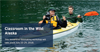
Deadline for AUCEF's Classroom in the Wild: Alaska Registration is June 15th!! The School of Communication's Center for Environmental Filmmaking is excited to offer students Classroom in the Wild: Alaska, a nine-day adventure into the Alaskan wilderness. Students will be introduced to the challenges and fun that comes along with environmental filmmaking. The program will take place from July 20-29, 2018. The class is open to the public. The class is for both first-time and experienced filmmakers and can be taken in conjunction with independent studies for AU credit. In order to register, you must email Seth Ransom, the general manager of Learn to Return at LTRoffice@alaska.net. There is a non-refundable $500 deposit with registration. Fees cover transportation, food, gear, and lodging in Alaska. Regular Registration $2600 – Deadline: June 15 For more information, contact Professor Chris Palmer at palmer@american.edu Visit: american.edu/soc/environmental-film/classroom-in-the-wild-alaska.cfm |
|
JWFF are looking for Dolby Atmos ready titles!! Yoshiharu McNicoll, of the Japan Wildlife Film Festival, is looking for Dolby Atmos ready films in the Natural History genre. So, if you have any Dolby Atmos ready content for possible sales in Japan, please email yoshi@naturechannel.jp directly for further info. |











|
Enter the Science Media Awards 2018 by June 8th... Extended Deadline! Science Media Awards Open for Entries! Enter over 20 categories that cover various science disciplines, types of programs and crafts. Preliminary judging is thorough, with finalists announced in early August. Winners will be celebrated September 27, at an Awards Gala in Boston during SMASH18... ENTER YOUR FILM by the 8th of June. 2018 Science Media Awards Entry Trailer Join Jackson Hole WILD and WGBH in Boston, September 25-27, 2018, for the Science Media Awards & Summit in the Hub (SMASH), where more than 300 science media stakeholders will gather to celebrate exceptional media, cutting-edge discoveries and explore new ways of communicating the wonders of science to a global audience in a rapidly-changing media landscape. Registration is now open! Also, WGBH and Jackson Hole WILD are accepting applications to be a SMASH Fellow! In September, fellows will convene in Boston from September 25-27 for an opportunity to attend three days of fascinating sessions highlighting recent discoveries in science and trends in science media distribution, as well as special pre- or/and post-conference workshops. Be a Science Media Awards Judge! Do you want to experience the best of emerging science media? See the latest and greatest? Become a judge for the Science Media Awards! |
  |
Wildscreen Photography Panda Award Deadline: 8th of June... Enter this brand new award!! For the first time in Wildscreen's 36 year history, the 2018 Wildscreen Panda Awards, widely regarded as the most prestigious accolade in the wildlife film and TV genre, will recognise the craft of wildlife photography, with the introduction of the Wildscreen Photo Story Panda Award. The award is being launched to further cement the conservation charity’s commitment to and belief in photography as a powerful and impactful tool for raising awareness about and protecting the natural world across society. It will celebrate and recognise the very best in photographic narrative, uniting it alongside the world’s very best natural world film talent. Call for entries Entrants have between the 18 April to 8 June 2018 to submit photo stories comprising of between six to ten images that have an aspect of the natural world as a central focus, with a clear and powerful narrative weaved between the images. The competition is open to professional and amateur photographers worldwide, over 18 years. The judges will also be looking for exceptional emerging talent photographers, under the age of 30, which will be considered for an ‘Emerging Talent Photo Story Panda Award’. Entries can be made via the online submission portal on the Wildscreen website, available at: www.wildscreen.org/panda-awards
Find out more here: www.wildscreen.org/festival/panda-awards/photo-story-panda-award Visit: wildscreen.org/festival ; find Wildscreen Fest on Facebook, follow @WildscreenFest on Twitter. |
|
Early Bird Wildscreen Festival Passes - ON SALE! Buy your delegate pass before July the 31st and get 20% off a full price week pass... i.e. save £100: wildscreen.org/festival/tickets Check out the Wildscreen Festival 2018 Trailer
|
|
Spend More Time In The WILD with Abbie Barnes Having twice walked across the country and explored some of the highest, most remote regions in the UK, Abbie has become eager to share the hidden beauty of our countryside and wilderness areas. Thus she has made it her mission to inspire others to don their walking boots, gather their friends and family, and head outdoors to explore our many extraordinary natural wonders and 'Spend More Time In The WILD'. Along the way she fearlessly shares how spending time in the natural world helps her to work through her struggles with mental health, and seeks to encourage viewers to join the journey by facing up to their own fears and stepping out to see their dreams become reality. Find out more and help fund the next 4 episodes of the 'Trails' series, incl. the Coast to Coast, West Highland Way, Great Glen Way and Two Moors Way: kickstarter.com/projects/503109371/documenting-the-uks-long-distance-hiking-trails |






|
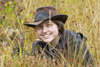
Don't swim with dolphins... A message from marvellous member Karla Munguia Colmenero Mexico City officially banned dolphinariums last month! This is great news, and a victory especially close to campaigner Karla's heart... She is the official Keiko film ambassador in Mexico and she gives some compelling reasons why you should not consider swimming with captive dolphins in this interview!
We love you Karla!! |
|
Escape to Costa Rica Trailer from Libor Spacek Official trailer of a trilogy - three documentary films - about nature and people in Costa Rica shot in 4k resolution, completed in March and directed by Libor Spacek. |
|
'Ephyra of Cassiopea feeding' from Rubén Duro Pérez, music by Davide Caprelli Cassiopea, also called "upside-down jellyfish", is a very special jellyfish that can be found in warm coastal waters around the world. It has symbiotic algae inside its body called zooxanthelae which provides nutrients to the jellyfish through photosynthetic reactions. Its reproduction can be sexual (by means of gametes) and asexual (by means of gemation or strobilation). The result of strobilation is the formation of ephyrae, which could be considered as larvae of the jellyfish. The video shows one ephyra of Cassiopea capturing and engulfing a larva of brine shrimp (Artemia salina). Ephyra of Cassiopea feeding Follow Science to Images: Vimeo.com/scienceintoimages |
|
‘To film wildlife one needs to be ready for the unexpected’ Award-winning wildlife filmmaker, Mike Pandey speaks to Bhumika Popli about his past work, his future projects, the crisis of wildlife filmmaking in India, and the threat mankind poses to nature. It was not a surprise to see the Delhi office of wildlife filmmaker Mike Pandey done in green and brown interiors. Perched on the backrest of a chair was his famous khaki hat, which makes you think he has just returned from one of his wildlife adventures. Pandey has made numerous wildlife films, which, over many years, have enlightened viewers on the havocs wreaked on nature by mankind, and the destruction of wildlife. Q. Could you talk about your major films on wildlife, and how they contributed to social change? More here: sundayguardianlive.com/lifestyle/film-wildlife-one-needs-ready-unexpected |
|
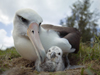
Birds Living on an Island 2,000 Miles From People Are Dying From Our Plastic Pollution In the trailer for his documentary Albatross, filmmaker Chris Jordan shares haunting images of seabirds whose lives were cut short because of plastic. The documentary, filmed on Midway Island in the North Pacific Ocean, situated 2,000 miles from the nearest continent, aims to shine a light on the critical issue of plastic pollution and its many victims.
More here: onegreenplanet.org/news/birds-living-island-miles-from-people-dying-plastic-pollution ALBATROSS will be released on June 8, World Oceans Day, in collaboration with partner Parley for the Oceans and the United Nations. Visit: www.albatrossthefilm.com |
|
James Honeyborne ('Blue Planet II'): 'Our understanding of the ocean has fundamentally changed' “Who would have thought marine biology and oceanography could engage such an audience?,” “Blue Planet II” executive producer James Honeyborne asks in an interview with Gold Derby (watch the exclusive video below). The BBC documentary miniseries was the United Kingdom’s most-watched television program of 2017. He continues, “But it’s part of our world and it’s the world that we don’t know.… the scale of this place — there’s still so much to explore and it’s so important to us.”
More here: goldderby.com |
|
BBC, Tencent enter into three-year partnership Chinese internet giant Tencent’s film unit, Penguin Pictures, and British pubcaster BBC have signed a three-year copro and content development partnership. Under the deal, Penguin Pictures and the BBC will also partner across business licensing, marketing and distribution of “content-rich” documentaries on a range of topics. The two companies – under the BBC and Ten cent Video – have previously worked together, having jointly produced the 2017 natural history juggernaut Blue Planet II. More here: Realscreen.com |
|
Fans enraged by Blue Planet II’s Bafta loss David Attenborough's documentary series lost out to Basquiat: Rags to Riches. BBC’s Blue Planet II lost out in the specialist factual award category at the Bafta TV Awards on Sunday night, and fans were not happy about it. Many took to Twitter to share their discontentment after another BBC doc, Basquiat: Rags to Riches, beat David Attenborough’s hugely popular nature series to take home the award.
More: radiotimes.com/news/tv/2018-05-14/fans-enraged-by-blue-planet-iis-bafta-loss Blue Planet II did win the Virgin TV Must See Moment for 'Mother Pilot Whale Grieves':
Visit: bafta.org/television/awards/virgin-tvs-must-see-moment |
|
Springwatch a good antedote to depressing news – Michaela Strachan The TV presenter, returns for a new series of the BBC’s seasonal nature programme late May, also expressed her sadness over the departure of long-running host Martin Hughes-Games, who stepped down earlier this year. Strachan said that last year’s Springwatch came at the right time for viewers as it coincided with the Grenfell Tower fire and the general election. "There was a lot of depressing stuff going on, so people want to come into a place where it's joyful and you're celebrating wildlife" “We want people to feel like they’re coming to a place where they feel comfortable, it feels friendly, it feels warm, and they learn something along the way. “It is a feel-good show and it’s interesting because last year there was a lot of awful stuff that went on during Springwatch last year. More here: belfasttelegraph.co.uk |
|
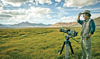
Who is Springwatch star Gillian Burke? 5 fascinating facts about the TV presenter Springwatch is back for 2018, hosted by the popular trio of Gillian Burke, Michaela Strachan and Chris Packham. As the programme begins its exploration of the British countryside, we get to know Gillian a little better. She comes from a rich cultural background: Gillian’s family moved around a lot – her grandparents met in Kenya, but her grandmothers had travelled there from the Seychelles. She told the Guardian: “No one really comes from Seychelles: everybody arrived through trade or other means. My grandmothers were from Mauritius and Somalia. We’re all creole. “I am a product of generations of people having moved between continents. My paternal grandfather was born in Trinidad, the son of a freed slave and a Seminole Indian.” Gillian joined the BBC’s Natural History Unit after completing her degree in Bristol. More here: tv.bt.com Catch up on this past week of Springwatch on iPlayer, staring guest presenter Steve Backshall: bbc.co.uk/programmes/b007qgm3/episodes/player Springwatch returns to Sherborne - Check out the blog: bbc.co.uk/blogs/natureuk The series continues on Monday the 4th of June at 8pm on BBC Two: bbc.co.uk/programmes/b0b611k8 It is the second week of Springwatch, and Michaela Strachan and Chris Packham are back to catch up with all the latest news and goings-on on the nest cameras from over the weekend. This week they are joined in Sherborne by Iolo Williams, who went out with Michaela to test a golden eagle against a white-tailed eagle in a Lord of the Wings spectacular. Expect bad hobbit puns and fancy dress. Meanwhile, Gillian Burke has moved south, and is just outside Leeds to see how a series of disused mines have been reclaimed as spaces for nature - with extraordinary results. |







|
Sir David Attenborough documentary showcases Tasmania by Max Moller & HumbleBee Films A Sir David Attenborough-narrated documentary featuring the vast wilderness of Tasmania aired on ABC (Australia) on Sunday 3rd June at 7.40pm. The legendary naturalist’s distinctive voice will be the soundtrack to a 50-minute program featuring some of the state’s most unique flora and fauna. The documentary was produced by Humble Bee Films in association with Black Devil Productions. Sir David described life in Tasmania as very different from the mainland. “[Tasmania’s] animal inhabitants are every bit as extraordinary as they are bizarre – a cast of black devils, white wallabies, miniature penguins and giant trees,” he said. More here: examiner.com.au & tvtonight.com.au |
|
MWF 16: Alex Jones - Adventurer & Filmmaker Specializing in Macro-Cinematography Alex's passion for macro-wildlife cinematography is evident as he explains his aspirations as a wildlife filmmaker.
Visit the Master Wildlife Filmmaking Podcast website: masterwildlifefilmmaking.com |
|
Zoom H1n – What is it? – from PinkNoise Systems This brief promo video shows you the Zoom H1n Handy Recorder. The handy little recorder that allows you to record audio anywhere and everywhere. Read more here: pinknoise-systems.co.uk/zoom-h1n-handheld-portable-recorder.html |
|
Nuzzle a panda, kiss a lioness: Jane Goodall takes us on her wildest adventure yet The wildlife legend wants to take the whole world on safari. As her stunning new VR film series launches, she talks about firing up David Attenborough – and explains why Andy Serkis was ‘fantastic’ as an ape. Amazing!” gasps Jane Goodall, as she tilts her head in all directions, oblivious to the outside world. Goodall is the primatologist who changed our understanding of nature by recording chimpanzees using tools, a skill previously thought to separate humans from animals. But today Goodall is the one mastering a new tool: the 84-year-old is sitting spellbound on a sofa, wearing a VR headset and a wry smile. She’s watching a film from The Wild Immersion, a project intended to raise awareness of – and perhaps even save – the natural world, via 360-degree virtual reality wildlife documentaries. Introduced by Goodall, they really are immersive: you’re practically nuzzling into the pandas’ fur, flying with the flamingos over an African lake. Then a lioness comes up and sniffs your face, before a giraffe walks right over you, its vast legs splayed above you like pillars. So that’s what a giraffe’s underneath looks like. Turn your head and the savannah stretches to the horizon in every direction.
More here: theguardian.com/film/2018/may/21/jane-goodall-the-wild-immersion-vr-safari-wildlife Visit: thewildimmersion.com |
|
Documenting the African elephant’s ‘last stand’: Q&A with filmmakers Cyril Christo and Marie Wilkinson
“Walking Thunder” can feel like a family trip around the continent of Africa — if your parents were award-winning photographers and explorers. The mesmerizing film about the African elephant by husband-and-wife team Cyril Christo and Marie Wilkinson basks in wide-open landscapes, intimate conversations with Africa’s indigenous herders and hunters, and haunting, close-up stares from the largest living land animal on Earth. But the film is really about Lysander, Christo and Wilkinson’s son, and we see much of the story through his eyes. He’s our guide as the family learns of the complex relationship that the Samburu, the Maasai and the Waliangulu peoples of East Africa have with the elephant. Even early on — the film draws from more than a decade and a half of footage — just as Lysander is beginning to walk and talk, his insatiable curiosity about elephants shifts the perspective that one might expect from a documentary on African wildlife.
Read more: news.mongabay.com/2018/05/documenting-the-african-elephants-last-stand-qa-with-filmmaker-cyril-christo Visit: christoandwilkinsonphotography.com |
|
Wildlife documentaries: Filmmakers dodge the hard truths Aldo Leopold’s A Sand County Almanac, from 1949, may not be the precise catalyst for the sharpened awareness of our impact on the natural world, but it is as good a point as any to recognise as a kernel moment. His gentle insights into how excess has skewered this planet found empathy among those with an alert conscience. Walt Disney continued that pioneering work, albeit at a very different pitch. James Lovelock’s and Lynn Margulis’ 1970s Gaia hypothesis encouraged that awakening, too. When he made his wildlife documentary on New Guinea’s birds of paradise, 64 years ago — his first — David Attenborough began a career that now looks more like missionary work than TV production. Anyone with the perception of the Easter Island statues, remnants of a lost civilisation he spoke about so challengingly, cannot but be moved by his work. He brought long-ignored responsibilities into the public forum and made many of us, but not enough, better custodians of our world. He was the first to politicise nature programming. He matched unprecedented film footage with unprecedented scripts that demanded more of us. That work continued with Al Gore’s An Inconvenient Truth, in 2006. Nature programmes had become television gold. We followed the fate of Yellowstone wolf packs or Antarctic emperor penguins, as once we followed The Riordans or the Ewing family’s Dallas adventures. Seal pups became babies. We adopted snow leopards. Species were reintroduced to ranges where they had become extinct and the inevitable documentary followed. Wildlife was box office and very many, hugely positive developments followed from this parity of esteem. Despite that, scientists have warned that we face “biological annihilation” and that a sixth mass extinction in Earth’s history is underway. Human overpopulation and over-consumption are at the root of this crisis, one that scientists have warned threatens the survival of human civilisation. Is it possible that this dangerous contradiction stands because of what might be termed coffee-table nature documentaries? Is it possible that an idiom established to show the beauty and centrality of nature, and the threat it faces, has been transformed into another vapid entertainment? A kind of exploitative celebrity charade in wellingtons? Are apolitical, non-judgemental, green-washing nature documentaries a part of the problem, rather than part of the solution? Do they create a false impression of robust abundance? Is a programme that touched on, say, curlew or corncrake collapse, without pointing out that habitat destruction is the root cause, culpable in the kind of apathy that allows Food Harvest 2025 to stand? Is a beautifully-filmed piece on a gannet colony that does not mention sea-bird population collapse caused by over-fishing a kind of fake news? Are these evasions the reason we still think these programmes are about the birds and the bees, rather than our future? Climate change and population are our defining issues and we have yet to confront them in a way that might avert chaos. Any process, any contribution that delays urgent action borders on betrayal. Unfortunately, far too may of today’s wildlife and country lifestyle programmes can be so accused. From: irishexaminer.com |
|
Giraffe headbutts filmmaker to death at South African safari lodge ‘We are not going to shoot Gerald. He was not in the wrong’ An award-wining film director was headbutted to death by a giraffe while shooting footage at a safari lodge in South Africa. Carlos Carvalho, 47, was taking closeups of the animal named Gerald when it suddenly swung its neck and knocked him flying through the air. Mr Carvalho died of his injuries that night after being flown to a Johannesburg hospital, said filming agency CallaCrew. He had been shooting scenes at the Glen Afric farm in Broederstroom, which is famous for featuring in the British TV series Wild at Heart. More here: independent.co.uk Also read on Kormorant.co.za: Filmmaker killed by giraffe after getting too close |
|
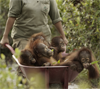
Blue Ant pre-sells Orangutan Jungle School to the UK Distributor Blue Ant International has pre-sold the 10 x 60-minute 4K docusoap Orangutan Jungle School (pictured) to the UK’s Channel 4. Member NHNZ is currently in production on the 10-part series that follows the antics, triumphs and tragedies of the orphaned orangutans in the Borneo Orangutan Survival Foundation’s primate rescue and rehabilitation project. Orangutan Jungle School is created, executive produced and written by Judith Curran. Kyle Murdoch serves as executive in charge in production and Anya Durling is head of development. Anna Sand is the executive producer for Blue Ant Media. More here: Realscreen.com/2018/05/22/hunting-isis-doc-series |
|
'Planet Earth' Parody Reads A Little Too Much Into Animal Behavior They're not people. But it's fun to imagine they are. David Attenborough seems insistent that he knows EXACTLY why animals are doing everything they're doing in Planet Earth II. Maybe they're just animals, Dave.
Visit: huffingtonpost.co.uk F**ked Planet: Attenborough's New Documentary After a particularly depressing Earth Day, a crestfallen David Attenborough announced a new documentary series.
Maybe this one's a little too close to the truth? Not the end for David though we certainly hope! |
|
Ottawa International Vegan Film Festival Call For Entries Submit your film to OIVFF! They are welcoming vegan-themed films from film-makers around the world – both short and full-length features, fiction and documentary. All entries will be viewed prior to the Festival by a pre-selection Committee chaired by the Festival Director and Programming Director. Finalists chosen by this Committee will be screened by an appointed international jury. All films must be submitted through Film Freeway HERE Entry Deadlines:
July 31, 2018 Visit: www.oivff.com & Facebook.com/OIVFF |
|
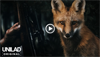
The Dark Side Of Britain: The Hunt - A UNILAD Original Documentary In the first episode UNILAD's new original series: 'The Dark Side of Britain', we explore whether the ban on hunting foxes with hounds, which was put in place in 2002 in Scotland, and 2005 in England and Wales, has had any affect on the welfare of foxes.
Subscribe to Unilad: Youtube.com/user/uniladtv |














Find a Wildlife Film Freelancer Find a Wildlife Film Organisation
|

































































Please send in YOUR news for the next issue to the editor: news@wildlife-film.com |
Disclaimer: Wildlife Film News publishes information and opinions as a service to its readers. Wildlife-film.com |

