 Wildlife Film News
|
Love Wildlife Film News? We want to improve the resource, so please subscribe via PayPal if you can! If some of our many thousands of subscribers were to give a small monthly or annual donation, we could invest that money in updating the site and newsletter, including our daily Paper.li newsletter too!! Thank you. :) |



|
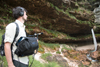
Welcome November's New Full Member! Axel Drioli - A freelance Immersive Audio Producer Axel has been exploring this audio field for quite a while. His focus is on Immersive Storytelling/Documentaries and how to integrate Spatial Sound to make immersive experiences convincing and emotional. His goal is to make people aware of people, wildlife and nature using immersive sound. Visit: www.axeldrioli.com Join him, become a full member here: Wildlife-film.com/freelancers or Wildlife-film.com/companies |

 |
Tweet |

|
New Wildeye Course Dates for Summer 2018!! Our longest running course is back next year: Introduction to Wildlife Film-making – The Spring dates filled up quickly, so we've scheduled Summer dates too: 17-19 August 2018 One of of our most popular wildlife film-making courses, the introductory weekend offers you your first insight into the world of wildlife film-making. From pre-production to delivery, we’ll guide you through the many stages of the process from your first idea, research, scripting, travel, filming, editing, delivering as well as importantly selling and distributing your completed film. This course is broken down into bite-sized modules presented over two days including time spent filming at Pensthorpe, former home of BBC Springwatch. The wildlife film-making weekend is suitable for anyone including beginners, hobbyists, keen enthusiasts, those looking to undertake wildlife film-making degrees or apprenticeships all the way through to camera operators looking to diversify into wildlife film-making. As well as educating, inspiring and providing practical hands on experience its a great addition to any CV. Visit/book: www.wildeye.co.uk/introduction-to-wildlife-film-making Check out the homepage for up-to-date availability: www.wildeye.co.uk |
|
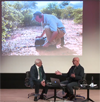
The Longplayer Conversation: Chris Watson and David Attenborough The 2017 Longplayer Conversation brings together long time collaborators, sound recordist Chris Watson and naturalist and broadcaster Sir David Attenborough. Hear highlights from this fascinating conversation informed by their shared interests and experiences as sound recordists in the natural world.
Part of a Season of Sound (wbl.uk/events/listen-140-years-of-recorded-sound), celebrating the British Library’s sound archive. |
|
Wildlife Film-maker Richard Kemp dies age 72 It is with great sadness that I have to report the death of Richard Kemp at the age of 72. It’s impossible to say the name Richard Kemp without including the words “and Julia” because Richard and Julia Kemp were a couple, partners and a team. Together they were responsible for some remarkable wildlife documentaries over a career of well over 40 years. Although the majority of these were produced for Anglia TV’s “Survival” series, the BBC, Discovery and Tigress Productions all benefitted from their talents. In more recent times they also turned to producing their own DVDs including Ten Days to Paint the Forest and Artists for Nature in the Pyrenees. Their list of productions is impressive and includes: Bears of the Russian Front, Giants of Kaziranga, Cheetahs in a Hot Spot, Missing Lynx, Night Raiders, Polar Bears: Hunters on Ice and Land of the White Fox. His adventures took him to the high arctic among Brown bears and Grey wolves, in search of Tigers in India, Snowy Owls in Siberia, and to Kenya, Sudan, Namibia, Peru and many other remote parts of the world. I was fortunate to work with Richard in Spain in the mid 1990s on films on Genets, snakes and Iberian Lynx. In 1992 he was the first person to film a truly wild Siberian Tiger and the first to catch on film in Spain both the Bear and the Iberian Wolf in the wild. Films produced in Southern Sudan in the 70’s & 80’s of the White-eared Kob migration “Mysterious Journey” and of the tribal fishermen in “The Swamp People” are to this day still the only documentation from these inaccessible locations. He learnt to fly his own plane in order to get an aerial viewpoint on the story he was telling. This passion has now developed into a keen interest in the latest “drone” technology. Richard won many awards for his camerawork and in 1984 was named BBC Wildlife Photographer of the Year. He was a very keen sailor and we sadly missed having dinner together a few weeks before his death because he had to move his yacht along the south coast in preparation for winter. He had shot a deer on his farm near Whitwell and was offering a venison supper. He didn’t believe in waste and was a great forager of “roadkill” on the narrow lanes around his home”. His sudden passing after a brief illness was devastating for his family and friends. Richard was a much-loved father to Malcolm and Emma and a loving and doting grandfather. My love to them and to Julia. Mike Linley |






|
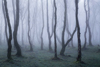
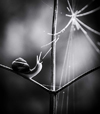
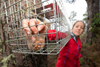
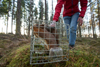
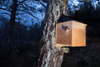
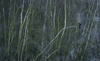
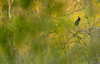
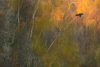
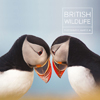
BWPA 2017 Winners Announced! The British Wildlife Photography Awards proudly announce the winners for 2017. The awards celebrate both the work of amateur and professional photographers and the beauty and diversity of British wildlife. Winning images are chosen from thousands of entries in fifteen separate categories including a category for film and two junior categories to encourage young people to connect with nature through photography. The Overall Winning Image, ‘Heathrow Roostings’ of a Pied Wagtail at Heathrow airport, is by Daniel Trim. In winter, pied wagtails roost communally in urban areas, both for protection and for the additional warmth given off by buildings and lights. This extra degree or two can make the difference in harsh weather. Here, a single individual out of hundreds is silhouetted by the lights of Terminal 5 at Heathrow Airport. “Living near London I'm always amazed by how nature can benefit from urban areas. There are many urban pied wagtail roosts across the UK during winter and they are incredibly important for the birds survival during these harder times, both for the additional warmth our buildings generate but also because there's safety in numbers. I waited for a cold night when their numbers swell. After about 30 minutes I hadn't seen a single wagtail, however, it wasn't long until hundreds were dropping in to the trees next to the terminal building, all calling away. It's an impressive site to see and once the initial excitement was over I spent time looking for birds I could isolate against interesting background lighting. The birds soon tuck their heads under their wing to sleep which doesn't make the silhouette as pleasing, you have to get lucky with one waking up briefly to have a look around.” Daniel Trim. “This stunning photograph perfectly captures how magical wild experiences can be, even when they’re right on your doorstep. It’s a great reminder that wildlife can be found in the most ordinary places, every single day. We love that a pied wagtail has as much power to inspire someone as a rare animal or dramatic landscape.” Lucy McRobert, Communications Manager, The Wildlife Trusts Tanya Steele, Chief Executive, WWF-UK comments “This latest collection of stunning photographs from the British Wildlife Photography Awards is a fabulous celebration of the wealth of biodiversity our small and densely populated island still possesses. As well as, of course, great testament to the talent, artistry, determination and commitment of the photographers who created them. WWF is therefore delighted to continue its support of this inspiring competition, raising awareness of the natural beauty and variety of life we have within and around our shores, and the on-going battle to protect it”. The winners: URBAN WILDLIFE: Heathrow Roostings, Pied Wagtail by Daniel Trim ANIMAL BEHAVIOUR: Crepuscular Contentment (Eurasian badger) Derbyshire, Andrew Parkinson ANIMAL PORTRAITS: Natural Beauty (Atlantic gannet) Isle of Noss, Shetland Islands, Melvin Redeker WILD WOODS: A Magical Morning (Silver birch) Peak District National Park, Derbyshire, Francis Taylor HABITAT: Wren on Frost-Encrusted Fern, Dunham Massey, Cheshire, Ben Hall HIDDEN BRITAIN: Green Hydras, Derbyshire, Alex Hyde CLOSE TO NATURE : Wing Tips (Emerald damselflies) Broxwater, Cornwall, Ross Hoddinott COAST AND MARINE: Emergence (Northern gannet) Bempton Cliffs, Yorkshire, Caron Steele BLACK AND WHITE: Web of Life (Brown-lipped snail) Thetford Forest, Norfolk, Paula Cooper BOTANICAL BRITAIN: Common Reeds Lindow Common, Wilmslow, Cheshire, Steve Palmer DOCUMENTARY SERIES WINNER: Translocation of Red Squirrels, Scotland, Peter Cairns BRITISH SEASONS: Great Cormorants, Holme Fen National Nature Reserve, Cambridgeshire, Ben Andrew WINNER 12-18 YEARS: The Golden Hour Hunt (Short-eared owl) Farlington, Hampshire, Matthew Roseveare WINNER UNDER 12 YEARS: Puffin in a Hole (Atlantic Puffin) Skokholm Island, Pembrokeshire Wales. Oliver Teasdale WILDLIFE IN HD VIDEO WINNER: “Caddisfly Larva” Blackdown Hills, Somerset, Liam Marsh
Highlights of all the Winning and Commended films of 2017:
Highly commended entries: Look a Little Closer by Simon Owen |















|
Wildscreen Festival 2018: World’s most prestigious wildlife TV and film awards open for entries. Diary dates: The ‘Green Oscars’ of the international wildlife film and TV industry, the Wildscreen Panda Awards opens for entries today (Wednesday 1 November). Wildlife and environmental filmmakers from around the world can submit their productions to be in with a chance of winning the most coveted awards in the genre when the world’s biggest festival of natural world storytelling returns to Bristol, UK, from the 15-19 October 2018. Launching the Festival’s latest call for entries, Lucie Muir, CEO of the charity behind the biennial event, said: “The Panda Awards have sat at the heart of the Wildscreen Festival since they were presented at the first Festival back in 1982 and they remain the highest honour in the international wildlife film and TV industry. And we’re thrilled to launch our 2018 competition on the same day when our home city, Bristol, has been announced as a UNESCO City of Film. A staggering 40 percent of all natural history productions come through Bristol and today’s announcement really cements our global reputation as a world-leading centre for film.” Entries must be submitted by Wednesday 21 March 2018, via the online submission portal on the Wildscreen website, available at: www.wildscreen.org/panda-awards For the first time this year, the charity is offering an earlybird rate for productions entered before 31 December 2017. The Wildscreen Festival is a not-for-profit initiative by the UK-based charity Wildscreen, which is also behind Arkive, a free-to-access online encyclopaedia about the natural world, and Wildscreen Exchange, a global hub giving conservation organisations access to imagery, footage and expertise which helps them to tell the most pertinent conservation stories of our time. Check out the Wildscreen Festival 2018 Trailer |
|
Calling all entries for the NaturVision film competition! The 17th International NaturVision Film Festival is set to take place in Ludwigsburg, Germany from 19 to 22 July 2018. Our film competition is now open! We look forward to your entries, ranging from fascinating and beautiful nature and wildlife films to critical and informative documentaries on the environment and sustainability, films for children, documentaries with their own unique score, and submissions for our Newcomer category. Thanks to the support of our sponsors, many of our competition categories will again carry generous prize monies in 2018! For more information on this and the competition, visit our NaturVision webside. The closing date for entries is 18 March 2018. Please register your film via our website at festival.natur-vision.de/en/filmfestival/film-competition/film-subscription.html Our special theme for 2018, aiming to raise awareness of the subject, will be "Soil Landscapes" Ralph Thoms, Festivalleitung |
|
2017 JHWFF Festival Recordings Did you miss a session from the Jackson Hole Wildlife Film Festival? Not to worry! They've been posted on their website! Re-Wilding the Planet with Kris Tompkins and Greg Carr
Getting Communities to Fall in Love with Their National Park
Filmed at the 2017 Jackson Hole Wildlife Film Festival & Conservation Summit. For more than twenty years, 650+ media professionals have gathered in the shadows of the Tetons to celebrate excellence, exchange ideas and be inspired by the landscape and each other. An unparalleled industry gathering of broadcast and media stakeholders, writers, leading scientists and conservationists. For more sessions, visit: www.jhfestival.org/session-recordings.html |
|
Announcing the International BIG CATS Film Festival with CITES & JHWFF Winners to be announced at UN Headquarters on World Wildlife Day! The Secretariat of the Convention on International Trade in Endangered Species of Wild Fauna and Flora (CITES) and Jackson Hole Wildlife Film Festival have partnered once again! The International BIG CATS Film Festival creates compelling programming for local organizations to inspire public engagement and personal commitment through storytelling and media while it is still possible to save these majestic creatures and the habitat they range. Film entry is free, and so will be the public screenings that result! We challenge wildlife filmmakers from around the world to submit. Together, we will galvanize the power of media to inspire wonder, catalyze change and move the dial on big cat conservation. Join the fight to save Lions, Jaguars, Leopards, Tigers, Cheetahs, Snow Leopards, Clouded Leopards and Pumas! Learn More: www.jhfestival.org/on-tour-with-the-un.html |
|
CALL FOR DCEFF 2018 Submissions Late Submissions Deadline: January 1, 2018 We're looking for heart-pounding, jaw-dropping and groundbreaking films. Environmental stories from the front lines of today's most pressing issues; stories that celebrate the planet and inspire environmental stewardship. Shorts, documentaries of all lengths, and narrative features -- from wildlife and adventure to natural history and popular science. Explore our database of past Festival selections and submit your film for consideration. With $30,000 in cash prizes available, what do you have to lose? (HINT: Absolutely nothing!) More here: dceff.org/submissions. The 26th Festival will be held from March 15-25, 2018. |











|
Natural history programmes were almost an endangered species reveals Blue Planet producer Alastair Fothergill was honoured with the BBC Trustees Award at the 2017 Grierson British Documentary Awards. Imagine a television landscape devoid of epic wildlife series – programmes that, themselves, had become an endangered species. Given the massive popularity of the current hit Blue Planet II, that seems improbable, but that’s exactly the situation that prevailed a couple of decades ago, according to the man credited with making the UK one of the world’s leading producers of natural history films. In a 35-year career Alastair Fothergill’s hits include Frozen Planet and the original versions of Planet Earth and Blue Planet. “It may be difficult to believe now with the massive success of Blue Planet II and Planet Earth II, but landmark natural history wasn’t always flavour of the month,” he said at an awards ceremony on Monday night. “When I was appointed head of the BBC’s Natural History Unit in 1992 there was a strong feeling that we had shot our bolt. David Attenborough had just done his last big epic series Trials of Life and there was a thought that we had filmed every wildebeest in the Serengeti.” That was the backdrop to his pitch, a few years later, to make the first Blue Planet series. “I was quite nervous when I went to see the then controller of BBC1, the aptly named Peter Salmon, and said ‘would you take eight hours on fish. Oh and by the way David Attenborough can’t author it or present it because the diving is too technical, oh and by the way I want a really large budget because we want to film the open ocean and deep ocean in a way that had never been filmed before’. I really believe that only the BBC would have had the nerve to commission that series.” Fothergill made his comments at the Grierson British Documentary Awards where he was honoured for his work in natural history film-making.* More here: Radiotimes.com *Lorraine Heggessey presented the award saying: "Alastair Fothergill has transformed the natural history genre and through his enduring partnership with David Attenborough, has created some of the most memorable television moments of all time. He is one of the most talented people in our industry, a pioneer whose ambition makes him soar to ever greater heights, who constantly innovates and find new ways of engaging the audience – and whose passion for his subject is inspirational. He has redefined landmark series not just for his own genre, but for all specialist factual and with the exception of Sir David Attenborough, few individuals have had such an impact on the wildlife film-making industry on the small and big screen." |
|
Unless we regain our historic awe of the deep ocean, it will be plundered. In the memorable second instalment of Blue Planet II, we are offered glimpses of an unfamiliar world – the deep ocean. The episode places an unusual emphasis on its own construction: glimpses of the deep sea and its inhabitants are interspersed with shots of the technology – a manned submersible – that brought us these astonishing images. It is very unusual and extremely challenging, we are given to understand, for a human to enter and interact with this unfamiliar world. The most watched programme of 2017 in the UK, Blue Planet II provides the opportunity to revisit questions that have long occupied us. To whom does the sea belong? Should humans enter its depths? These questions are perhaps especially urgent today, when Nautilus Minerals, a mining company registered in Vancouver, has been granted a license to extract gold and copper from the seafloor off the coast of Papua New Guinea. Though the company has suffered some setbacks, mining is still scheduled to begin in 2019. More here: theconversation.com |
|
'Getting to know an octopus' by Craig Foster I grew up in a small wooden bungalow on the Atlantic Ocean at the tip of Africa and when I was 3 years old, I started swimming in the kelp forest. This sea forest is my other home. It's where I feel safest on Earth - a place of awe and wonder, away from the suburban abyss. After spending many years filming with San-Bushmen master trackers in the Kalahari desert of Botswana I returned to my kelp forest home and began a protocol of diving every day for a period of years - without a wetsuit. I wanted to see if my body could adapt to the cold Atlantic water and I wanted to learn to track animals underwater. In the first few years my body slowly adapted to the cold, but the tracking seemed impossible until I started watching octopuses. I began to recognise their tracks and the signs they left when they hunted and devoured prey and even more intriguing I began to see remarkable interactions with their predators – the various cat sharks that hunt the forest. I showed some footage I had filmed to my great friend Roger Horrocks who was looking for stories for the new Blue Planet series. He was blown away by the intimate behaviours I was witnessing and later that year we began filming together, Roger shooting, as I tracked the octopus. More here: bbc.co.uk
Also read here: 'Filming the octopus Houdini in South Africa' by Kathryn Jeffs, Producer for Green Seas. "One of my favourite animals in the film has to be our little female common octopus who turned out to be a genius in the art of escape… Just as well, as she lives in an undersea kelp forest that is just packed with predators." |
|
Oceans under greatest threat in history, warns Sir David Attenborough Blue Planet 2 producers say final episode lays bare shocking damage humanity is wreaking in the seas, from climate change to plastic pollution to noise. The world’s oceans are under the greatest threat in history, according to Sir David Attenborough. The seas are a vital part of the global ecosystem, leaving the future of all life on Earth dependent on humanity’s actions, he says. Attenborough will issue the warning in the final episode of the Blue Planet 2 series, which details the damage being wreaked in seas around the globe by climate change, plastic pollution, overfishing and even noise. More here: theguardian.com |
|
Blue Planet II - Get involved with ocean conservation If Blue Planet II has inspired you to help our oceans, then you've come to the right place. Below we share some links and information on the issues our oceans face and how you can help. Did you know? No one in the UK lives more than 70 miles from the coast. And remember, the oceans connect us all so what you do doesn't just help marine life in and around the UK coast but will help our oceans globally. Things you can do! #2MinuteBeachClean Be an ocean hero! We’re inspired by Jan Wells, a very dedicated dog walker who committed to do a beach clean every day for a whole year! And if you’d like to take part in a bigger organised event near you, check out www.mcsuk.org/beachwatch or www.beachclean.net In 2016, 6,000 volunteers cleaned 364 beaches by attending one of the Marine Conservation Society organised cleans! Every year, around 8 million metric tons of plastic waste enters the ocean, where it can prove fatal to marine life. Did you know? Fishing boats in the UK catch up to 150 different species, but most people in the UK only eat five. What's on your plate? If you have ever wondered where the fish you eat comes from then this handy guide and free app help you to choose sustainably caught fish, which in turn protects fish stocks and other marine wildlife and habitats. More here: bbc.co.uk Also read: Shocked Blue Planet viewers vow never to use disposable plastic again after heartbreaking whale scene and Did Blue Planet's tragic baby whale really die of plastic poisoning? Professor accuses BBC of FAKE NEWS over 'questionable' Attenborough narrative that had viewers sobbing on their sofa |
|
Blue Planet II edited on normal TV set to head off sound complaints Producers of David Attenborough series say they checked sound quality after complaints about recent BBC shows. The makers of Blue Planet II used a normal television while editing the soundtrack of the programme because of concerns that viewers would complain about the narration not being audible. The BBC team used a TV rather than a music theatre or studio to review the final mix so they could understand how the natural history programme would sound in a family living room and set the narration, music and sound effects to the appropriate levels. The BBC has faced a significant number of complaints about sound in its programmes, including viewers saying they cannot hear what is being said in drama programmes and music being too loud. More here: theguardian.com |
|
Blue Planet II producer reveals the secrets of the show’s success – and why he won’t turn down THAT music James Honeyborne, the man behind the biggest television hit of the year, talks how the BBC show became a global phenomenon and what the series still has to offer Monday 30 October: 9.33am. James Honeyborne pulls into a lay-by on his way to work in Bristol to take one of the most significant calls of his professional life. The previous evening had been spent with his Blue Planet II team in a local pub watching the broadcast of the opening episode, enjoying (for the 25th time) not just those spectacular first 60 minutes of underwater drama but, more importantly, the outpouring of Twitter love the series curtain-raiser was producing. The series had occupied Honeyborne’s every waking moment – and disturbed quite a few of his slumbering ones – for the previous four years. Not least because of the expectations generated by the success of last year’s hit Planet Earth II and, also, the not inconsiderable pressure that comes with splurging millions of pounds of BBC money. The Twitter reaction was vindication, he hoped, that it had all been worthwhile – the phone call giving him the overnight viewing figures would provide the definitive proof. First on the line was publicist Tara Davies, followed immediately by the BBC’s director of content, Charlotte Moore. An average of 10.3 million viewers, peaking at 10.6 million, they both reported. “It was astonishing. I just thought how wonderful that marine biology and oceanography can compete with everything else that’s on telly,” Honeyborne says. More here: radiotimes.com/news/tv/2017-11-26/blue-planet-2-producer-success |
|
What Does It Take To Be A Blue Planet II Cameraman? Filming wildlife takes cameraman Ted Gifford’s to some of the remotest corners of the planet. What inspired him to start the journey in the first place?
|
|
'Creating an underwater soundscape' by James Honeyborne, Executive Producer of Blue Planet II Natural sound is an important part of any wildlife doc. It helps create atmosphere and a sense of place. But for the Blue Planet II sound team, the challenges of portraying natural underwater soundscapes are many. Contrary to Cousteau’s notion of ‘the silent world’, the oceans are alive with sound. Much of it is the natural sounds of fish, mammals and smaller creatures going about their business. That can sound wonderful - if you’re in the vicinity of a singing humpback whale - but on a busy coral reef city, the busy sounds can produce a busy background noise of grunts, bumps and clicks that isn’t always that pleasant to listen to. Sound travels far and fast underwater – and that includes the noise of human activity. When we looked into recording sound at the bottom of the Mariana Trench for example, scientists told us that sound pollution from ship traffic can even reach all the way down there. The most important component of the soundtrack is the natural sounds available – those that the cameras and professional sound recordists have captured. The Blue Planet II team have gone to great lengths to take recordings from all sorts of sea creatures and have worked with scientists to reveal the dawn chorus of fish on a coral reef, for example. If you can tune into the right frequency, some fish, it turns out, sing. There’s a sequence about this with Dr Steve Simpson in the final episode. We don’t play the relentless soundtrack of the cameraman breathing - that would be like watching TV whilst sitting next to Darth Vader. So to create an immersive and enjoyable experience, underwater filmmakers have no choice but to re-create a suitable soundscape in post-production, once the film has been edited. My favourite sequence for its soundtrack is when we dive with a sperm whale mother, who is communicating with her baby, before using her sonar to hunt... More here: bbc.co.uk |
|
BBC’s NHU at 60: still capturing the heart of the natural world When UK pubcaster BBC launched its Natural History Unit in the autumn of 1957, its goal was to bring the natural world into the homes and hearts of the public. Now, as the unit celebrates its 60th anniversary, Julian Hector, says its mission remains the same. “We want to develop projects which continue to celebrate the wonder of the natural world as a resource that is owned by all of humanity but also to start telling many more of the stories about its fragility,” Hector, who has been head of Natural History Unit for BBC Studios since September 2016, tells realscreen. More here: Realscreen.com |
|
BBCWW, BBC Studios to merge The BBC is merging BBC Studios, its independent production unit, and BBC Worldwide, its commercial division, to form one commercial organization. The new unit, called BBC Studios, will integrate program production, sales and distribution into one entity. The commercial activities already carried out by BBCWW and BBC Studios will be brought together with a single business plan and combined operating model. BBC Studios will be led by CEO Tim Davie and CCO Mark Linsey. While BBCWW and BBC Studios already work together closely, including on projects such as Blue Planet II, which is produced by BBC Studios but over three quarters funded by BBCWW and partners, the company believes joining forces will allow the two groups to operate more efficiently. More here: Realscreen.com |
|
NHNZ marks four decades of filming It was a battle at times, but after four decades a Dunedin-based company has grown from mainly filming birds to becoming an internationally respected creator of Emmy-winning wildlife documentaries. This month NHNZ, formerly Natural History New Zealand Ltd, celebrated 40 years since it began as the wildlife unit of TV One. The company will held tours for people connected with the company and a party tonight for current and former staff. NHNZ today employs 100 people, supports another 300 globally in various ways, and also has offices in Beijing and Washington, DC. Technical and IT systems manager Wayne Poll, who has been with the company for 35 years, said the largest change in that time was technology. The company stores 3.5 million video files at any given time and produces 60 to 70 shows a year. More here: odt.co.nz/news/dunedin/nhnz-marks-four-decades-filming |
|
Irish wildlife film, from member Crossing the Line Productions, beats Planet Earth 2 to prestigious documentary award! If it wins an award ahead of Planet Earth 2, you know it’s good. Planet Earth 2 and the most recent BBC documentary, Blue Planet 2, have rightfully been showered with praise, but a documentary made closer to home is also picking up well-deserved accolades. Made by Irish production company Crossing the Line and broadcast on the BBC and TG4 earlier this year, Wild Ireland highlights the wildlife and landscapes of Ireland’s Atlantic coast and some of the most breath-taking sights on the Wild Atlantic Way. It was the subject of much acclaim when broadcast this year and this week, it fought off competition from Planet Earth 2 and a host of the finest wildlife films of the year to claim the award for Best Natural History Documentary at the prestigious Grierson Awards. Read more: joe.ie/movies-tv/wild-ireland-planet-earth-605963 |








|
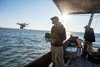
As Ocean Drones Proliferate, Marine Wildlife Are Getting a Bit Annoyed Marine scientists and sanctuary managers are grappling with how to contain a growing nuisance – which could harm whales, seals and other marine mammals – while ensuring scientists can continue using drones for valuable research. In one of the earliest instances, two guys with two drones flying in tandem made multiple passes over a herd of pregnant harbor seals below Hopkins Marine Station at the southern end of Monterey Bay off the coast of California. Scared, the seals stampeded into the water. Scolded by passersby on the trail above the beach, the drone operators said they could do whatever they wanted. Read more: newsdeeply.com |
|
The Real T-Rex With Chris Packham Naturalist and T Rex enthusiast Chris Packham embarks on a global journey to discover the astonishing truth behind the T. Rex, the animal that has endured centuries of scientific inaccuracy and Hollywood misrepresentation. Today, groundbreaking studies of dinosaur skin, teeth and musculature, combined with reconstructions of T. Rex’s incredible brain, are redefining this iconic dinosaur. Was she lizard or bird? Brightly coloured or feathered? A pea-brained scavenger or a sophisticated hunter? Meeting international experts, Chris reveals groundbreaking insights into not just what T. Rex looked like but into its behaviour, exposing the real beast behind the myth. With both a new understanding of palaeontology and zoology, and trailblazing technology, Chris then attempts to create the most accurate CGI representation of the T. Rex ever produced. Chris has unique access to ‘Tristan’, one of the most complete Tyrannosaurus Rex fossils in the world. Chris travels to meet Dr. Greg Erikson, whose research with alligators is revealing the true power of T Rex’s phenomenal bite. In Dino State Park in Texas, he walks in the footsteps of real and still visible dinosaur footprints, and with the help of biomechanics expert Prof. John Hutchinson and a virtual treadmill, they determine how the predator moved… and ran. With the help of Dr. Larry Witmer, who uses CT scanning of T. Rex skulls, Chris reveals the predator’s awesome brain and exposes its secrets. Chris travels to Berlin to work with avian palaeontologist Prof. Julia Clarke to determine just how bird-like this creature would have looked and sounded, even producing the sound it may have made! And finally he explores the Canadian Badlands, for clues that Canadian expert Dr. Phil Currie believes could blow apart the understanding of T. Rex’s social life… TX: BBC2 Wk52 27th December 2017 2000hrs |
|
NFTS First Film School to Win Queen’s Anniversary Prize for Higher Education! The National Film and Television School (NFTS) is proud to announce it is the first ever film school to win a Queen’s Anniversary Prize for Higher and Further Education. The NFTS is among twenty-one universities and colleges of further education who were announced as recipients of Queen’s Anniversary Prizes in the current - twelfth biennial - round of the scheme at an event hosted at St James’s Palace by The Royal Anniversary Trust today. Judges commented that the NFTS was chosen to receive the prestigious award as they were “impressed by the reach and influence of the School in a hugely important sector.” Read more: www.nfts.co.uk |
|
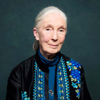
Primatologist Jane Goodall: ‘Tarzan married the wrong Jane’ The 83-year-old chimpanzee expert has been the subject of more than 40 films. Ahead of the release of the latest, Jane, she explains how she went from ‘dreaming a man’s dreams’ to living her own. Growing up in Britain during the second world war, Jane Goodall was often told her dreams were just that – fantasy, unrealistic, unachievable: “I had read Tarzan and fallen in love, although he married the wrong Jane, the wretched man,” she jokes. “I wanted to live with wild animals and write books about them. But people would say: ‘How can you do that? Africa is far away, we don’t know much about it. You don’t have any money in your family. You’re just a girl.’” Now, at 83, the celebrated British primatologist tours the world, never stopping anywhere for more than a few weeks at a time, giving sold-out lectures on what she has learned over five decades of chimp study in Tanzania. Angelina Jolie, Colin Firth and Judd Apatow are vocal fans. Michael Jackson, she says, wrote Heal the World about her. Goodall just wants to get on with the job of better protecting our planet from the effects of climate change, but now her schedule has been interrupted once again by National Geographic’s Jane, a film about her life (of which there are now more than 40). She sounds mildly annoyed when she tells me that she recently had to pause her activism to travel to the Hollywood premiere of the documentary, which is directed by Brett Morgen and scored by Philip Glass. “Brett and Philip did such a good job,” she concedes, “I feel I need to support people who care that much.” In the film, Goodall’s own passion for the chimps is captured on 16mm by her former husband, the late wildlife film-maker Hugo van Lawick, and carefully restored and edited from hundreds of hours of film from the National Geographic archives. More: www.theguardian.com |
|
Galapágos, a Short Doc from member Mark Coger A short video created by Mark from when he was on the Galápagos Islands.
Visit: www.markanthonycoger.com |
|
WWF elephants Christmas advert 2017 #JustLikeUs, elephants feel complex emotions. Just like us, they feel loss. More African elephants are now being poached than born.
This Christmas, help us tackle the illegal wildlife trade that’s putting these beautiful giants at risk - support.wwf.org.uk/join-and-protect-wildlife |
|
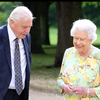
ITV orders landmark doc featuring Queen Elizabeth, David Attenborough British commercial broadcaster ITV has commissioned a major royal documentary from ITN Productions. The Queen’s Canopy (w/t) will document the progress of Queen Elizabeth II’s initiative to create a global network of protected forests that span 52 Commonwealth countries. Featured in the landmark documentary will be an informal conversation on the grounds of Buckingham Palace between Her Majesty The Queen and the venerable David Attenborough. The pair will discuss nature, conservation and the ambitious canopy project. The strategy, titled “The Queen’s Commonwealth Canopy”, is a conservation project ” aimed at raising awareness of the value of indigenous forests, and of preserving them for future generations.” The project also aims to serve as a lasting legacy that will celebrate the Queen’s leadership of the Commonwealth. More here: Realscreen.com |
|
Robert Redford and Jackie Chan narrate astonishing ‘Earth: One Amazing Day’ documentary ‘Earth: One Amazing Day’, the first Sino-UK film collaboration after the signing of a 2015 co-production treaty, is released in China The Chinese director Fan Lixin found it challenging to work with animals in Earth: One Amazing Day. The British directors Richard Dale and Peter Webber and he have directed the nature film. “They [the animals in the movie] are from remote areas where it is difficult to reach,” Fan said. “But even after you have gone there it’s hard to find them.” The 100-minute film, the first Sino-British film after a co-production treaty signed by the two countries in 2015, was produced by BBC Earth Films and SMG Pictures, a Shanghai company. With a crew of about 100 from China and Britain, the film took 142 days of shooting and three years of editing from more than 12,000 DVDs that capture footage in the wild. More here: telegraph.co.uk |
|
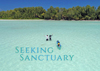
Seeking Sanctuary: A New SOSF Short Film By Nick Jones SOSF collaborator, Nick Jones has spent more than 1000 hours underwater filming various types of marine wildlife from humpback whales to great white sharks. His work has been featured by Lonely Planet, Wanderlust and the BBC. This past year, as part of his Masters in Wildlife Filmmaking at the University of West England, Nick partnered up with SOSF to create a short documentary about sharks, and the other wildlife present on D’Arros Island and St. Joseph Atoll — an unprotected area in the Seychelles with high amounts of biodiversity. The end result of this effort is Seeking Sanctuary, a 10 minute film which captures the importance of these areas to sharks. The Seychelles is a unique country made up of a constellation of islands 1500 km off the eastern coast of Africa. As demonstrated in Nick’s short film, Seychelles hosts an abundant variety of marine species. Still, aside from the work being conducted by SOSF D’Arros Research Centre (DRC), marine fish and sharks are not a large focus for studies in this country. Nick hopes his new film will highlight the significance of D’Arros and St. Joseph to a wider audience. Hopefully, these richly populated locations will be granted marine protected area status in the future.
More, incl' a Q&A with Nick: saveourseas.com/seeking-sanctuary-a-new-sosf-short-film-by-nick-jones |
|
Big game hunting documentary SLAMMED by wildlife campaigners: 'NOT informative' A BIG screen documentary about trophy hunting has been blasted by a leading animal charity as it goes on general UK release. Trophy’s cinematic portrayal of big game hunting in Africa is angering Born Free, the renown wildlife campaigners founded by two of Britain’s most famous film stars. Born Free president Will Travers – son of actors Virginia McKenna and Bill Travers – has lambasted the feature length “shockumentary” for being “peppered with assumptions and assertions about trophy hunting that are offered in an almost fact-free environment”. The charity – named in honour of the 1960s classic film about Elsa the Lion – says the documentary fails to present the facts about trophy hunting or the dangers of promoting a legal international trade in Rhino horn. But the film-makers have hit back by saying the Born Free has a very specific agenda – "keep the wild, wild" – which is a utopian perspective and that other voices need hearing as the debate about trophy hunting rages. "I believe this film will be used by the South African government to push for legalisation of rhino horn trade" Will Travers - Born Free president From: express.co.uk |
|
New species of orangutan discovered! A new orangutan species has been found hiding in the forests of Sumatra. The Tapanuli orangutan is only the third orangutan species, and the seventh non-human great ape. Read more: newscientist.com |
|
Watch: VEGAN 2017 – The Film Plant Based News' end of year film Vegan 2017 is here... Wildlife-film.com is a vegan company and recommends that you take the time to watch this film and then make up your own mind on the movement.
Support: plantbasednews.org/support |
|
Greenpeace Alternative Coca-Cola Christmas Advert ad Noticed anything strange about this new Coca-Cola Christmas advert?
Visit: greenpeace.org.uk/watch-alternative-coke-christmas-advert |



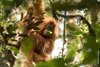






Find a Wildlife Film Freelancer Find a Wildlife Film Organisation
|































































Please send in YOUR news for the next issue to the editor: news@wildlife-film.com |
Disclaimer: Wildlife Film News publishes information and opinions as a service to its readers. |

