New Short Film From Thailand Wild Uses Wild Boar Footage to Critique Global Animal Agriculture
By Jason Peters for Darryl Sweetland
12 May 2026
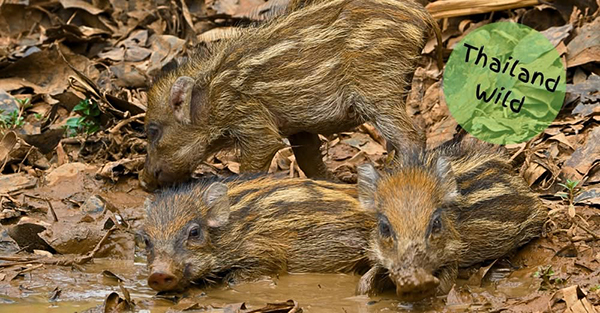
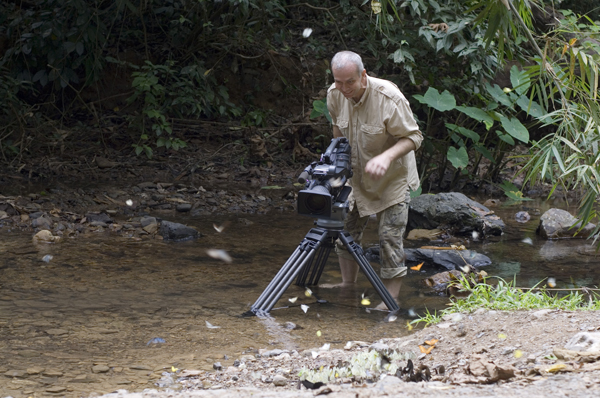
Natural history filmmaker Darryl Sweetland has released a compelling new short film on his conservation channel, Thailand Wild, capturing the early life of wild boar piglets at Big Pool in the Huai Khayeng Nature Park region.
While the release initially presents a traditional, intimate look at native wildlife behaviours, it pivots into a sharp industrial critique, highlighting the profound ethical and physical juxtaposition between free wildlife and the billions of domesticated pigs (and other species) kept globally within industrial farming systems.
The film relies on pristine, observational field tracking to document a striped litter of wild boars wallowing, foraging, and navigating their natural jungle habitat. Sweetland explicitly utilises these serene natural sequences as a direct subversion of typical wildlife shorts, using the baseline of natural freedom to pose urgent questions regarding systemic animal exploitation. The narrative directly confronts the conditions of the estimated 1.5 billion domesticated pigs moving through the global animal agriculture industry annually, drawing a stark line between the natural sovereignty of the wild boars and the total subjugation of their domesticated counterparts.
"The goal of the project is to bridge the gap between traditional natural history filmmaking and proactive animal advocacy," says Sweetland. By emphasising the shared biology, high intelligence, and complex social traits inherent to both wild and farmed pigs, the production functions as an explicit call for systemic industry reform and a vocal endorsement of the global vegan movement.
The short film is available for immediate viewing on the official channel, or below:
¨When I see these gorgeous animals, my heart bleeds for the 1.5 billion pigs that are enslaved in the animal agriculture industry each year for nothing more than gastronomic entertainment in virtually all cases. Meat eating really is the scourge of the modern world, and is not just an animal rights issue but is very much a conservation, environmental, and human health issue too. And there really is no justification for it in a world full of nutritious plant-based foods. For those who haven’t considered the arguments in detail, a plant-based diet has five major advantages.
Firstly, it greatly reduces animal suffering. Pigs are highly intelligent, ranking higher than dogs and human toddlers in cognitive tests so they are well aware of the abuse inflicted on them. As are the other 90 billion land animals farmed for consumption each year. About 10 for every human on the planet.
Secondly, it reduces the climate impact of food production. Animal agriculture has an effect on climate change equal to all forms of transport combined.
Thirdly, growing plants is far more energy efficient, requiring much less land and water to produce the same number of calories. And everywhere we see wilderness being converted to farmland, and rivers and wetlands drying up. And therefore has a far kinder impact on the environment and on the species that we share the earth with, and which we are currently driving to extinction at an alarming rate.
For example, 80% of world soybean production is grown, not for direct human consumption, but to be used for animal feed, including on vast areas of land that used to be Amazon rainforest.
Fourthly, for better human health. Looking around we can all see the catastrophic effects of the modern human diet. A plant-based diet is associated with lower rates of heart disease, obesity and some cancers, and is strongly linked to improved endurance.
Last, but by no means least. A reduction in animal agriculture could reduce the spread and emergence of zoonotic diseases, some of which have had disastrous consequences in recent history. HIV/Aids and Covid-19 had catastrophic effects on the world, but these would have been nothing if the WHO hadn’t successfully contained Ebola to small parts of Central and Western Africa. And SARS, MERS, Avian flu, Nipah virus, and Salmonella are all hazards of life that we have all felt the consequences of whether we eat animals or not.¨
Since the late 1990s Wildlife-film.com has been the leading source of information for the wildlife filmmaking industry worldwide. For over twenty five years the site has been Google's number one ranking site for 'wildlife film' and related searches. Our site is viewed in over 195 countries. Our newsletter, Wildlife Film News, is read every month by thousands of people involved in wildlife filmmaking - from broadcasters and producers, to cameramen - we encourage readers to submit their news. We also serve as an online resource for industry professionals and services. Find producers, editors, presenters and more in our Freelancer section, and find out about festivals, training and conservation in Organisations. We encourage amateur and professional freelancers to join our network and welcome all wildlife-film related organisations to join our team.
Wildlife Film News is available every month straight to your Inbox! Subscribe here: