 Wildlife Film News
Issue 42
December 2002
www.wildlife-film.com

News Contents:
1. Christmas Presents
2. FFC Report Published
3. The 'C' Word
4. Wildscreen Feedback
5. Green Film Festival
6. Wildscreen Trust Mourns its Visionary Founder
7. The Most Extreme
8. Eye Opener
9. NatGeo's Wildscreen Awards Clarification
10. Wild Places of the Sierra Nevada
11. The Future is Wild
12. Telenatura Awards Announced
13. HD Footage Needed
14. IWFF Call For Entries
15. The Salamander's
Secret
16. RealScreen
Summit 2003
17. Things
'Reely' Rolling for Reel Girls Media
18. Wild Visions
- A View on the Future
1. Christmas Presents
Isn't it annoying when Mum
rings up to ask what you want for Christmas and you can't think of a thing?
Well help is at hand - how about these suggestions:
Books:
Life
On Air by David Attenborough - memoirs of 50 years in broadcasting
- Price £13.29
In the Heart
of the Amazon by Nick Gordon - film-making adventures in South America
- Price UK £5.59
Videos:
Microcosmos
- A bug's eye view of life in a meadow - Price:
£8.99 / $9.99
Cousins
- Three episodes from the series which looks at how primates
remind us of ourselves - Price: £12.99
DVDs:
UK The
Blue Planet - 3 DVD Box Set Our Price: £30.99
US/Canada The
Blue Planet - Seas of Life 2 Pack (Parts 1 & 2) Price: $24.99
The Blue Planet
- Seas of Life 2 Pack (Parts 3 & 4) Price: $29.94
Clothing:
Balaclava
- green - £9.00
Scrim scarf/net - £4.00
Six pocket trousers
- camouflage pattern - £40.00
Gear:
Camouflaged
masking tape - £3.75
Camera bean bags - £16.00
Head torch - £12.00
Dome hide - £159
Camouflaged lens and
camera covers - from £10
Plenty of stocking fillers
there! All these and much more are available from the Wildlife Filmmakers Shopping
Mall at www.wildlife-film.com...
2. FFC Report Published
The Filmmakers for Conservation
research report commissioned this summer is now online for all to see.
The report is titled "Are
Wildlife Programmes Broadcast on Television Effective at Producing Conservation?",
and was written by Amanda Webber and sponsored by National Wildlife Federation.
It was first presented at the FFC Open Session at Wildscreen and is now available
on the FFC website in its entirety. Not only is it a fascinating read itself,
but it is also loaded with references and suggestions for further research.
Check it out at www.filmmakersforconservation.org
3. The
'C' Word
Overcoming conservation's rep as a
dirty word (first published in RealScreen Natural History Guide 02)
By
Chris Palmer
It
isn't easy being a wildlife filmmaker these days, particularly if you want to
see your films broadcast. I'm not talking about so-called 'blue chip' films
that show unspoiled wilderness, charismatic species and virtually no people.
I'm referring to wildlife documentaries that deal with controversial issues
such as habitat loss, climate change and overfishing.
If
you want to make films dealing with such issues and hope to get them broadcast,
you have your work cut out for you. Broadcasters are interested in ratings,
not causes, no matter how important or noble they might be. To get such films
aired, we need to change the way we think about conservation films and how we
make them. The problem is not the subject of conservation but rather how conservation
is presented.
Viewers
have heard the same depressing, preachy messages over and over again, and are
bored with them. The 'bulldozer moment' in the film - when the resource in question
is seen to be threatened -is utterly predictable, and the experts are often
bland and uninspiring. Reality shows are much more fun to watch.
To
succeed in the ratings game, wildlife filmmakers need to embrace showmanship
and entertainment, and make programs that will grab and keep an audience
(consisting of more than just conservationists). To reach that new audience,
the focus must be on satisfying the customer. The immediate customer is the
broadcaster, and its objective is to reach the largest possible audience in
key demographics. Therefore, filmmakers have to focus on ratings and demographics
- and that means entertainment.
There
are many ways to make conservation more engaging. One is by using dynamic hosts
with sparkling personalities, like Jeff Corwin on Animal Planet, who are totally
immersed in the program, and who use wacky humor to engage the audience. Other
methods are interactivity, computer graphics, comedy, compelling characters,
character-driven narratives, investigative journalism, new scientific findings,
enthralling visual images, dramatic suspense, linked websites, and so on. None
of these require sacrificing the conservation message.
Storytelling
is also essential to enhancing entertainment value. I used to think that a story
was something with a beginning, middle and end; now I view it as something uniquely
capable of conveying meaning and purpose. The audience sees the transformation
that a protagonist goes through, and that brings clarity and coherence to the
conservation issue. The best way to reach people (and achieve high ratings)
is through emotion rather than reason. People want passion after a long day's
work, not complex arguments.
I
believe it is now more important than ever for filmmakers to make programs that
discuss vital conservation issues. Conservation films can play an important
role in producing an informed and active citizenry, which is what keeps our
democracy thriving.
Of
course, broadcasters are citizens too. They want clean air and robust wildlife
populations for themselves and their kids. But like the rest of us, they also
want to hold on to their jobs. Their performance is assessed on the ratings
they achieve, not on their contributions to the cause of conservation. Their
first priority is the solvency of their company. Producers have to remember
that making and selling programs is a business.
We
need a new generation of wildlife films that attract large, new audiences and
huge ratings while inspiring viewers to become active in conservation. This
is a noble cause worthy of all the storytelling techniques and audience-grabbing
approaches we can bring to it. Conservation is too important not to be made
entertaining.
---------------------
Chris
Palmer is President and CEO of National Wildlife Productions at the Reston,
VA-based National Wildlife Federation. He can be reached at palmer@nwf.org
4. Wildscreen
Feedback
If you went to Wildscreen
in October this year and have any feedback/suggestions for them - then please
complete the delegate questionnaire at www.wildscreen.org.uk. It really is vital
for them if they are to improve on the areas that delegates are not so happy
with.
5. Green Film
Festival
The 3rd International Festival
of Environmental Films "Green Film Festival" will be held from February 21-26
2003 in Tehran with the collaboration of several Iranian and International organizations.
The festival welcomes the
best environmental films produced in any scope, format and duration.
For further information , please contact:
Elahe Taheri
3rd International Green Film Festival
Tel: 9821 2585459
Fax: 9821 2589179
web site: www.clik.to/IGFF3
6. Wildscreen Trust
Mourns its Visionary Founder
The Wildscreen Trust is mourning
the loss of its visionary founder, Christopher Parsons OBE who died early November
following a serious illness.
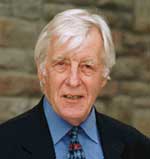 Although
Bristol based, Chris was a world renowned wildlife filmmaker, who began his
career at the BBC Natural History Unit on Whiteladies Road more than 40 years
ago, he went on to co-found the Wildscreen Festival in 1982, the largest festival
of moving images from the natural world which has helped establish Bristol as
the green 'Hollywood'.
Although
Bristol based, Chris was a world renowned wildlife filmmaker, who began his
career at the BBC Natural History Unit on Whiteladies Road more than 40 years
ago, he went on to co-found the Wildscreen Festival in 1982, the largest festival
of moving images from the natural world which has helped establish Bristol as
the green 'Hollywood'.
Keith Scholey, Head of the
BBC Natural History Unit said 'he was indeed a giant in our industry and few,
if any, have contributed more'.
Instrumental in producing
the groundbreaking series Life on Earth, Chris was appointed the first
head of the BBC's Natural History Unit, shaping the future of modern wildlife
film production and changing the level of viewer's perception of the natural
world forever. Sir David Attenborough has described him as a 'national treasure'.
Wildscreen Trust Chairman,
Chris Curling said, 'he was an extraordinary and inspiring man who galvanised
people through his quiet enthusiasm and commitment to the preservation of the
natural world'.
Chris was also hugely influential
in the creation of the award-winning visitor attraction Wildwalk At-Bristol,
which forms part of the Millennium Commission supported at-Bristol complex.
At-Bristol Chief Executive, John Durant said that his death is a huge loss,
though 'his vision will continue to inspire us; but we shall greatly miss him
and his quiet, insistent passion for communication with the public about wildlife
and wildlife conservation'
His final and most ambitious
project for the Trust is the development of ARKive - the world's centralised
library of films and photographs of endangered species, freely accessible to
all for educational and scientific use - the Noah's Ark for the Internet era.
Due for launch in Spring 2003 Chris was immensely proud of the project and the
Bristol based team currently turning his vision into reality.
Chris's last plan was to
create an 'in memory' program for ARKive, where donations would help fund the
research and creation of species listing pages whilst acting as an enduring
natural memorial to the donor. With his death he wished to donate funds
to sponsor the pages of one of his most loved British species, the otter.
The loss of Chris will be
felt around the world, by the many projects he was involved with and the people
he inspired throughout his life.
7. The Most Extreme
NHNZ AND ANIMAL PLANET
announce second series of THE MOST EXTREME - Popular Series Back for a Second
Season
Animal Planet, owned and operated by Discovery Communications, Inc., is joining
forces again with NHNZ, the world-leading producer of factual programming, to
produce another 13 episodes of THE MOST EXTREME.
THE MOST EXTREME premiered on Animal Planet Sunday, June 30, 2002 and has become
a popular show among Animal Planet viewers and generated positive feedback from
critics. The New York Post said, '[THE MOST EXTREME] offers extremes of
sex and violence in nature that make Tony Soprano look like a big sissy.'
With viewers intrigued by the quirky top ten countdowns of the most amazing
creatures in the world, Animal Planet approached leading producers NHNZ for
a second 13-part series.
THE MOST EXTREME twists a path between natural history, science, history and
trivia to expose the most outrageous behavior and abilities of the animal kingdom.
Each quirky episode counts down the top ten most extreme animals and stacks
each contender's feat up against human efforts to work their way into
the record books.
With 9 episodes of the first series gone to air in the US, Animal Planet's
executive producer for the series, Kevin Mohs, says ' We wanted to create
a series that was fun, fast and fascinating and Animal Planet believes that
THE MOST EXTREME is just that. This type of programming is hard to pull off
effectively, but NHNZ had done a great job in delivering on our expectations.'
NHNZ managing director Michael Stedman says the company, which has worked in
co-production with Animal Planet since its inception is delighted at Animal
Planet's success with the series.
'The success of THE MOST EXTREME is further evidence that natural history
programming can be highly entertaining and still deliver solid factual information.
We're proud to work with Animal Planet to develop programs which combine
these two requisites in such a clever, obviously winning way.'
THE MOST EXTREME is produced by NHNZ's Ian McGee who was also producer
for the successful series, TWISTED TALES, another co-production with Animal
Planet. In 2000, Ian was awarded an Emmy® for his writing work for the series.
Ian and his team are currently researching the next 13 episodes of THE MOST
EXTREME, which promise to comprise an equally fascinating and entertaining anthology
of animal facts.
The second series will be completed next year and is expected to begin airing
on Animal Planet in the US in the summer of 2003.
8. Eye Opener
EYE OPENER: OSF RELAUNCHES
WITH NEW CATALOGUE
OSF, has launched its first major catalogue
since 1993. Entitled, Eye Opener, the 200 page catalogue includes 1200
of OSF's strongest images, selected to appeal to the creative industries of
design and advertising.
The new catalogue is one of the key deliverables
of OSF's recent repositioning programme. The other is a new database-driven
website. The repositioning exercise was undertaken by design company Pyott who
have also designed and produced the catalogue and website.
In compiling images for the catalogue,
OSF Head of Collection Gil Woolley and James Pyott worked in close partnership
to edit the library's collection of images into page-by-page narratives. Examples
include Lion Attack and The Rainforest. "Singularly, the images are very strong,
but together they are more than the sum of their parts." Commented James Pyott.
Suzanne Aitzetmuller, Head of the OSF Libraries,
made the following comment: "The catalogue is a showcase for our premium images
as well as a crucial element in introducing our brand to an advertising and
design audience. We believe it's a visual feast and we hope it will inspire
creative and editorial briefs alike."
The catalogue can be ordered directly
from OSF by calling 01993 881 881 or sending your name and address details by
email to photo.library@osf.uk.com.
New Website Launched
The new OSF website www.osf.uk.com features a searchable
database of just over 2000 images, allowing users to search and browse images
online. New images will be added to the site on a monthly basis to further improve
the selection process for our clients. The next phase of the project will see
the introduction of online ordering.
The new website will also feature
OSF's world-renowned footage collection. A strategic alliance with the German
on-line footage library, Framepool, will allow OSF clients to view initially
more than 200 hours of footage, combined from both libraries.
Suzanne Aitzetmuller: "Over the
last few years, the website has become a key tool in image research, and the
ability to browse online is a crucial part of the sales process. But developing
a good image library website is as much about careful editing as it is about
technical solutions. In developing the OSF website we have been able to review
other image library sites to see what works and what doesn't. The result is
a site that is both highly inspirational and eminently functional, without overwhelming
the user with an unmanageable quantity of images."
9.
NatGeo's Wildscreen Awards Clarification
Last month's Wildscreen Award
Winners announcement failed to mention National Geographic's involvement in
several of the awards - so to clarify:
National Geographic Television & Film
(NGT&F) was awarded three Panda Awards in the following categories:
· Animal Behavior -- Mzima:
Haunt of the Riverhorse (Aired in the U.S. on National Geographic EXPLORER/MSNBC
as Haunt of the Hippo)
Produced and filmed by Mark Deeble and Victoria Stone, a co-production of Survival
Anglia Limited/NGT&F
· Camerawork -- Mzima: Haunt
of the Riverhorse (Aired in the U.S. on National Geographic EXPLORER/MSNBC
as Haunt of the Hippo)
Produced and filmed by Mark Deeble and Victoria Stone, a co-production of Survival
Anglia Limited/NGT&F
· Presenter-Led Show -- Snake
Hunter - North America (Aired in the U.S. on National Geographic EXPLORER/MSNBC)
Produced by Zebra Film Productions, for NGT&F
With the Panda Awards, Mzima: Haunt of the Riverhorse continues to be one of
the most decorated natural history films of the 2001-2002 awards season.
In the U.S. Mzima won a 2002 News & Documentary Emmy, a 2002 Peabody Award
and the Grand Teton Award at the Jackson Hole Wildlife Film Festival in 2001.
Mzima was also a Best Animal Behavior award winner at Jackson Hole and garnered
an additional nine awards at this year's International Wildlife Film Festival
in Missoula, Montana
Filmmaker Hugh Miles won a separate award for Outstanding Achievement.
In addition to his work with the BBC and as an independent producer, Miles has
produced, photographed and/or appeared in a number of films for National Geographic,
including the National Geographic Specials Puma - Lion of the Andes and The
Tigers of Kanha. Miles has also produced and/or filmed a number of films
for National Geographic EXPLORER including The Ultimate Crocodile, Newfoundland:
People of the Sea, Spitting Mad: Wild Camel of the Andes, Africa's Wild Dogs,
Day of the Lion, and The Improbable Ostrich.
10. Wild Places of the Sierra
Nevada
Jim Karnik has announced
that production has begun on "Wild Places of the Sierra Nevada". Up to 20 locations
will be included in this inspirational view of California's Sierra Nevada range.
The film's focus will be on cinematic photography and natural sounds captured
while touring rugged river gorges, lush mountain meadows and tranquil alpine
forests.
"A Natural Transformation"
a documentary on the construction of a 20 acre marsh restoration project is
now available for purchase for $19.00 + &3.50 s/h. This video is a must
for anyone involved in habitat restoration efforts.
More information from:
Jim Karnik Productions
http://www.fieldnotes.com
jim@fieldnotes.com
11.The Future is
Wild
422 South have produced stunning graphics and CGI for John Adams Television's
£4 million documentary ‘The Future is Wild'.
‘The Future is Wild' is a 13 part series for Animal Planet USA (part
of the Discovery Channel) and 3 x 1 hour programmes for European Co-Producers.
Using cutting edge computer graphics, modern filming techniques and the knowledge
of leading scientists, ‘The Future is Wild' looks up to 200 million
years into the future. The series explores the fascinating subject of future
evolution on earth and shows a dramatically changed planet, accommodating fantastic
new creatures.
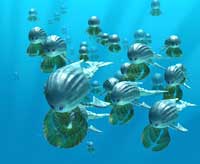 The
422 South team (lead by Peter Bailey) of up to 30 animators, compositors, designers
and producers worked with John Adams Television Limited, Series Producer Paul
Reddish and Series Director Steve Nicholls to bring the series to life over
a 2 year production schedule. The 60 minutes of 3D graphics in ‘The Future
is Wild' incorporates a cast of almost 50 unique and highly diverse CG
animals in a wide variety of live action backgrounds filmed across the globe.
422 South also designed and completed an hour of 2D graphics, the series title
sequence, along with a high volume of print resolution images.
The
422 South team (lead by Peter Bailey) of up to 30 animators, compositors, designers
and producers worked with John Adams Television Limited, Series Producer Paul
Reddish and Series Director Steve Nicholls to bring the series to life over
a 2 year production schedule. The 60 minutes of 3D graphics in ‘The Future
is Wild' incorporates a cast of almost 50 unique and highly diverse CG
animals in a wide variety of live action backgrounds filmed across the globe.
422 South also designed and completed an hour of 2D graphics, the series title
sequence, along with a high volume of print resolution images.
Peter Bailey, Creative Director of Animation at 422 South comments; 'The
Future is Wild was the biggest challenge undertaken at 422 South to date. It
represents a huge leap forward for us creatively, technically and also from
a project management point of view. Personally the series represented a great
opportunity for me to hone my skills as an Animation Director and enabled me
to further increase my empathy for the natural history genre. The talent and
dedication of the team shone through on The Future is Wild which needed to fulfil
so many different requirements for a wide range of co-producers across the globe.'
'I'm delighted to have worked with 422 on this', remarks John
Adams. 'They have developed a fine sense of the particular requirements
of this programme. Nothing like it has been made before, and we're incredibly
excited to finally be bringing this to life. It opens up some astounding opportunities.'
‘The Future is Wild' is scheduled to air worldwide from December
this year.
12.
Telenatura Awards Announced
ORF's "The Realm of
the Golden Eagle" wins best film award at Telenatura - Spain October 2002.
Austrian production "Summits
of Life", of the series "The Realm of the Golden Eagle", won
the best film award at Telenatura, International Television Festival on Conservation
and Popularisation of Nature, organized by the University of Navarra (Spain).
This film, produced by Michael Shlamberger, Norbert Winding and Klaus Feichtenberger,
was awarded by the international jury, among 75 productions from 18 countries.
National Geographic's
"Hornets from hell", produced by Geff Morales, won two awards for best produced
film and best scientific content. TVE's documentary "H2O", produced by de Mario
de la Mano and Joan Albert Planell, won the popularisation award. "Río
+ 10", of Canal Natura, won the conservation award. The best newcomer award
went to Daniel Morcillo and Eduardo Berian, for their film "Searching corpses".
The jury was Jeffery Boswall, consultant and former BBC producer, Amy Hetzler,
Secretary of Filmmakers for Conservation, Joaquin Gutierrez Acha, producer of
internationally awarded wildlife films, Dr. Maria Joao Façeira, producer and
university professor, Rafael Miranda, professor of biology at the University
of Navarra, and Santiago Echeverria, professor of the School of Public Communication
of the same university.
"The quality and international range of the films was outstanding", said Dr.Bienvenido
León, León, professor of audiovisual science popularisation and director of
Telenatura. "We are sure these films have contributed to promote television
as a means of environmental education, as well as to encourage the production
of more conservation films."
13. HD Footage
Needed
Karl Lear from Pangaea
TV in the UK (www.pangprod.com) has been asked to provide some HD footage for
an expo next year in the US.
Karl says: "Its quite
confidential at the moment so I can't discuss particulars, and there is no fee
for helping, but there is a good opportunity for huge exposure with some leading
figures likely to be there.
specs:
Pristine images that can or have been stored in uncompressed format such a D5
or a data file of 10bit resolution. HD TV sourced images from 720P or 1080i
cameras. Very high end film transferred to tape in HD formats; 24, 25, 30 fps.
(I am discussing the technical requirements further before laying down a final
criteria.) Visual content is king; fine detail beautiful scenes, travelogue,
sports, close-up 'wow' shots, real things, not psycho-graphics. And it will
all appear in 16:9. The sound is likely to be Dolby 5.1, but as can be imagined,
will mostly be suppressed by public noise, so content with chat or dialogue
is not the best choice. Music or natural fx are likely to work best.
To start with I just need
stills depicting the shots or scenes - choices will then be made. Give me a
call or e-mail off list to
hd@pangprod.com or 0800 652 9982"
14. IWFF Call For
Entries
An invitation form Janet
Rose, Executive Director of IWFF:
The call for entries for
the 26th International Wildlife Film Festival, Missoula, Montana - Wildlife
in Focus: Looking Forward to the Future is now underway. Film
entries will be accepted through January 17th, 2003. The entry form and
registration packet can be downloaded from our website at www.wildlifefilms.org. Or, we would
be happy to send you a packet by mail if you prefer.
This is a unique and significant
time for IWFF-Missoula. 2002 marked our 25th anniversary and an evolution
into a new year round organization, the International Wildlife Media Center.
We established a permanent headquarters in the historic Roxy Theater here in
Missoula, Montana, creating the first international media center devoted exclusively
to wildlife and natural history programming and media. This now extends
the breadth and scope of natural history programming to new and expanding audiences
twelve months a year.
The 26th IWFF-Missoula will
be held April 22nd-26th 2003, Tuesday through Saturday evening, following Easter
Weekend. Youth and community events as well as film screenings will precede
this beginning with Easter Weekend, April 19th. The line-up includes workshops
in Underwater Filmmaking (bring your wetsuit)-led by Blue Planet's
award-winning DP, Rick Rosenthal, Sounds From the Field, Music
Composition, "live" pitching from Development to Market, Raising
Funds for Your Project, presented by Chris Palmer, President/CEO of National
Wildlife Productions, one of the most dynamic fundraisers in filmmaking today;
Field and Studio workshops in HD and DV with plenty of the latest technology
to try out, with Sony experts on hand to answer questions; Script-writing
in the new style and so much more as well as a Montana-style Western
Barn Dance and an elegant Night Under The Stars, two of the many
spectacular evening events that are planned as well as many dynamic seminars
and panel discussions on new and emerging issues. All of these workshops,
parties, and panels are included in your delegate registration.
In addition, the video library
will be open from sun up to sundown every day, with plenty of viewing stations
as well as daily and evening film screenings in the 1000-seat Wilma Theater.
Field trips include the renowned Bison Range, Raptors of the Rockies, a Float
Trip on the Alberton Gorge and fly fishing if mother nature cooperates.
There are now 18 possible
categories in which you can enter your film, psa, television program, music
video or ad. This year several are new, including the categories of Presenter
and Government Agency film.
If you have any questions
about the Entries or the Festival itself, please feel free to contact us directly.
We hope to see you in 2003!
Janet Rose
Executive Director
jr1@wildlifefilms.org
Alison Garrity
Festival Coordinator
alison@wildlifefilms.org
New Address
International Wildlife Film Festival & Media Center
718 S. Higgins
Missoula, Montana 59801
406-728-9380
Fax: 406-728-2881
www.wildlifefilms.org
15. The Salamander's
Secret
A nautilusfilm Production
for NDR Naturfilm (Germany) and Parthenon Entertainment Ltd. (UK), 'The Salamander's
Secret' will be broadcast for the first time on 1st January 2003, on Germany's
ARD, 19:10h (German title: Das Geheimnis des Salamanders). Program length: 46
min.
For the first time in German
wildlife filmmaking the producers have tried to illustrate human life and
wildlife of the middle ages by telling a story which uses the techniques of
a criminalistic movie...
A lightning strikes...... and illuminates a medieval castle. A fire salamander
crosses a muddy path, behind the thick walls of the castle the young Lady and
her husband Knight Heinrich are having dinner. Small beads of sweat are
showing on Heinrich´s forehead... For a long period of time the old Castle was
left a ruin. Today, at the beginning of the 21st century a new inhabitant
has moved in. The new owner reads in the old chronicle about the long forgotten
times. He reads about wolves that traces a young Lady, about a bear which chases
away two lovers, about a wild boar hunting and the hawking of a hazel grouse,
a witch collecting the forests most toxic plants and a murder, where the fire
salamander seems to play an important role.
This is, what the film´s framework is about. Murder, Crime and Jealousy although
its actual content, embedded in accurate reconstructions is the natural history
of 13th century Germany.
The film tries not only
to portray the various species that roamed the medieval forests but wants to
go deeper and tell stories of wildlife ecology. Stag beetles for example meet
on wounded trees to feed and mate. Little Owls sometimes discover these places
and it occurs that one of these small owls preys predominantly on stag beetles
as long as they occur. Under the traditional feeding and hunting places of an
owl then accumulate the indigestible parts of the beetles as their head capsules.
In the program, tiny gredlers ants now take shelter in a head capsule and
peace by peace carry their larvae and pupae into their new chitinous apartment,
placing their offsprings in the beetles hollow mandibles. 'Now the stag beetle
has more in his head than during its lifetime'. At this point, the Stag beetle
story is not over. The head capsule, together with more of its kind, is collected
by two kids that lived during those medieval days. They run through the forest,
reach an old wooden hut and sell their prey to a witch...
Of course we do not forget
animals with fur and brown eyes as brown bears, edible dormice, wolves and bats.
The film was recorded
on D9 (JVC), HD (Sony 24p) and Film (Super 16) and was produced in 2001 and
2002. Shooting mainly took place on a castles ruin in south-western Germany
and at the nautilusfilm-studios. Reconstructions of the castle were made by
Silver Animation, Munich. Rough Cut was made over three weeks on AVID Express.
For finishing, colour grading and final FX we choose to work on AVID DS, although
the program being a PAL project. Apart from Super16 and HD Shots, all other
sequences have been rendered from 50 interlaced into full frames on AVID DS.
Jan Haft, CEO at nautilusfilm GmbH says 'we hope that this program inspires
a little bit the natural history film industry, especially in Germany and shows
that there are still plenty of subjects being worth to rise them an issue and
a lot of new ways to tell natural history stories. It may be an experiment but
we feel that the interesting history of our environment and peoples perception
of nature in earlier times has rarely been covered in wildlife programming so
far.'
Another nautilusfilm production
to be broadcast soon was coproduced together with BR (Alfred Breitkopf, Bayerisches
Fernsehen) and is called "Heavenly Birds- Gallows Birds" - The Premiere of this
film will be 28th December 2002, BR 19:00h, the German title is Göttervögel-
Galgenvögel.
16. RealScreen Summit 2003
The Most Valuable Event for the International
Nonfiction Programming Industry
February 5, 2003 Master Classes
February 6 & 7, 2003 Conference
Celebrating it's 5th anniversary, RealScreen
Summit is the must-attend event for the nonfiction film & tv industry. RealScreen
Summit puts you in contact with international decision-makers and provides you
with the resources to make deals to build your business. Timed perfectly between
NATPE & MIPTV, RealScreen Summit takes place in Washington, DC - the heart
of the nonfiction TV industry - home to major international broadcasters like
Discovery, National Geographic and public tv's, pbs. Join us in DC on February
5th, 6th and 7th for the best industry event for the factual industry.
Highlights:
*Last year brought together over 680 delegates, from 22 countries
*97% of past attendees recommend this event
as the best event to attend if you are in nonfiction programming
*2 new programming blocks this year: Breaking
into the UK & Breaking into the US
*Summit Lounge - the perfect networking
space, open all day each day of the conference with refreshments, business services
and space for meetings
*Twice as many '30 Minutes with...' sessions,
with programming execs each taking 2 time slots, so delegates will have better
opportunties to get into these coveted breakout sessions - sign up is on a first-come,
first-served basis
*Content for advanced, intermediate and
beginner level delegates - making RealScreen Summit perfect for everyone
PLUS SO MUCH MORE!
Full conference price of $995 for 2 days
and $1295 for 3 days.
www.realscreensummit.com
"Realscreen Summit has now established itself as a valuable meeting place
for documentary producers, broadcasters and distributors without many of the
negative aspects of some of the larger, less genre-specific markets."
- Huw Walters, Head of Coproductions, S4C International (Wales)
17. Things 'Reely'
Rolling for Reel Girls Media
It's been a 'reely'
busy year at Reel Girls Media (Edmonton, Canada), and the TV/new media production
company has lots to show for it. Reel Girls' president/producer Ava Karvonen
has spent the last several months attending festivals and bringing home international
accolades. Last month, the CD ROM Zoology Zone: Bears, co-produced with Blackstone
Multimedia, received the Best Interactive Award at Wildscreen in Bristol, England
with the jury praising its 'strong, clear narrative structure.'
Quite a kudo, considering that the popular series The Blue Planet had its DVD
and website up for consideration!
Also
rolling along is the one-hour Metis fiddle and dance special, How the Fiddle
Flows, produced in co-production with the National Film Board of Canada by Leigh
Badgley, Bonnie Thompson and Karvonen. This toe-tapping documentary picked
up the River is Life award, one of only three awards presented at the Rio River
Film Festival in Spain, and was a finalist for Best Documentary at the American
Indian Film Festival in San Francisco. After airing on BRAVO! in Canada this
fall, it also screened Opening Night at Vancouver's ImageNation Film Festival
as well as at the Terres En Vue Film Festival in Montreal.
The innovative animated/live-action
family series Stories from the 7th Fire has three new episodes, the best
yet. Storytellers Production Inc.'s Gerri Cook, Greg Coyes and Karvonen employed
new advances in digital animation for the three beautiful new half-hour shows
- Spring and Summer and Fall. Winner of the Best Program for Children
Award at the Telenatura Festival in Spain, Spring also screened at Bavaria's
Naturvison Festival, the ImageNation Festival in Vancouver, the Planet in Focus
Film Festival in Toronto and the BC Festival of the Arts. Fall was
selected for Opening Night screening at Vancouver's ImageNation Film Festival
while both Fall and Spring were selected for Edmonton's Global
Visions Film Festival. Spring and Summer were also selected for
Montreal's Terres En Vues Film Festival.
Karvonen also produced the wildlife
documentary Return of the Peregrine, a finalist at the Missoula International
Wildlife Film Festival and selected for screening at the Florida International
Wildlife Film Festival.
'I think these awards speak to the
high quality and diversity of projects that are being produced in the regions',
says Karvonen. 'I've been fortunate to work with a world-class innovative
and creative production team and to have investors who are behind our projects.
We expect 2003 to be our busiest year to date for production'.
Reel Girls Media Inc. was incorporated
in 1998 by Ava Karvonen. This independent production company based in
Edmonton, Alberta produces documentaries, children's programming and interactive
projects that reflect an appreciation of the environment, a deeper understanding
of the natural world and an exploration of themes such as spirituality, art
and culture. Reel Girls is currently in production on the interactive
science and nature series wildfiles.tv, in development on the one hour
documentary God's A Trip and the TV series The A to Z Film Guide.
18. Wild Visions - A View on the Future
'Wild ideas for wildlife television - an
opportunity to work together in a NEW way'
One of the exciting things about the wildlife television industry is the genuine
passion and enthusiasm which people have for wildlife and programme making.
This is even more evident amongst the newcomers into the business who made up
a very large proportion of delegates at the recent Wildscreen festival.
Rather than let all this talent go to waste our idea is to bring together individuals
to form a collective: 'Wild-Visions'. Its aim is to attract people
from all disciplines, to work together on exciting new wildlife and conservation
films, pooling their resources and sharing their experience and knowledge.
How will this work?
Database : We are collating a database
where everybody is listed with details of their experiences, expertise, and
areas of specific interest. People can access the database to make contacts,
ask advice, get feedback on ideas but also get in touch with people they would
like to work with to form smaller working groups.
Working Groups: These working groups will allow individuals
to work together in any which way that suits, whether it be: skill swapping,
brainstorming, sharing contacts and resources supporting one another or as a
think tank to develop new projects.
Feedback: Details on how new projects and working groups are
progressing will then be feed back to the wider group. Once a portfolio of achievements
initiated by the group is established the hope is that the process will start
to snowball as the experiences - both mistakes and moments of genius - are fed
back into the group.
More established people in the industry can then see what ideas emerge from
such a group and hopefully lend some of their experience and expertise to see
where these might be refined, adapted and potentially find a home..
Who does this group involve?
This group is being set up by a group of people who are relative newcomers to
the business for anybody who wants to be involved. In essence our aim is to
produce a very open and flexible system which will hopefully generate enthusiasm
within the group, provide support and give a focus and platform from which new
skills can be learnt and projects germinate and grow. The more people that get
actively involved, the more productive and successful the collective will become.
How do I get involved?
If you are interested then email: wildgeneration2002@hotmail.com with 'information'
in the subject heading or visit www.wildlife-film.com/wildvisions.htm. We
will be taking our first leap on 14th December 2002 at our Christmas Launch
Party in London (see www.wildlife-film.com/wildvisions.htm).
Databases are all very well, but face to face is better!
That's it! Send me YOUR news for the next issue and
for the site.
This newsletter goes out to thousands of people in the wildlife film-making
industry world-wide.
Piers Warren
Editor/Producer
www.wildlife-film.com
Merry Christmas
to you all!
